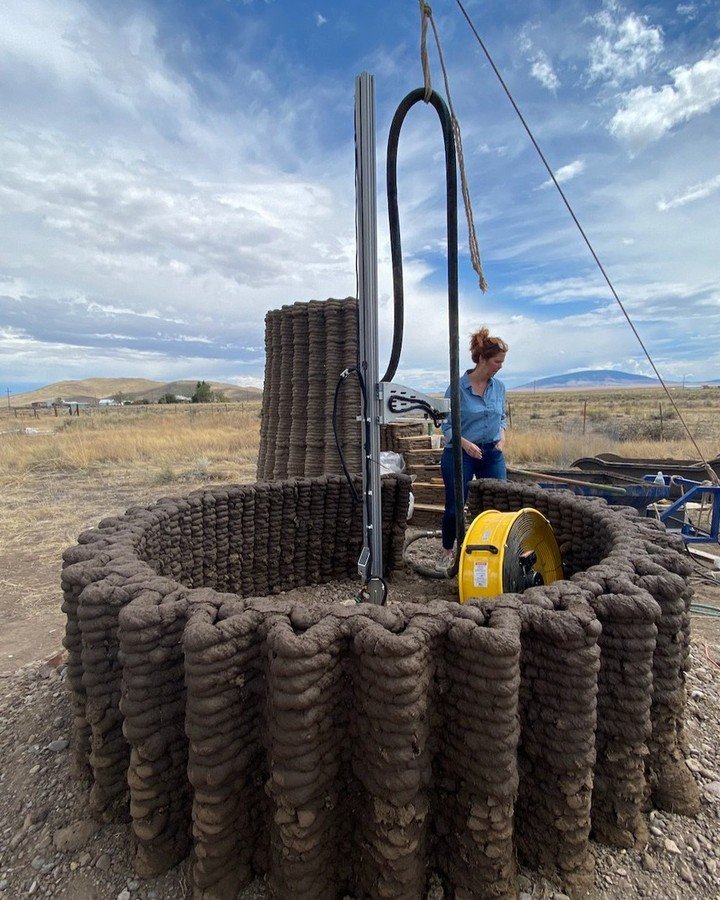

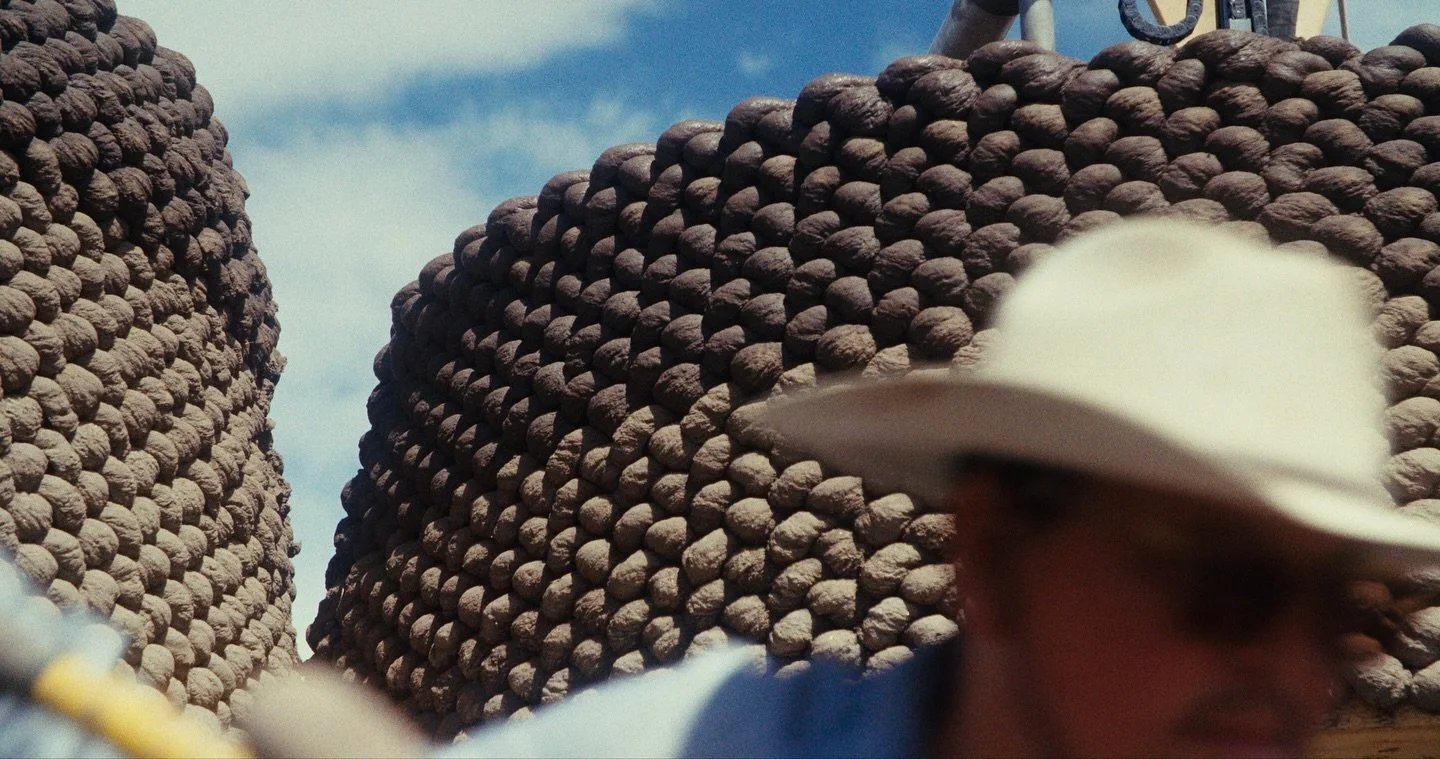
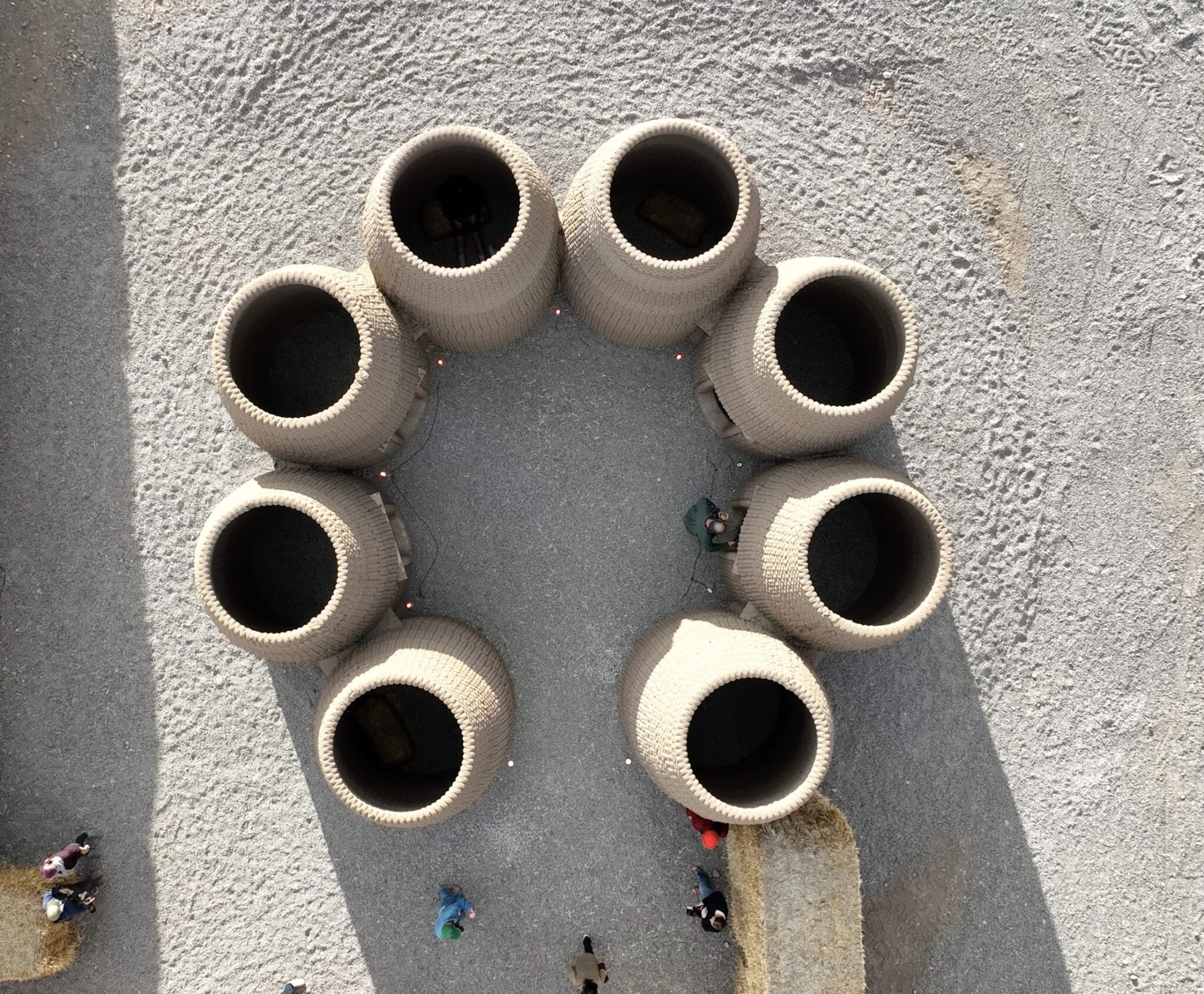
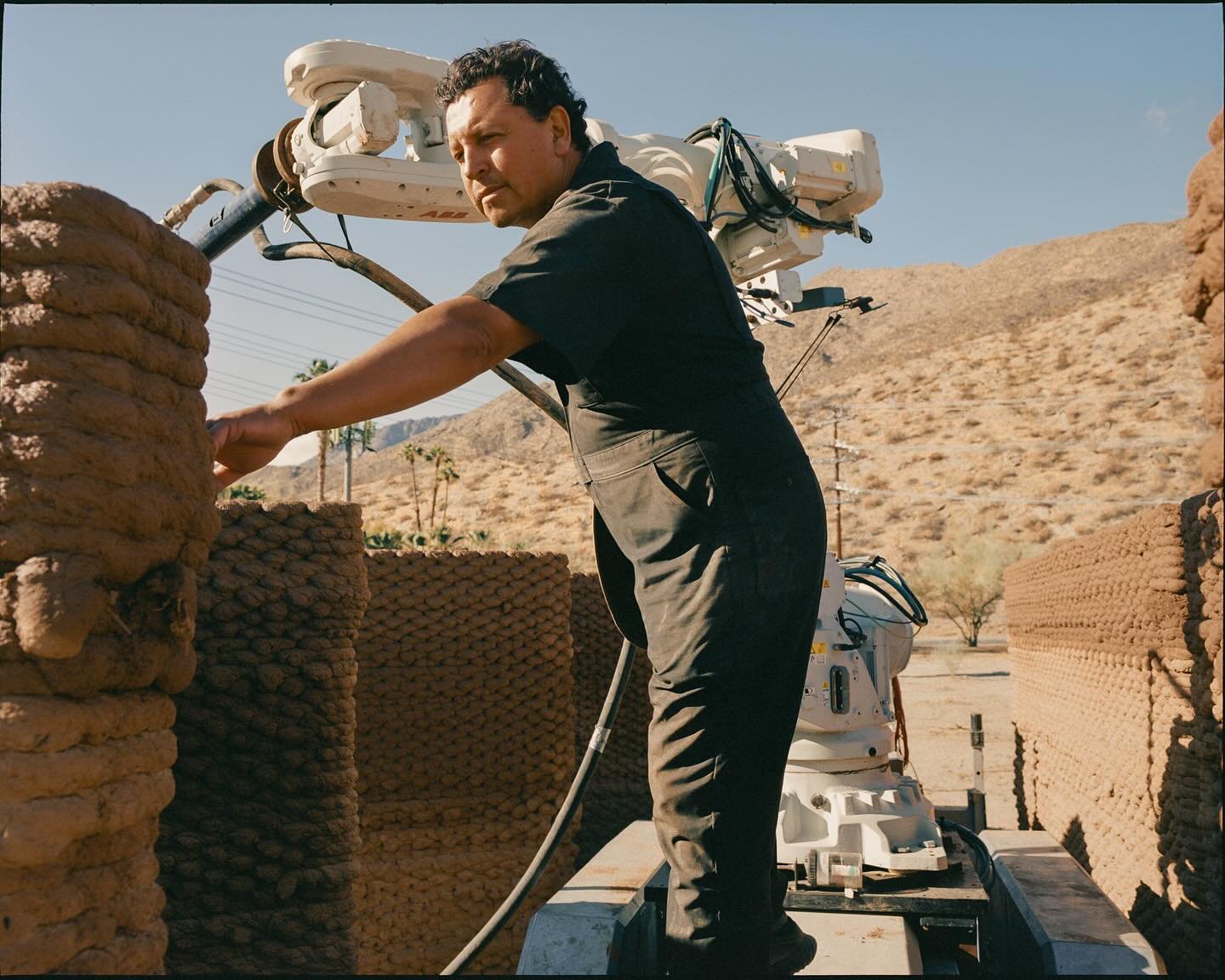
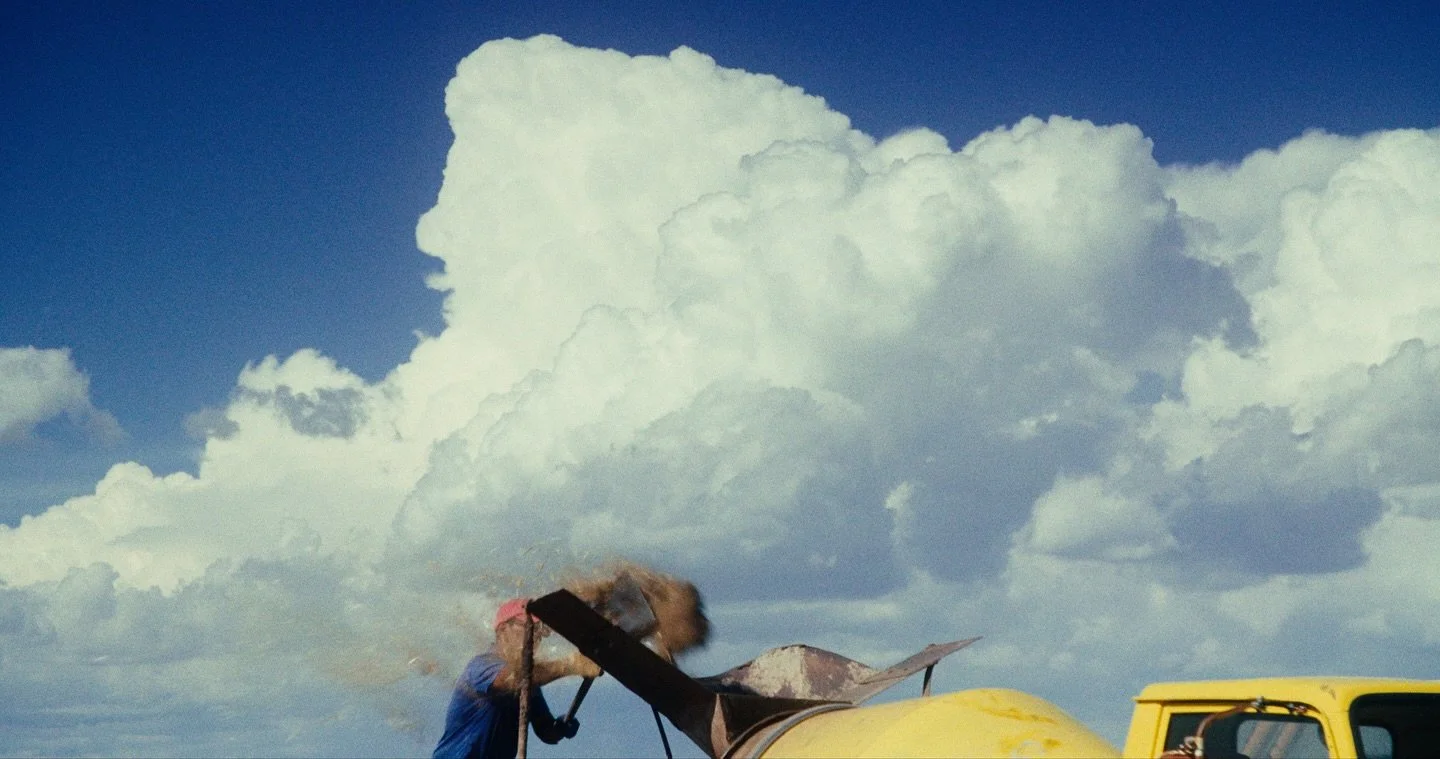
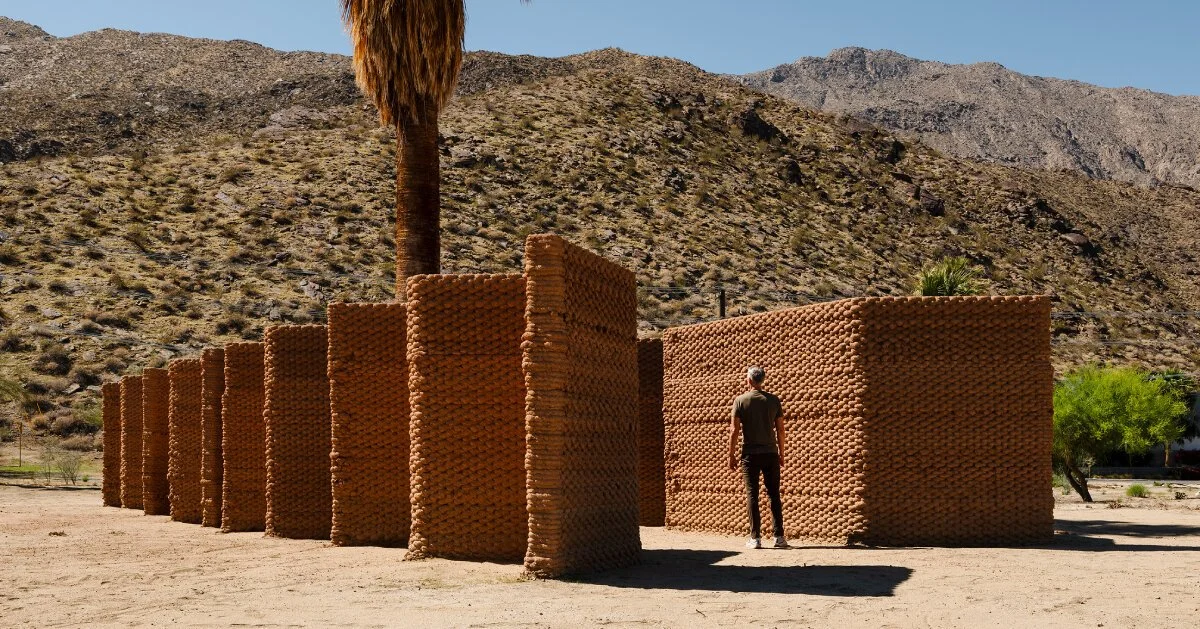

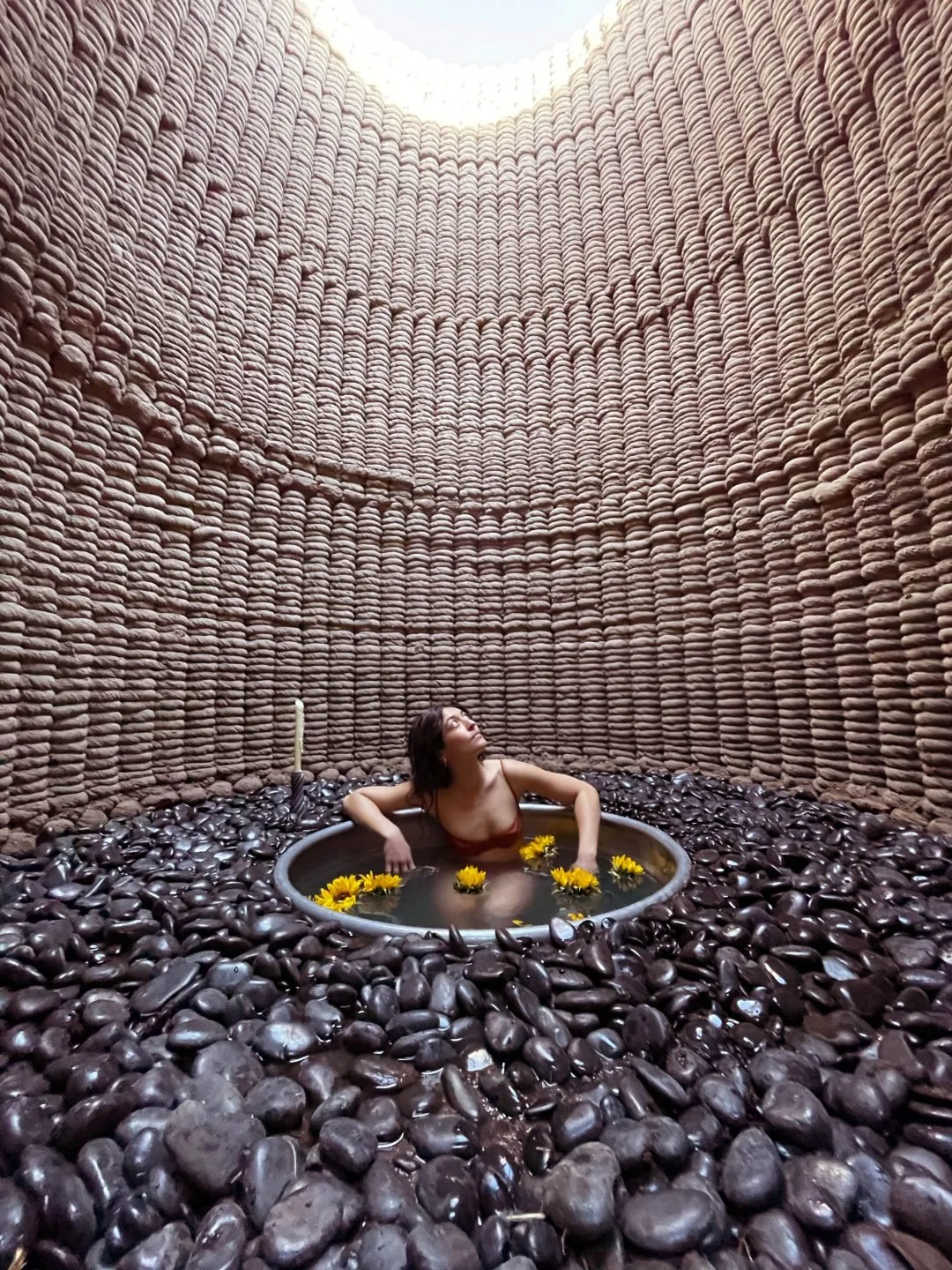
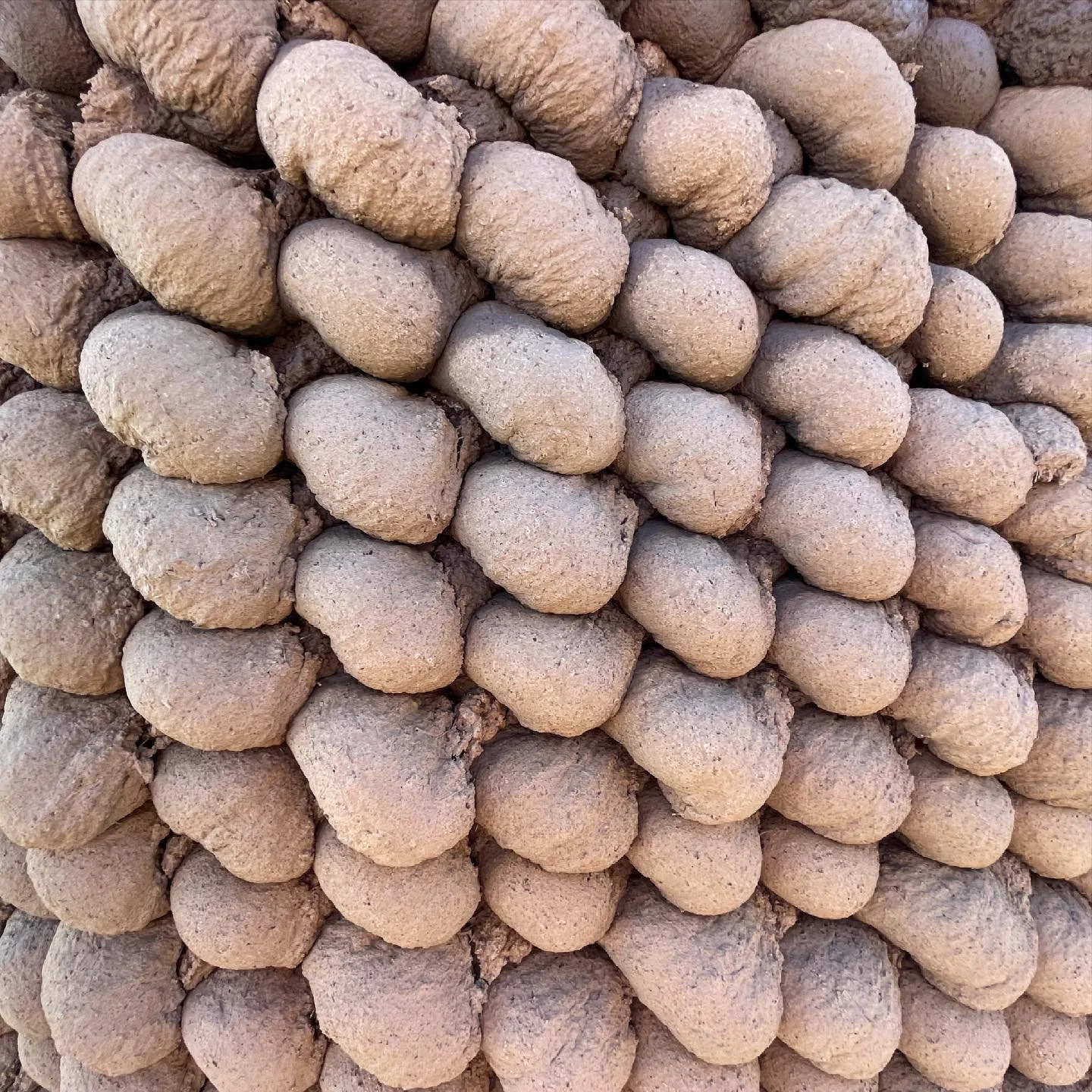
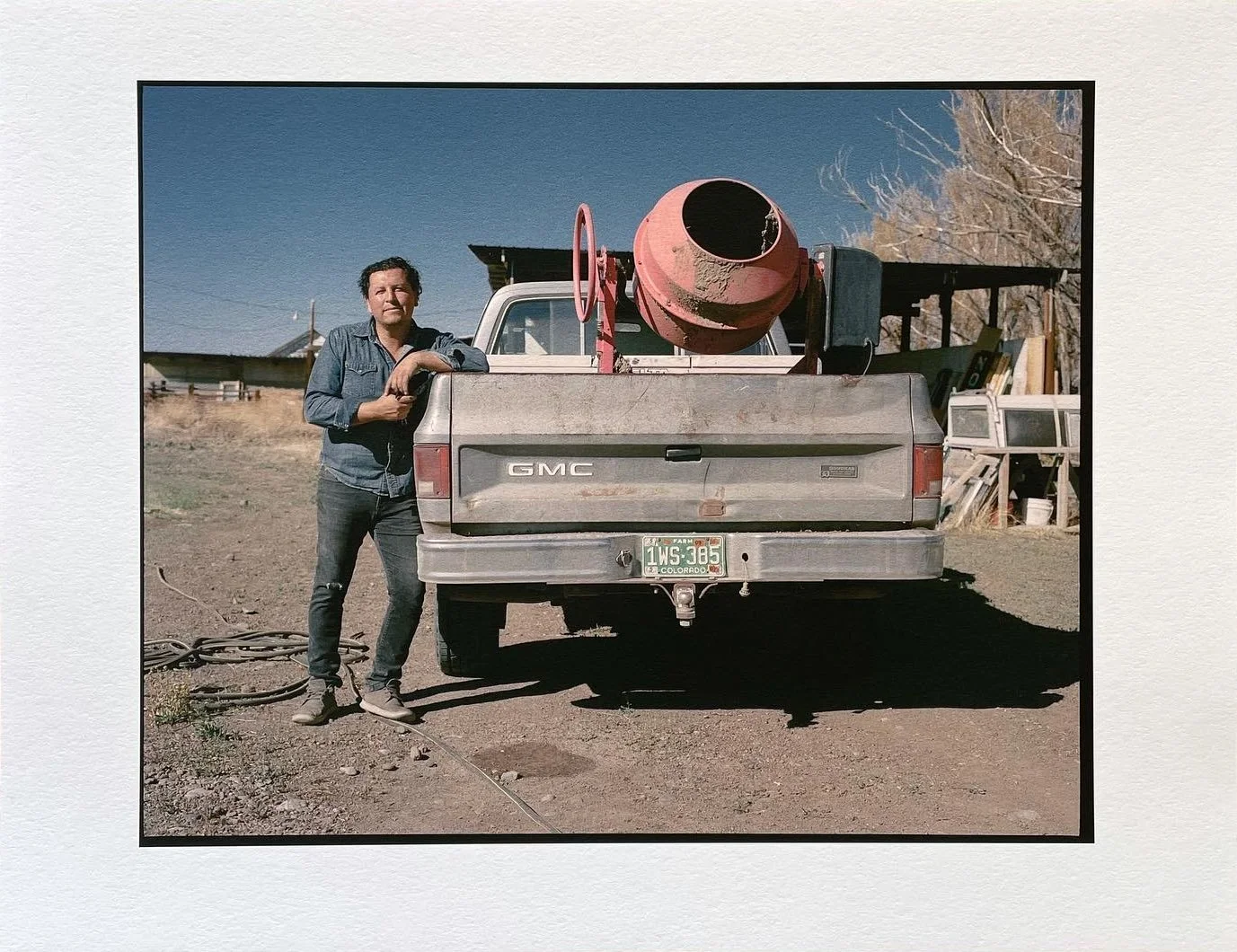
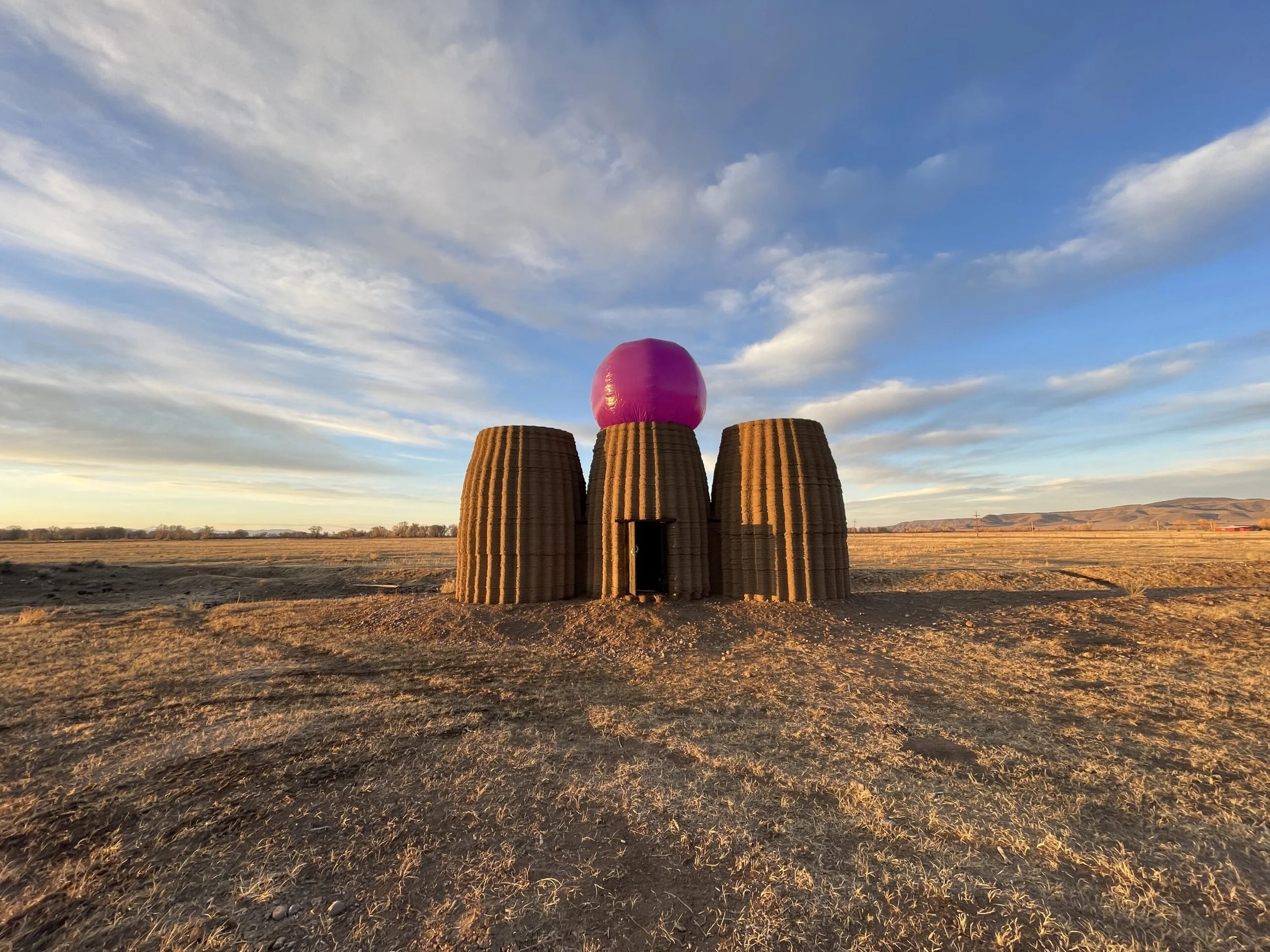
IMAGES & VIDEO ABOVE, LEFT TO RIGHT, TOP TO BOTTOM: ‘ADOBE OASIS‘ (PHOTO BY LANCE GERBER, DESERT X), ‘SKYLOS’ (PHOTO BY EMERGING OBJECTS), ‘MUD FRONTIERS’ (PHOTO BY RAEL SAN FRATELLO), ‘SKYLOS‘ (VIDEO BY EMERGING OBJECTS) , ‘SKYLOS‘ (PHOTOS BY JOSEPH KOLEAN, FROM SHORTFILM SILOS DEL CIELO)
As architecture urgently rethinks how and what we build, Ronald Rael’s work feels especially relevant. His practice brings together two technologies that seem worlds apart: robotics, among the most advanced tools of contemporary manufacturing, and earth construction, one of humanity’s oldest building traditions.
Through robotic 3D printing, Rael is developing new ways of building with earth. The technology dramatically reduces the time and labour traditionally associated with earth construction. Processes that once took months or even years can now be completed in days, opening up new possibilities for earth as a viable material in contemporary architecture.
The material matters just as much as the technology. Earth is abundant, often locally sourced, offers excellent thermal mass, and can return to the ground at the end of a building’s life. Its value extends beyond environmental performance: earth construction carries a rich social and cultural history, connecting architecture to local knowledge and building traditions refined over generations.
Yet despite these advantages, the wider adoption of Rael’s approach faces two seemingly contradictory forms of resistance: the fear of the new and the prejudice against the old. On one hand, robotics evokes unease around automation and unfamiliar construction methods; on the other, earth continues to be associated with fragility, impermanence, and poverty. By bringing the two together, Rael challenges not only how we build, but also the assumptions that shape which technologies and materials we consider worthy of building with.
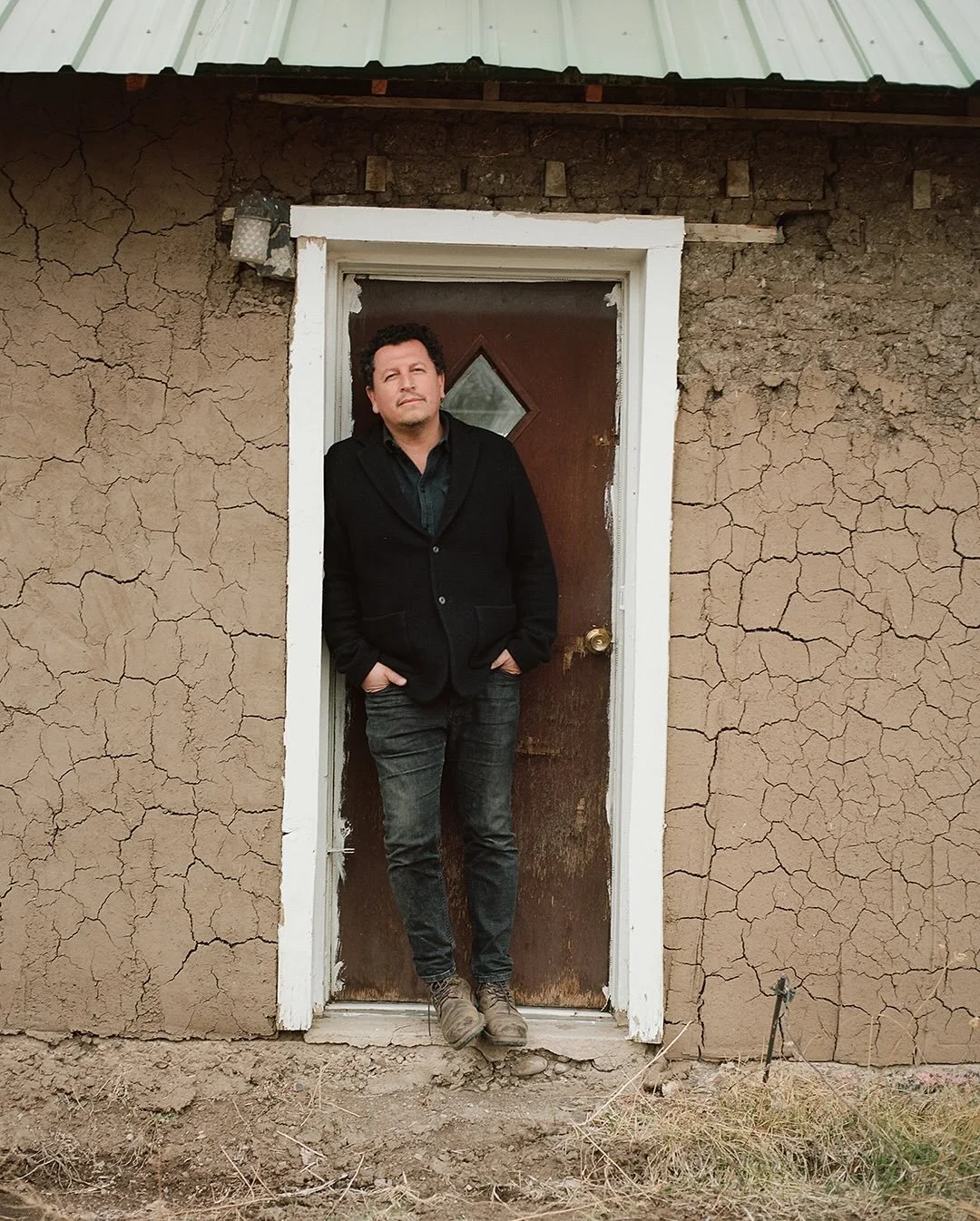
RONALD RAEL © MANDELL / BURKE
Interview by Marcela Spadaro | Edited by Candela De Bortoli | Visual curation by Asiel Nuñez | Images and videos courtesy of Ronald Rael
Your work brings together a technology of our time—robotics, and most notably 3D printing—with an ancestral technology: building with earth. When did you begin to understand your own connection to this material?
Ronald Rael: Since I was a little boy. I’m actually sitting in my great-grandfather’s house right now, which is built out of mud.
Ah, so that’s the house I’ve read about! I saw it mentioned in a few articles.
RR: Yes. And outside I’m making a 3D-printed twin of this hundred-year-old house. It will have exactly the same dimensions, but with a twist. The old house has three rooms; the new one will be one large space, and it will become my studio. So there’s this juxtaposition between the two houses.
And do you currently live in your great-grandfather’s house?
RR: I do. I live in Colorado and work in Berkeley, California, so I go back and forth. I’m very connected to this land.
I’ve noticed the Spanish names of your projects, Casa Covida, for instance.
RR: They come from this place: where I live used to be Mexico. And I try to use the local dialect in the names as well. There’s a project called Casa de la Pompa. People ask me why I pronounce or spell it that way, but that’s the way we say it here. I’m trying to reinforce this dialect because it’s disappearing.
The building I’m showing you now [Ronald walks outside and points his camera towards the 3D-printed twin] is going to be called Casa Cuate. Cuate comes from Nahuatl and can mean a twin. It can also mean a very close friend—mi cuate.
And Casa Covida isn’t really a word. It sounds like COVID, but also like co-vida: cohabitation, or living together. It was a house for cohabitation during COVID-19. That’s where the name came from.
How did Casa Covida come about as a project?
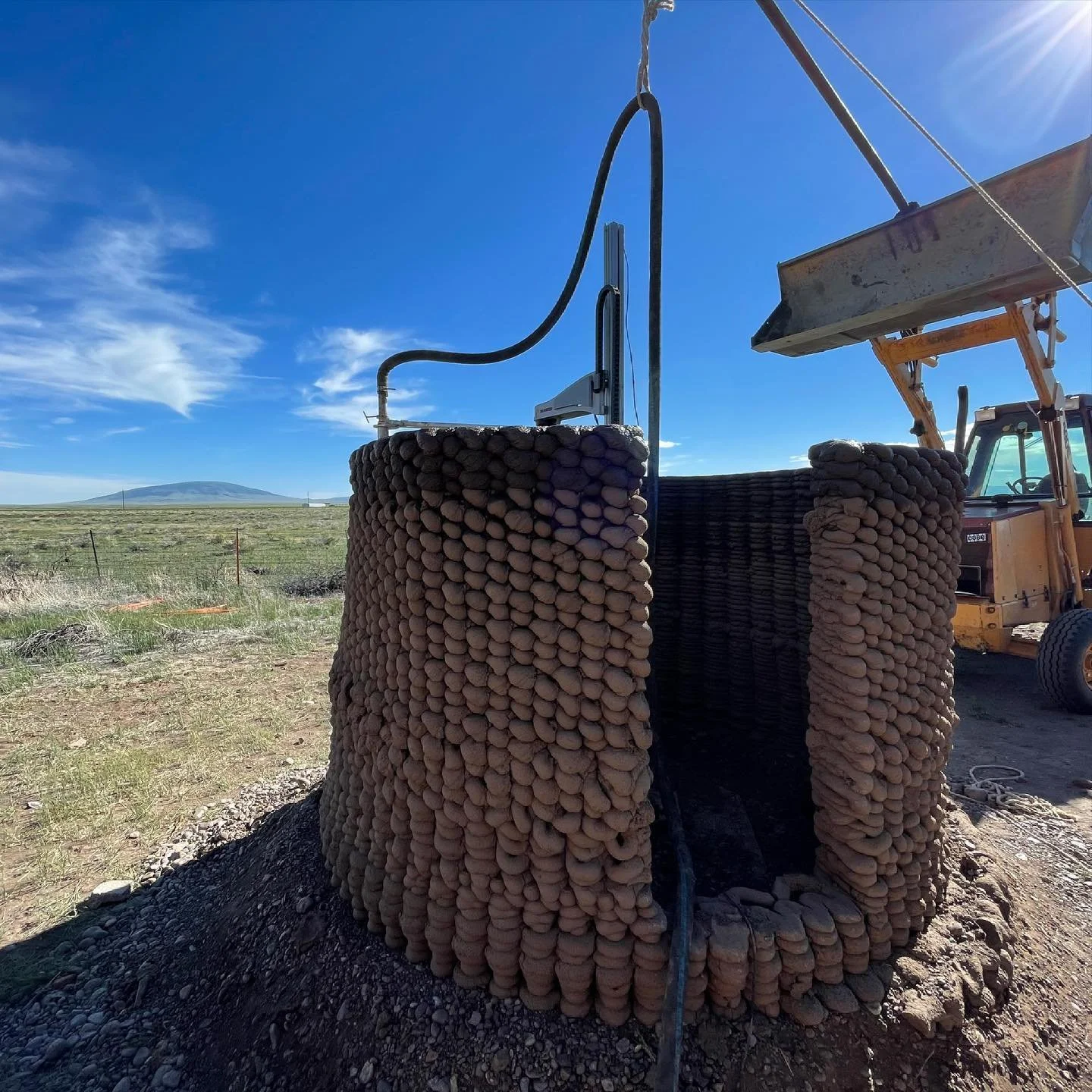
RR: It was 2019, and it was very much about testing the limits of earth 3D printing, of what we could do with the robot. I worked with a company to develop a relatively inexpensive robot that I could take out into the landscape and operate with a phone. It was very simple. Then the university closed during COVID-19, so I couldn’t go to my lab. But I had this robot that I’d been experimenting with, so we brought it out here and basically said, let’s print the biggest thing possible.
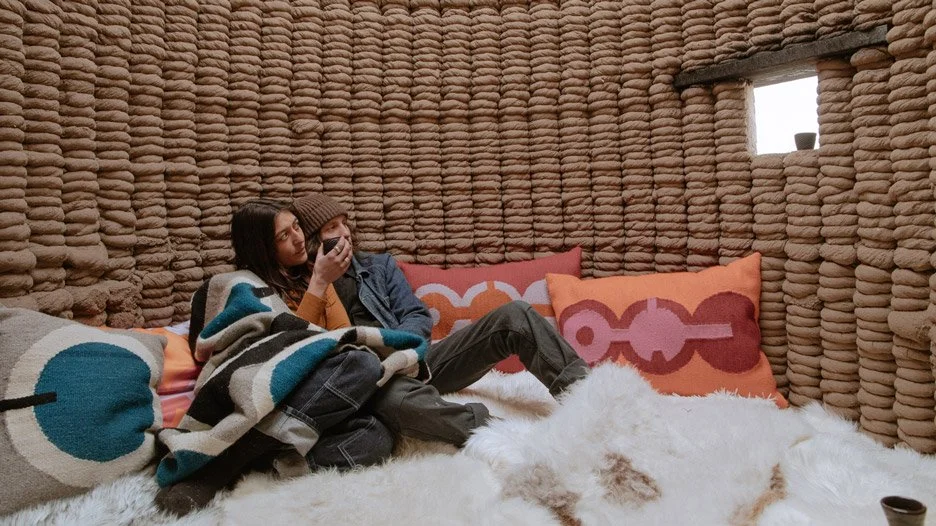
People often ask me why Casa Covida is round, as though there must be some poetic explanation. There really isn’t—which sounds quite anticlimactic. If I wanted to prove that I could make something big, I needed to stretch the robot as far as possible. The circular form did that. It happens to produce this beautiful texture as it goes around, but there’s a lot of pragmatism in the work.
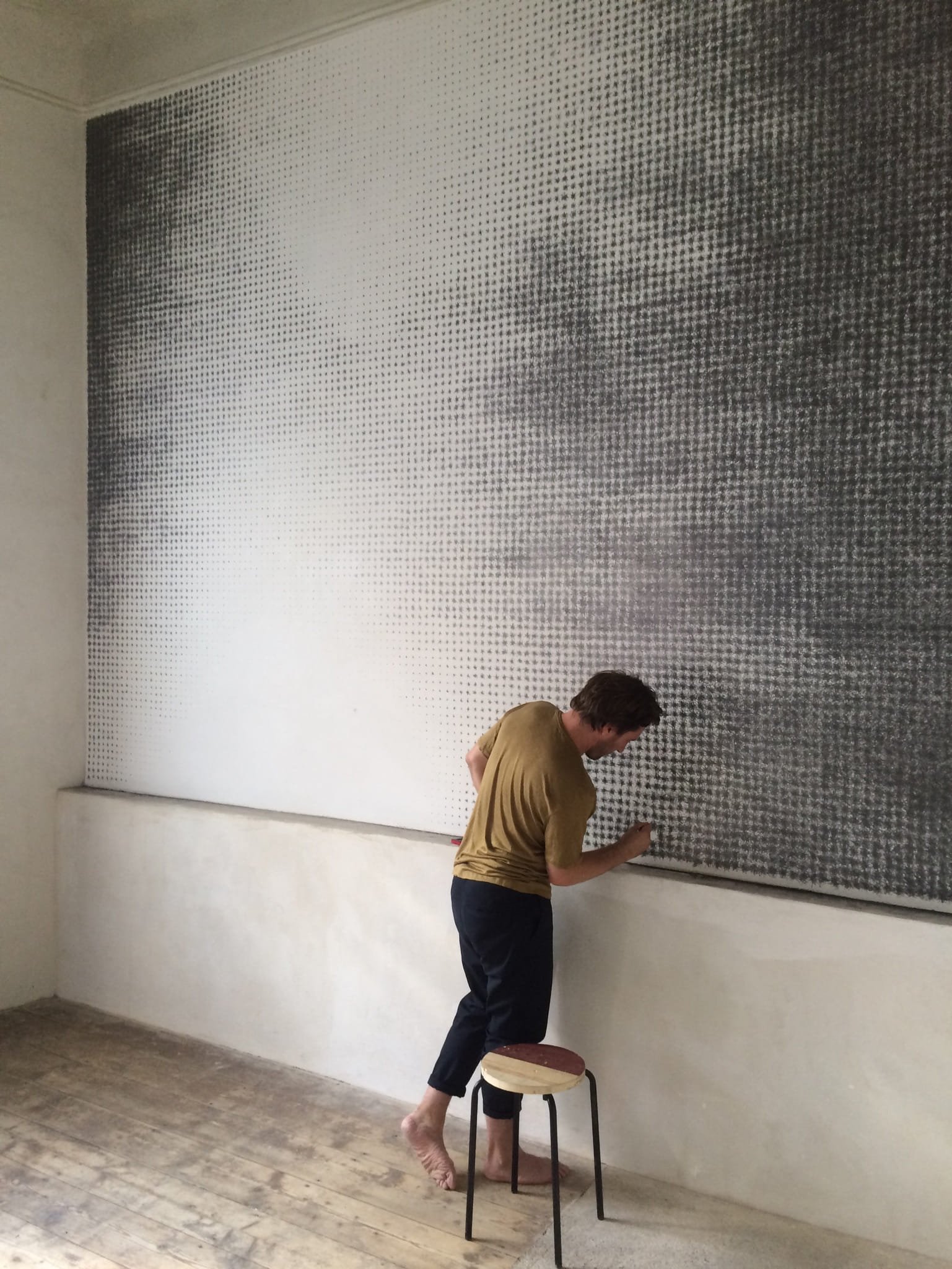
IMAGES & VIDEO ABOVE, LEFT TO RIGHT, TOP TO BOTTOM: ‘CHOREOGRAPHY OF REPRESENTATIONS III’, ‘PAYSAGE EMERGENT’, ‘TRAJECTORIES’ (INSTALLATION PHOTO BY XAVIER GONZALEZ). ALL PROJECTS © EDOUARD CABAY
Why do you think we should build with earth?
RR: Partially, it’s my own passion. I’ve been fascinated by this material since I was a child because I grew up around it. My father, my grandfather, my great-grandfather—for probably a thousand years or more, continuously—we’ve lived in mud buildings. So I’m deeply tied to it.
But I think now, more than ever, we urgently have to consider earth because it has very low embodied carbon; it’s non-toxic, locally available, inexpensive, fire-resistant and insect-resistant; it has thermal mass; and it can ultimately return to the earth.
It also connects us to our humanity—to hundreds of thousands of years of evolution. This is how people on every continent built: with earth, with our hands and feet, together with our communities. I host workshops where I still teach traditional building techniques. Everybody comes together. We eat, we talk, we sing, we make things with mud, we repair and restore buildings, and we talk about history and the future.
Those are all aspects of architecture that I think we’ve become disconnected from. The architect doesn’t build. The builder doesn’t necessarily involve the community. The builder may not know where the materials came from or what their history is. We might live in our own homes without knowing our neighbours. We can live surrounded by latex paint, gypsum board, screws and coatings without having any idea where any of those things came from.
Earth construction can begin to resolve some of those disconnections. With an earth house, we can talk about the connection to the material, our communities, our past, and our bodies.
I want to be romantic about it—or maybe I shouldn’t say romantic, because I actually think I’m quite pragmatic about it. That doesn’t mean I’m anti-contemporary materials or processes. Obviously I’m not—I use robots. I’m interested in how we can use these technologies while reconnecting communities, bodies, materials and architecture. Earth is one way to do that.
I went to a funeral two days ago and saw one of my old high-school teachers. I told him, “I remember when I was a little boy, and my father built your adobe house.” And he said, “I remember that completely. I remember when you buried my daughter in the pile of dirt to make the adobes.” He still has photographs of it. That house is still there. There are all these memories connected to that way of making, and I don’t think that happens very often anymore. Now the contractor puts up a fence: it’s dangerous, you can’t come in, there are liability issues. Those kinds of stories become impossible.
When you say the house is still there, I think that challenges a misconception. A lot of people assume adobe simply washes away in the rain.
RR: Exactly. That’s another thing I’m trying to reinforce: earth isn’t inherently a fragile material. Some of the longest-lasting architecture we have is made of earth.
What would you say robotics adds to earth construction?
RR: Traditionally, it’s an extremely laborious process. If you’re going to make adobe bricks yourself, you might have to begin a year in advance. You make all the bricks, let them dry, stack them, transport them if you’re not making them directly on site, and then perhaps the following year you begin laying them.
With robots, we can take the earth, make the mud and deposit it immediately. We might print a foot or a foot and a half vertically per day. In roughly ten days you can have a ten-foot-high wall—about three metres.
So in that sense, the technology could potentially make earth construction more accessible. How far have you developed the technology?
RR: We’ve perfected the process to a significant degree. I developed one of the earlier robots with a company called 3D Potter. It was a relatively small robot, and it’s still available. I recently made a museum installation with it.
Now I’m using much larger robots. I don’t necessarily need to make the robot itself, because there are companies developing robots for all kinds of purposes. Ideally, robots will wash your dishes; robots will do all sorts of things. They can make the adobe house too. Those companies can advance the machines while we advance the design, the materials, the ideas, the spaces and the forms.

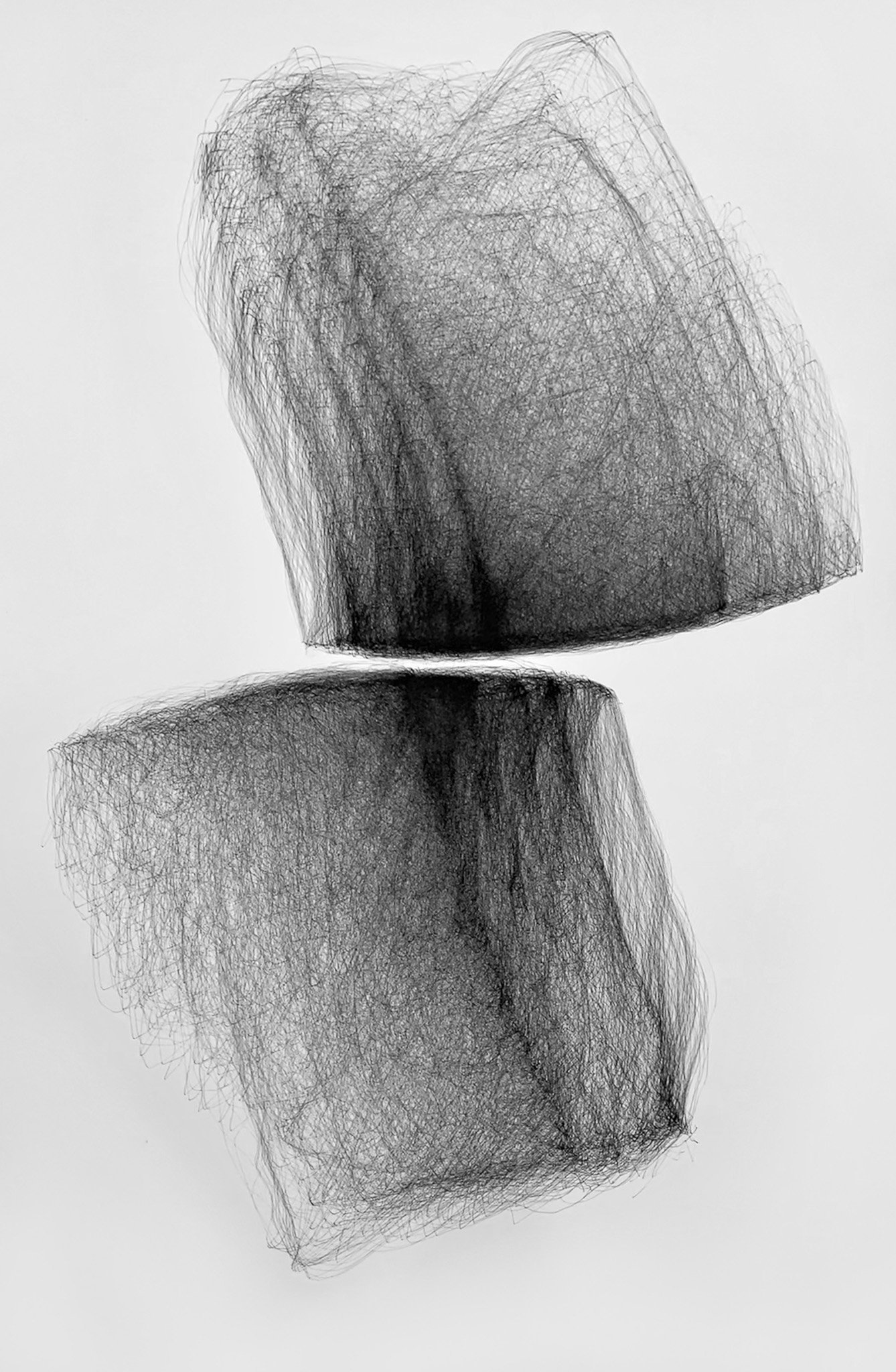
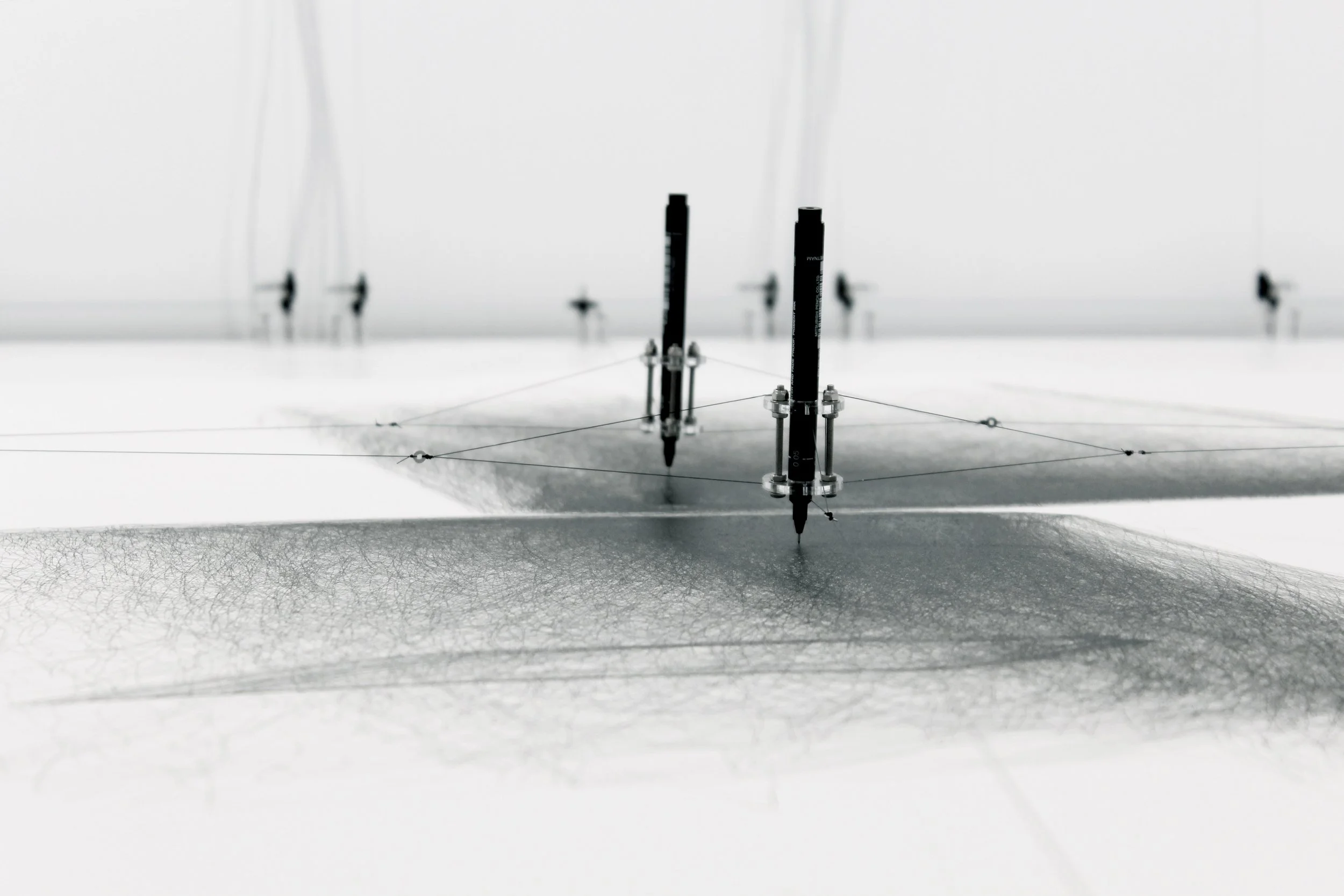


IMAGES & VIDEO ABOVE, LEFT TO RIGHT, TOP TO BOTTOM: ‘SCRIPTS - MACHINE 3‘, ‘CAPTURE ALIVE‘, ‘DESDOBLAMIENTO‘, ‘JULES AND JULES‘, ‘EDOUARD CABAY’S STUDIO’ (PHOTOGRAPHY BY CECILIA DÍAZ BETZ). ALL PROJECTS © EDOUARD CABAY
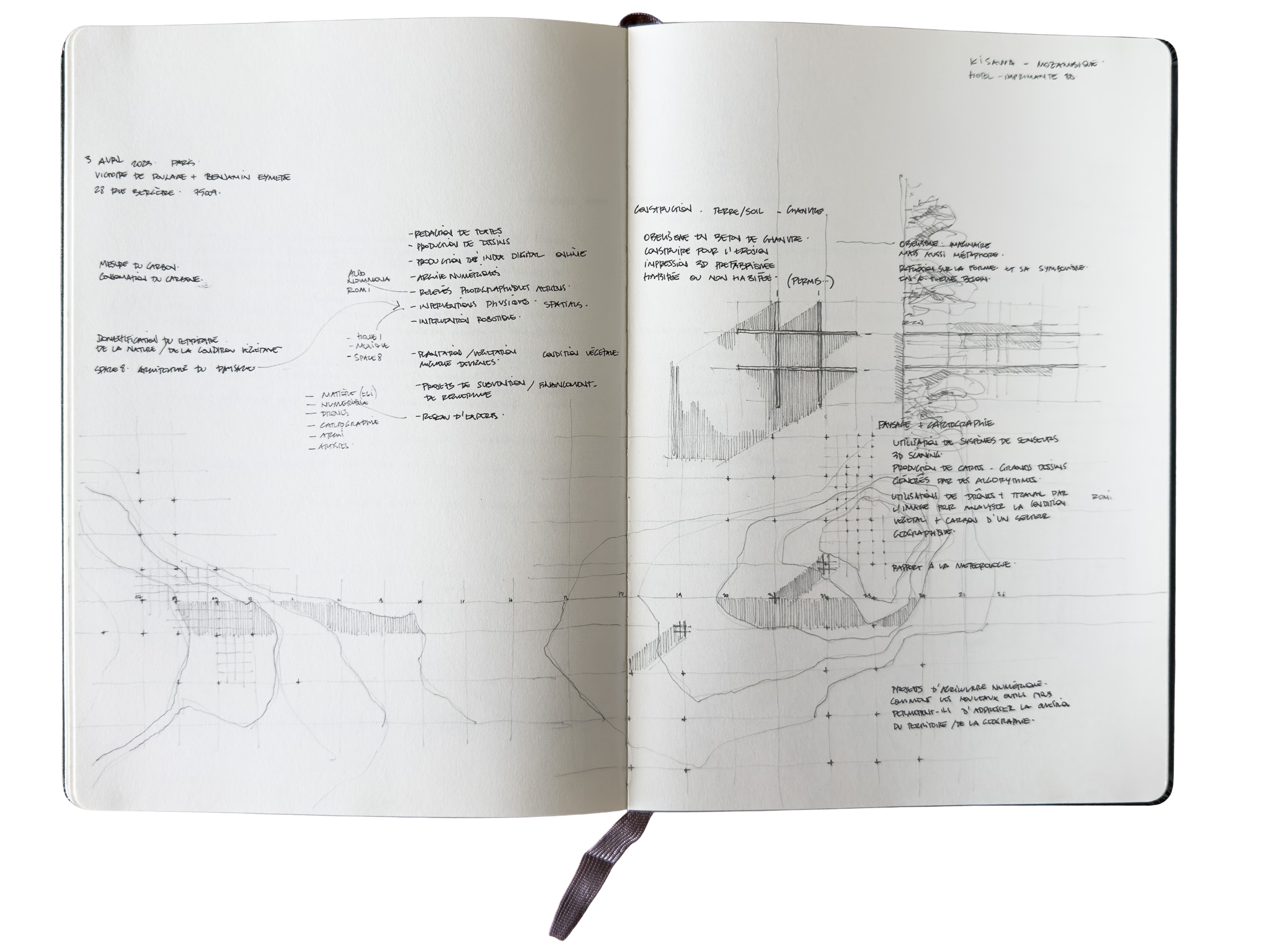
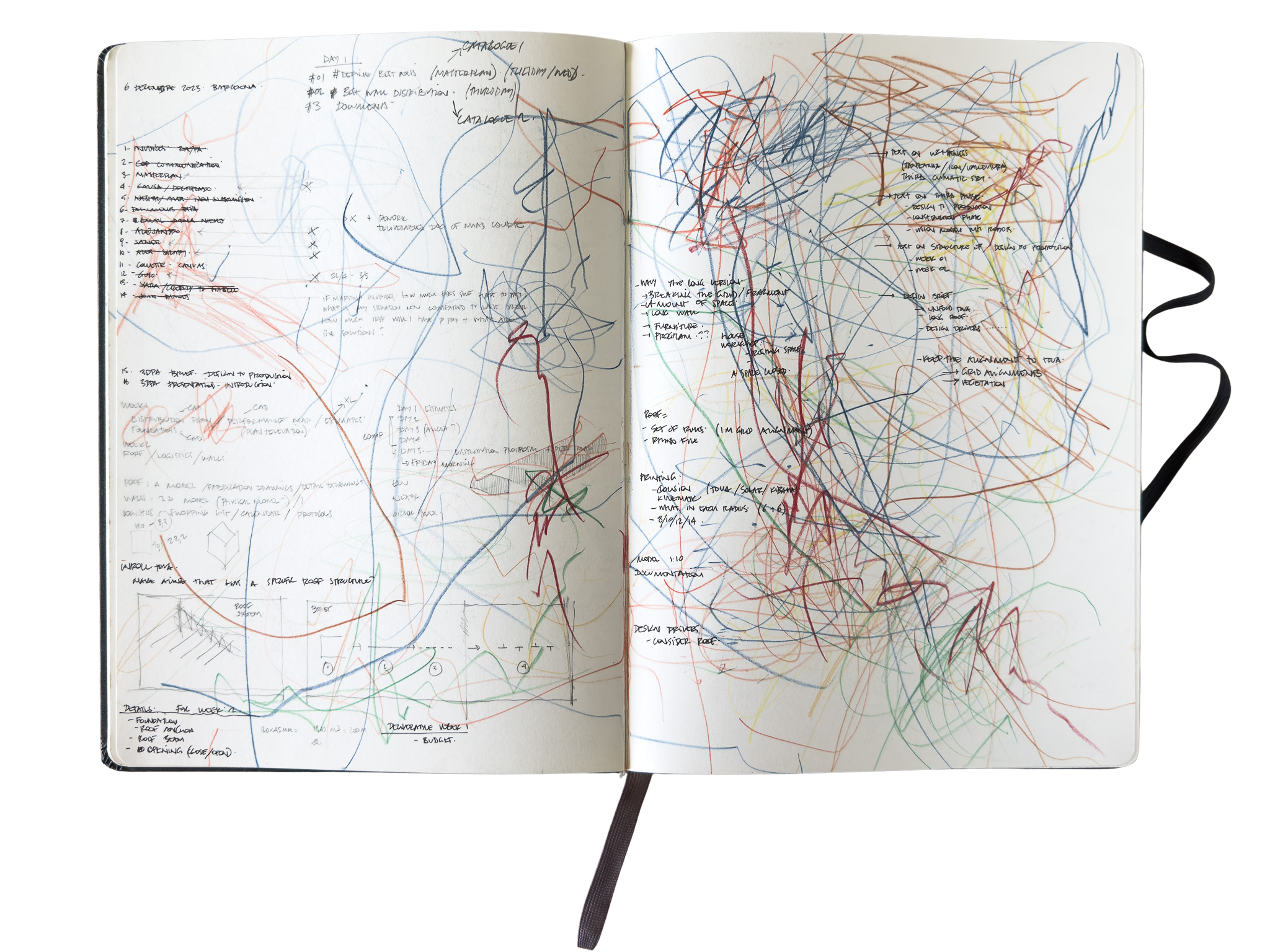
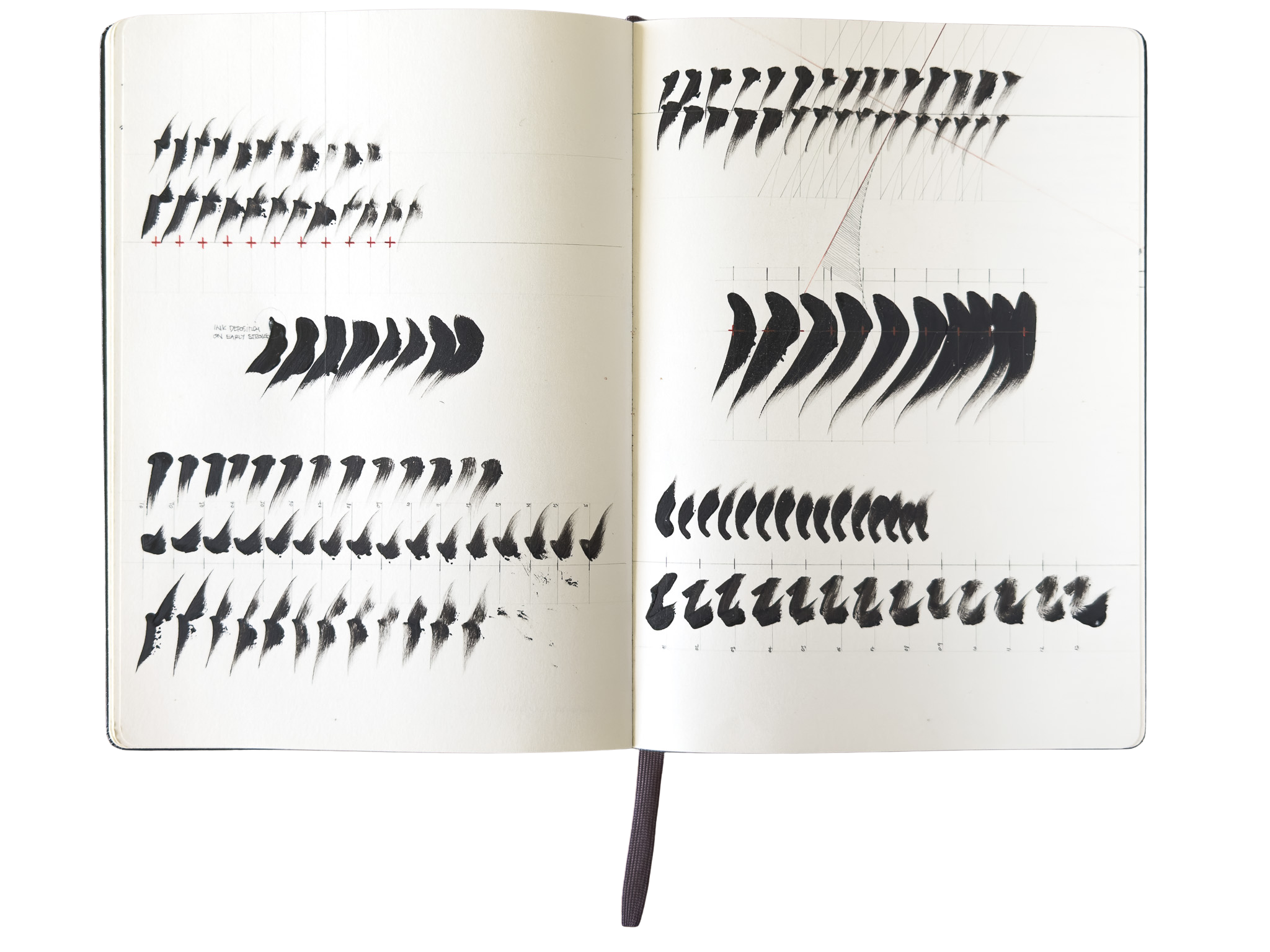
IMAGES ABOVE: ‘SKETCHBOOK’ © EDOUARD CABAY
Could at this point somebody else buy a robot and reproduce what you’re doing?
RR: No, because the robot itself isn’t the process. We’re using an existing robot, but we’ve developed the process around it. There are still very few people doing what we do. More people are becoming interested because they recognise its value. There’s a company in Italy developing machines specifically for 3D-printing earth, for example, and there are schools teaching robotic processes. Then there’s Muddy Robots and my team. We’re interested in bringing earth 3D printing into architectural and professional applications through design.
At the opening of your project Liminal (Harwood Museum of Art of The University of New Mexico, US, 2026) in June this year, you talked about how good it feels to live with mud, as opposed to being surrounded by, for example, painted surfaces. And you were saying this while standing next to these very textured walls. I remember thinking something very banal—what about the practicalities of having these kinds of surfaces inside a house? How do you clean them?
RR: Yes, and your question is connected to why some of the houses we’re designing now are intentionally rendered smooth on the interior. I love the textures. I think they’re really beautiful, and they make a lot of sense on the exterior for several reasons. One is aesthetic, but another is practical: the texture slows erosion. All those ridges act almost like small drip edges, slowing the rain as it moves down the wall.
When I look at some of the more recent houses on the Muddy Robots website, it seems that you’re pushing the technology more than the architecture—they look a bit more conventional. Is that intentional?
RR: Yes, those newer projects are intentionally so. I’m not sure whether I’d call this defending them or justifying them, but part of what I see as my responsibility is to educate and convince. If I want to make an impact in the world by reintroducing earth into twenty-first-century construction, it’s going to take a lot of convincing. In much of the Western world, people have very strong preconceptions about earth architecture. I would love to make houses like Casa Covida and some of the more experimental projects. But the majority of people aren’t ready for those possibilities.
An everyday person needs to be able to look at a house and say, “I can imagine myself living there.” I don’t think most people can yet imagine themselves living in some of the more artistic projects. I’ve spent a decade showing people this research—work that is beautiful and textural and fantastic—and they ask, “What are you trying to do with this? Are you trying to be an artist?” And yes, that’s one avenue. But I’m also trying to reinforce the idea that earth can make architecture in a new way.
It has been very difficult for people to imagine that what they see in Casa Covida could actually become a house. So these more conventional proposals are intended to allow somebody to engage their imagination and see themselves living within earth architecture.
I understand. So you’re being quite deliberate about where you push the boundaries.
RR: Exactly. I’m pursuing two avenues of exploration. One can be very spatial, very material and phenomenal. The other can be more conventional. My long-term aspiration is that eventually those two things begin to converge in the public imagination. Innovations require time.
Right now, understandably, you’re concerned because these tools appear to be mirroring what already exists. But these are flexible tools. They don’t necessarily require the same forms of mass production. So I think they can migrate towards customisation and become open to forms of expression that we’ve never seen before.
The Industrial Revolution moved architecture towards homogenisation. I think automated fabrication could move us towards greater heterogeneity. Towards complexity.
I’ve made it very clear to my team that I want to maintain both, because they can influence one another. I think that relationship can allow us to make better architecture and bring architecture into the company. But we have to allow the work to evolve.
If we begin only with the most complex forms of architecture, we risk encountering the same problem that most architects encounter: there simply isn’t enough work.
We can talk about Zaha Hadid or OMA and that very particular one percent of architectural practice. But one of my architectural heroes is Hassan Fathy [Egyptian architect who worked to reestablish the use of adobe and traditional mud construction]. A fundamental part of his ethos was: my clients are the other 99 percent of the planet. So let’s make good architecture for the 99 percent.

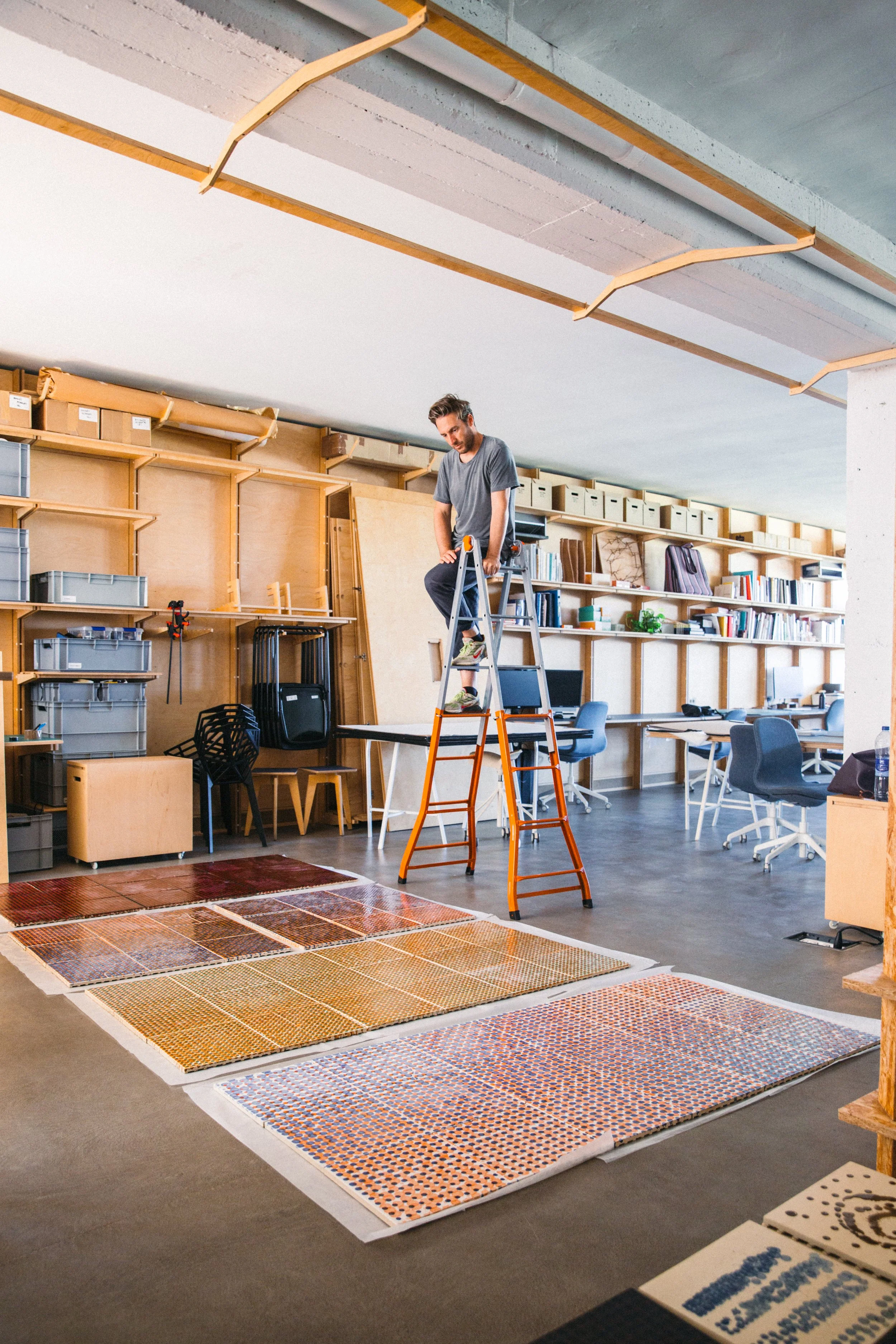


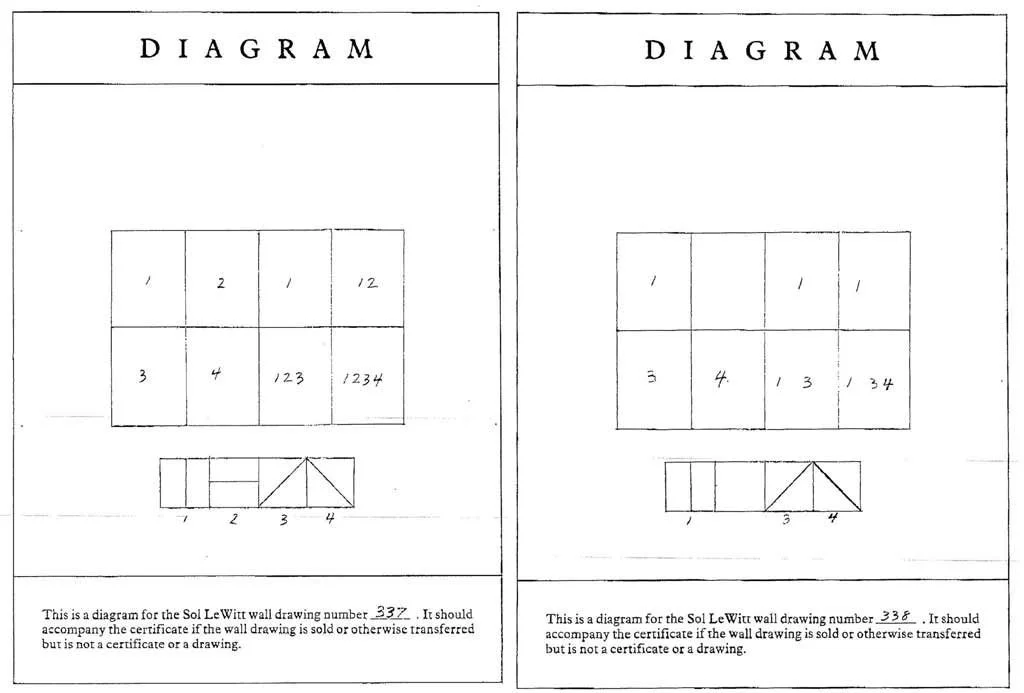
Sol Lewitt
IMAGES & VIDEO ABOVE, LEFT TO RIGHT, TOP TO BOTTOM: ‘DROPS’ (VIDEO & FABRICATION PHOTO BY NONAME DEPARTMENT - PHOTOS OF TILES AT CABAY’S STUDIO BY PIT SIEBENALER), ‘THE ALBERTI DRAWING‘. ALL PROJECTS © EDOUARD CABAY
I’d like to shift slightly and talk about your work in Marfa, Texas—the cultural destination just north of the US/Mexico border—because I see that as connected to your wider practice even though it doesn’t use the 3D-printing technology.
RR: I think about Prada Marfa [a minimalist sculpture built in 2005 that replicates the luxury boutique] as a kind of immigrant architecture. It has sometimes been treated in Marfa in a way that resembles the way immigrants are treated: there was an established idea of what Marfa was, what belonged there and what didn’t, particularly in the context of art.
Donald Judd had helped establish a particular idea of art in Marfa—minimalism, a certain aesthetic—and then this new thing arrived that wasn’t easily categorised. It wasn’t exactly land art, although perhaps it could fit there. It wasn’t minimalism. It contained critique. It had these projections of capitalism, but it was also a spoof. It was all these strange things simultaneously. And on the night of the opening, the building was attacked.
I hadn’t heard of that.
RR: Yes. It was vandalised. I think there’s a mentality where somebody decides something doesn’t belong and then attacks it. People can apply that same mentality to other people when they decide those people don’t belong.
The vandalism also created all kinds of speculation. People wondered who had destroyed Prada Marfa. Was it the contractor? The artists? The architects? It affected relationships, and it cost a lot of money to restore.
What was your role in the project?
RR: I was involved primarily in executing it, but we embedded ideas in the project, particularly around making it from adobe. There was a clear juxtaposition between Prada and what I think the artists understood as a kind of ‘non-place’—the desert.
But for me, those desert environments are not a non-place. They’re incredibly rich culturally and historically. This is an inhabited landscape along the US–Mexico border, rich with culture, biodiversity and politics.
So the artists could see the binary—Prada in the desert—and I agreed with that, but I also wondered: how can we weave the complexity of the culture and the place into the building itself? It isn’t only a juxtaposition between wealth and poverty. There’s the United States and Mexico, Mexican and American cultural identities, and the military presence.
The adobe in Prada Marfa, for example, is laid in cement mortar. It seems like a very simple construction detail, but it references the way the US government built military buildings after the Mexican–American War. So Prada Marfa combines adobe—let’s call it, for the sake of the argument, a Mexican material—with concrete, which we could similarly call an American material. Those two materials collide. There’s resistance between them. If you visit buildings in Marfa constructed in similar ways, you can see that tension physically. We wanted Prada Marfa to contain that architectural tension both conceptually and structurally.


IMAGES & VIDEO ABOVE, LEFT TO RIGHT, TOP TO BOTTOM: ‘TEN TO ONE’ (PHOTOS BY MENASA EMIRATI DESIGN PLATFORM, EXPO DUBAI 2020), ‘SCORE FOR 50‘, ‘EDOUARD CABAY’S STUDIO‘ (PHOTO BY CECILIA DÍAZ BETZ), ‘CHOREOGRAPHY OF REPETITIONS‘, ‘THINGING‘ (PHOTO BY GUNNAR KNECHTEL). ALL PROJECTS © EDOUARD CABAY
What impact do the cultural associations attached to mud construction have on your practice and what you’re trying to achieve?
RR: I think there are stereotypical cultural associations attached to earth architecture. I say “stereotypical” deliberately. Prada Marfa itself is dealing with stereotypes, but that’s different from accepting those stereotypes as reality.
People say, “Mud buildings are in Africa,” or “Mud buildings are for poor people,” or “Mud buildings immediately fall apart when it rains.” Those statements can contain fragments of truth while also being completely misleading. Poor people do live in earth architecture, but so have presidents. Ronald Reagan lived in an adobe house. It was known as the Western White House, and I think it was already more than a hundred years old when he lived there. Before that, it had been the home of a Mexican politician. Across the world you find earth construction used by every socioeconomic group, in very cold climates and very hot climates, in very new buildings and very old buildings.
Part of my job is to educate people and demonstrate through design that earth can be an accessible material for everybody.
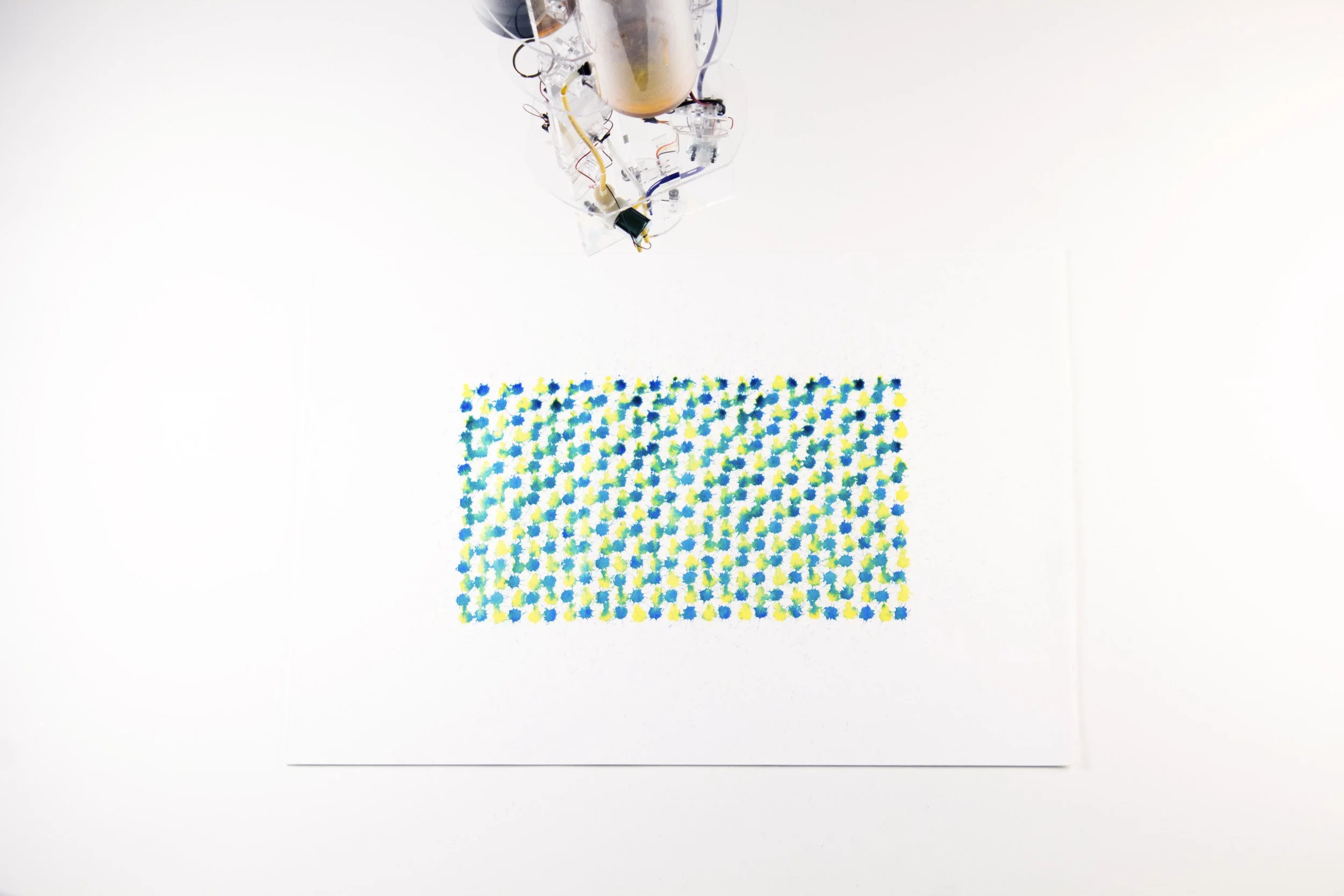


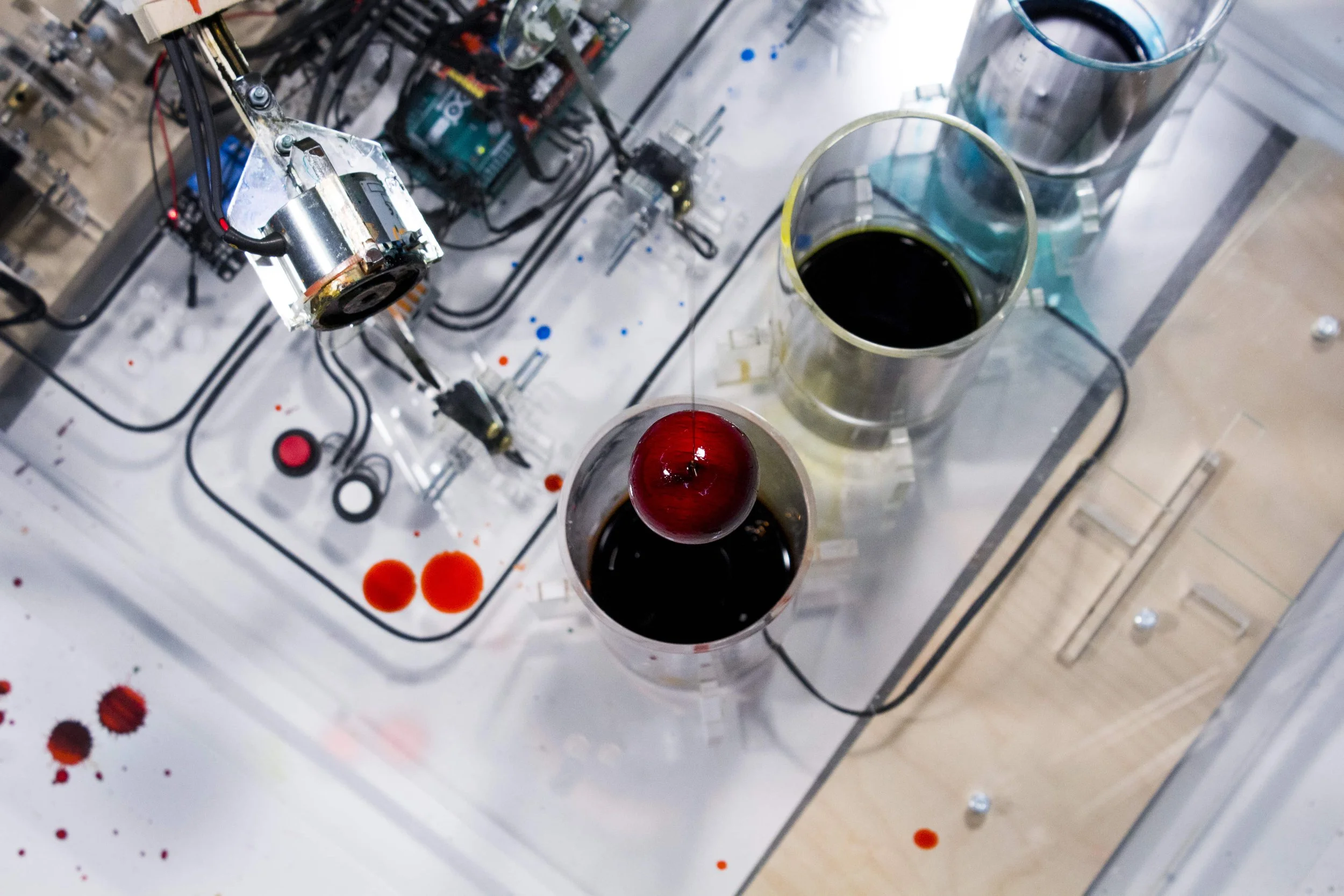
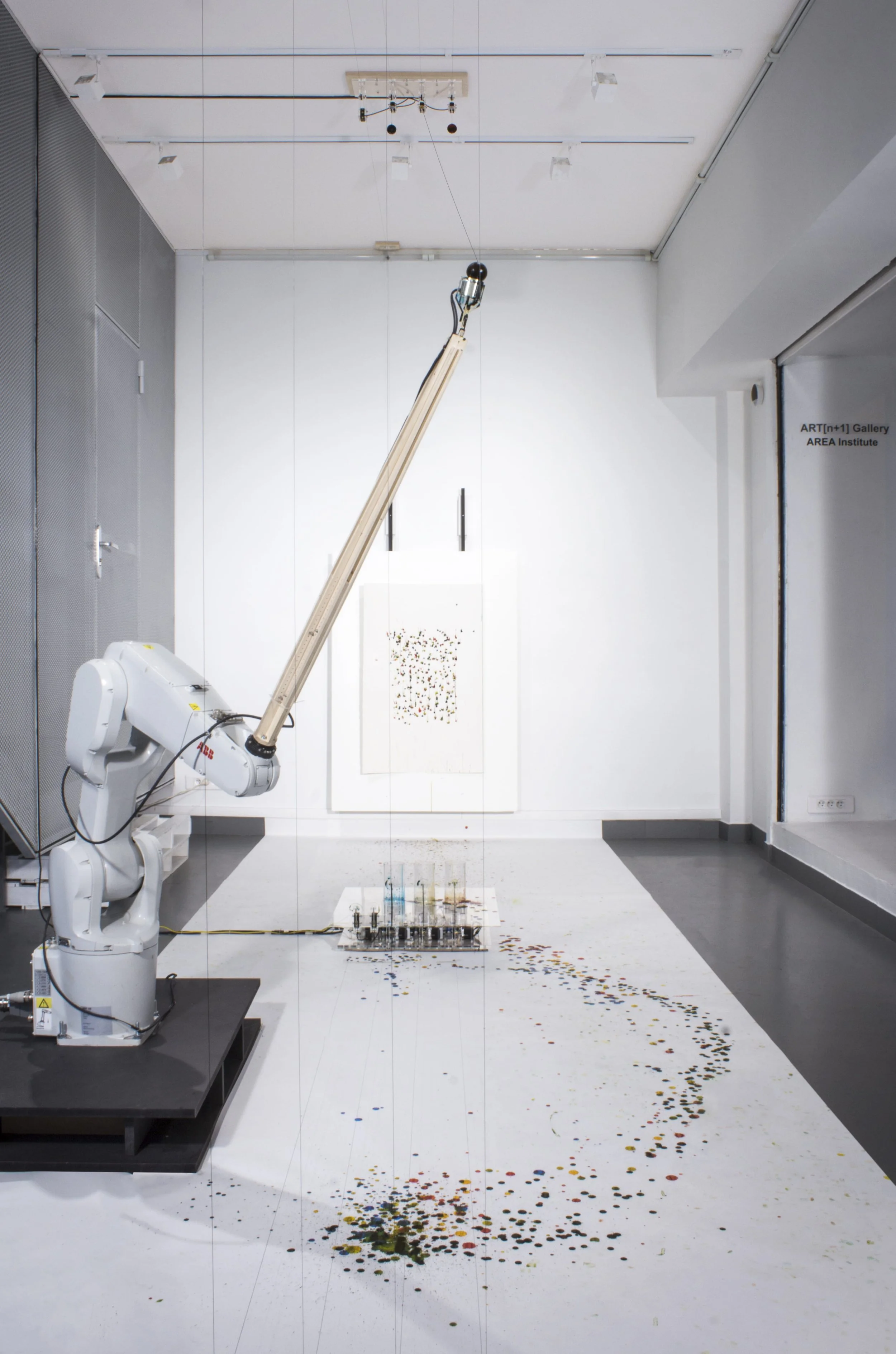
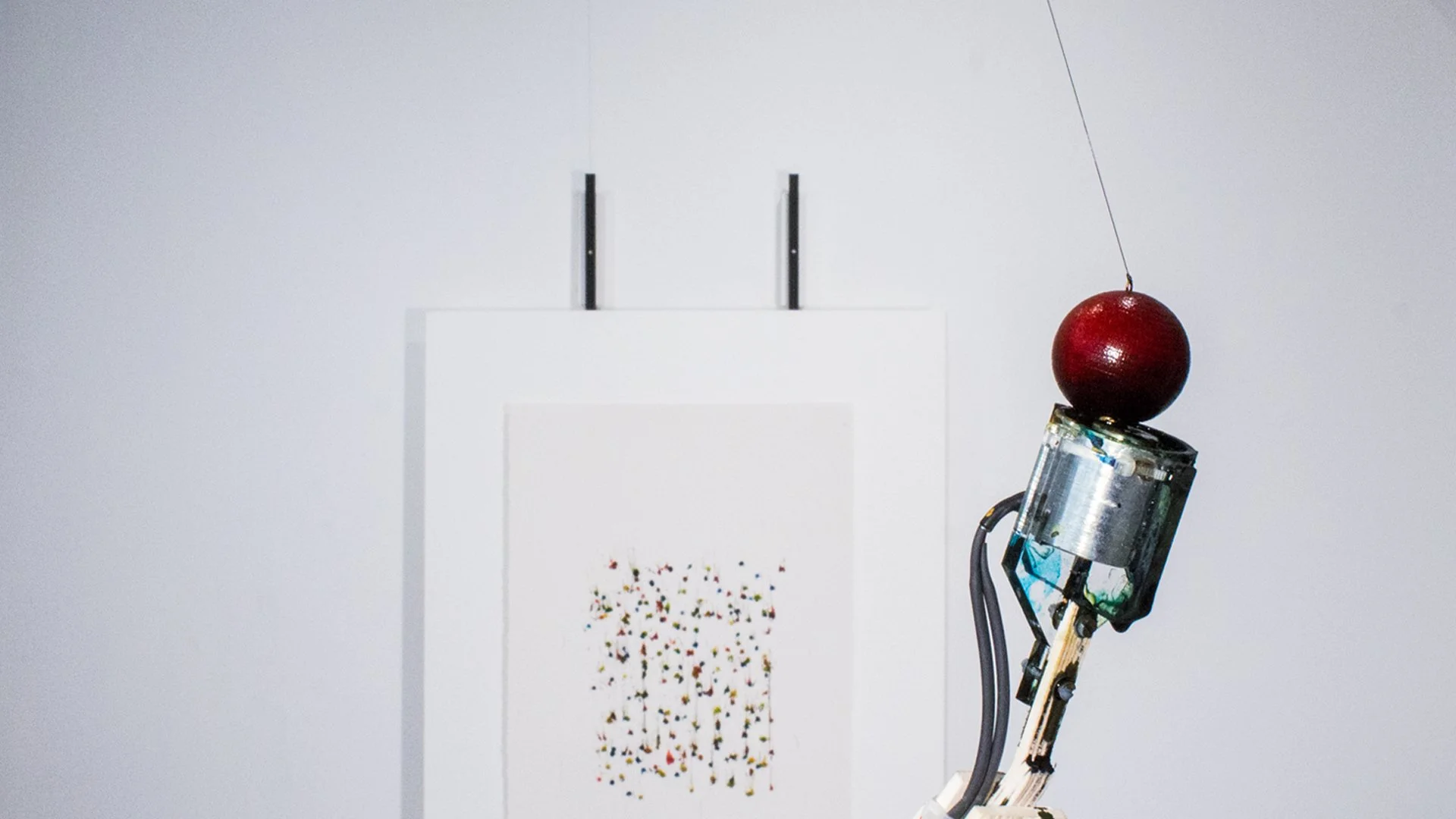
IMAGES & VIDEO ABOVE, LEFT TO RIGHT, TOP TO BOTTOM: ‘FIRST DEVIATION‘ (PHOTOS BY PETER MAGNUS), ‘COREOGRAPHY OF REPETITIONS III‘, ‘SECOND DEVIATION‘, ‘THINGING‘. ALL PROJECTS © EDOUARD CABAY
RONALD RAEL PROJECTS COLLABORATORS:
Casa Covida: Alexandre Dubor. With the collaboration of IAAC.