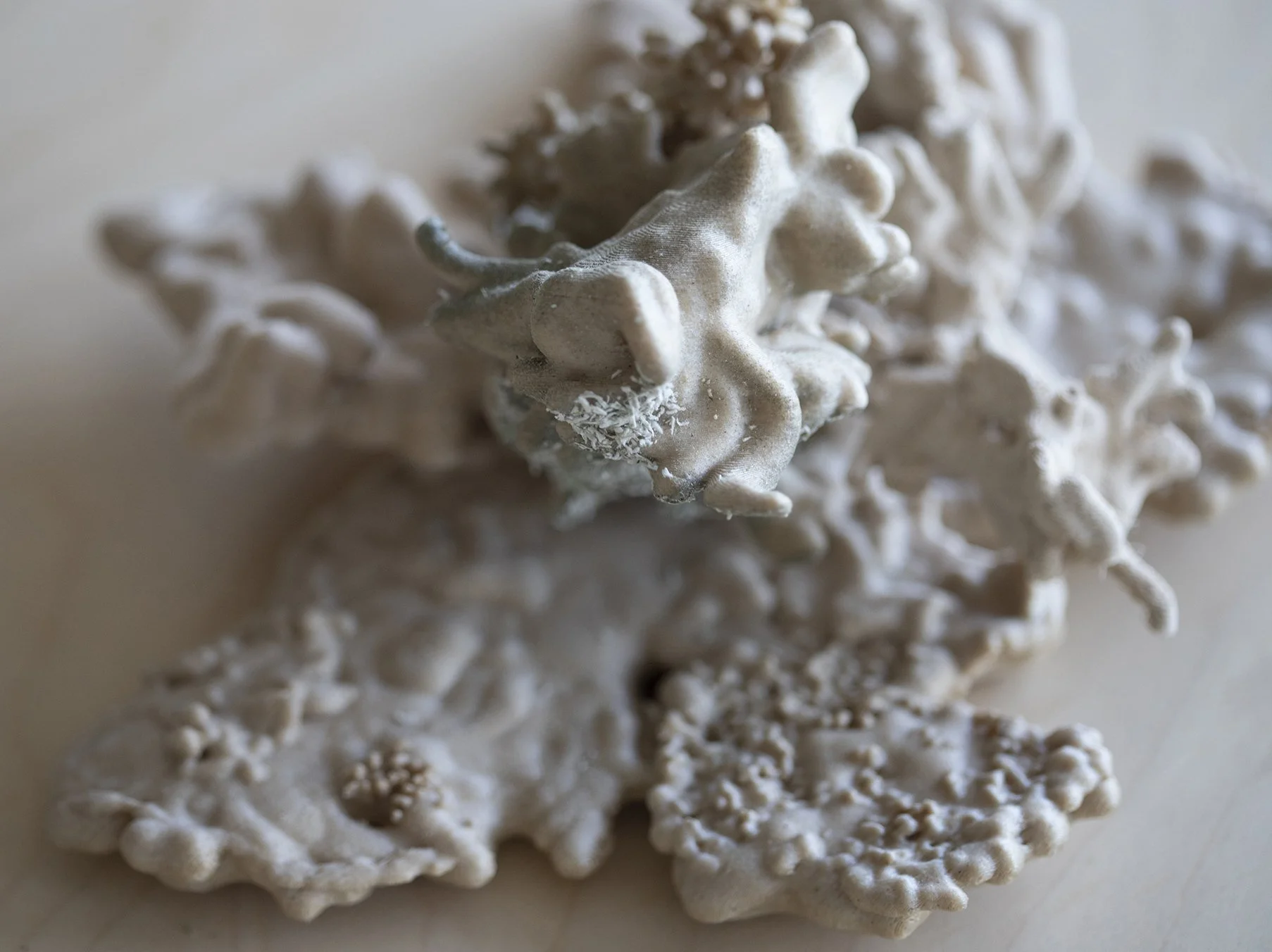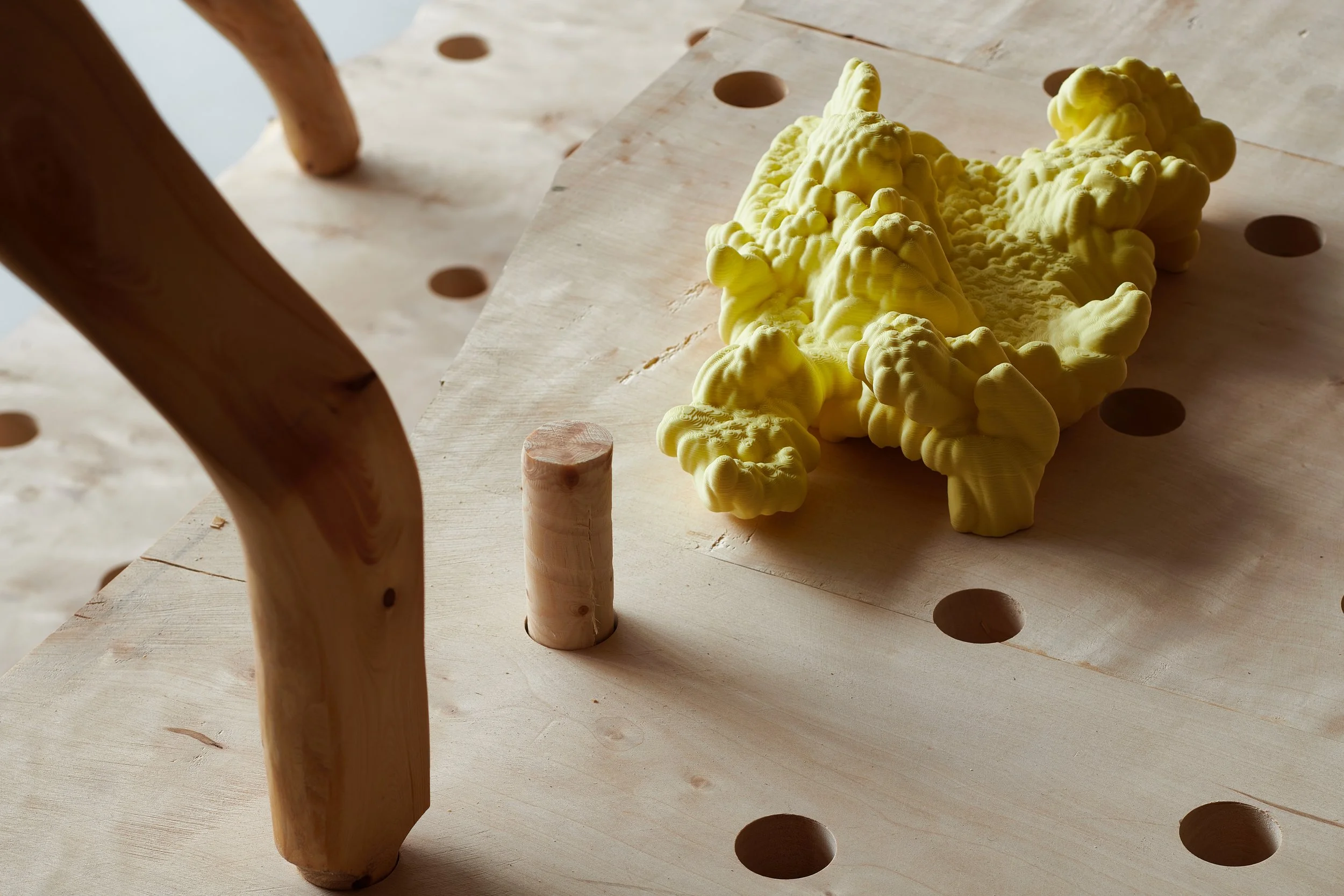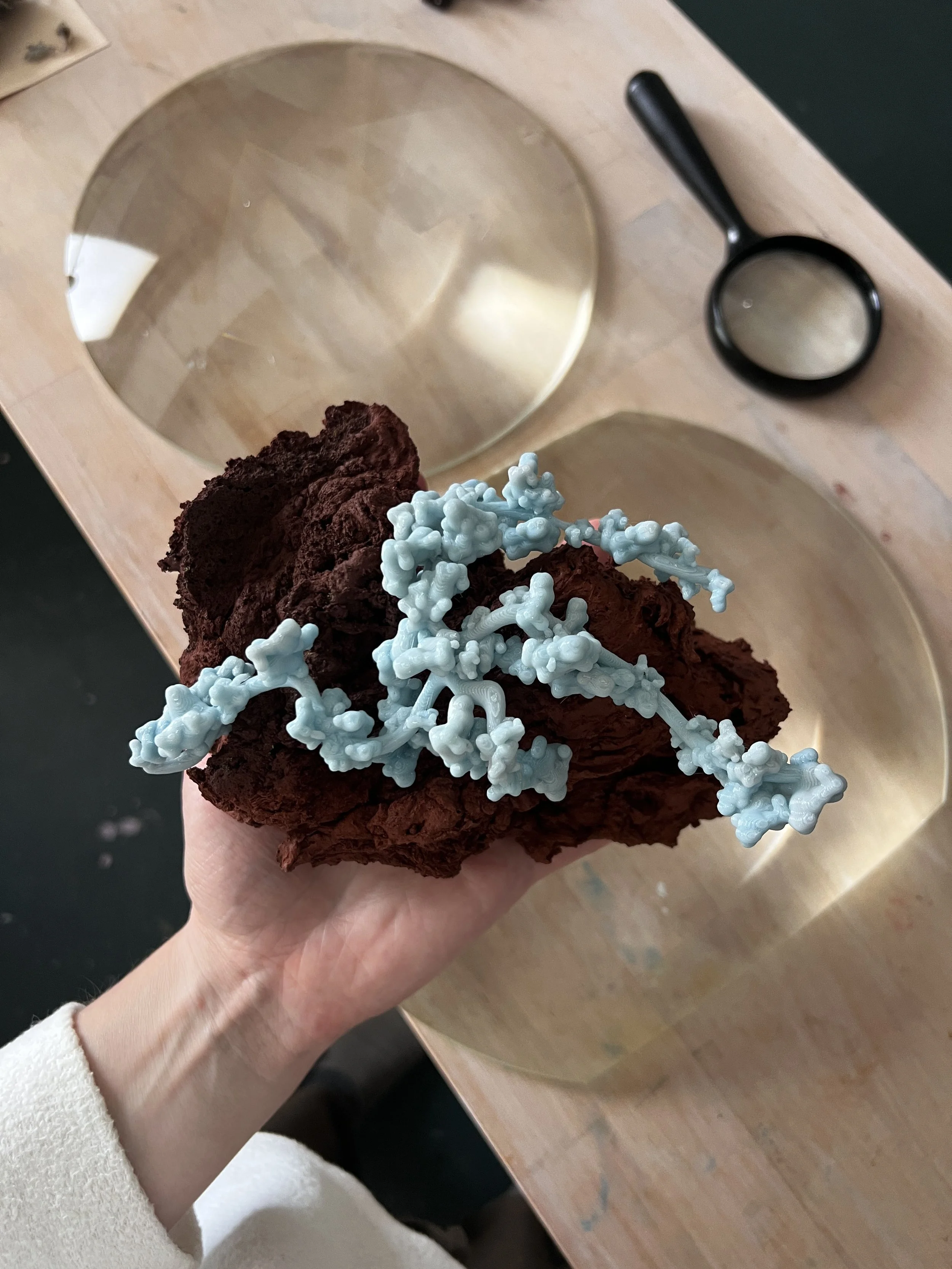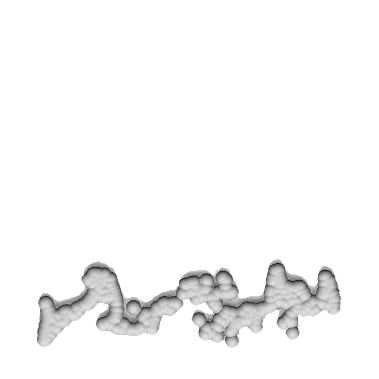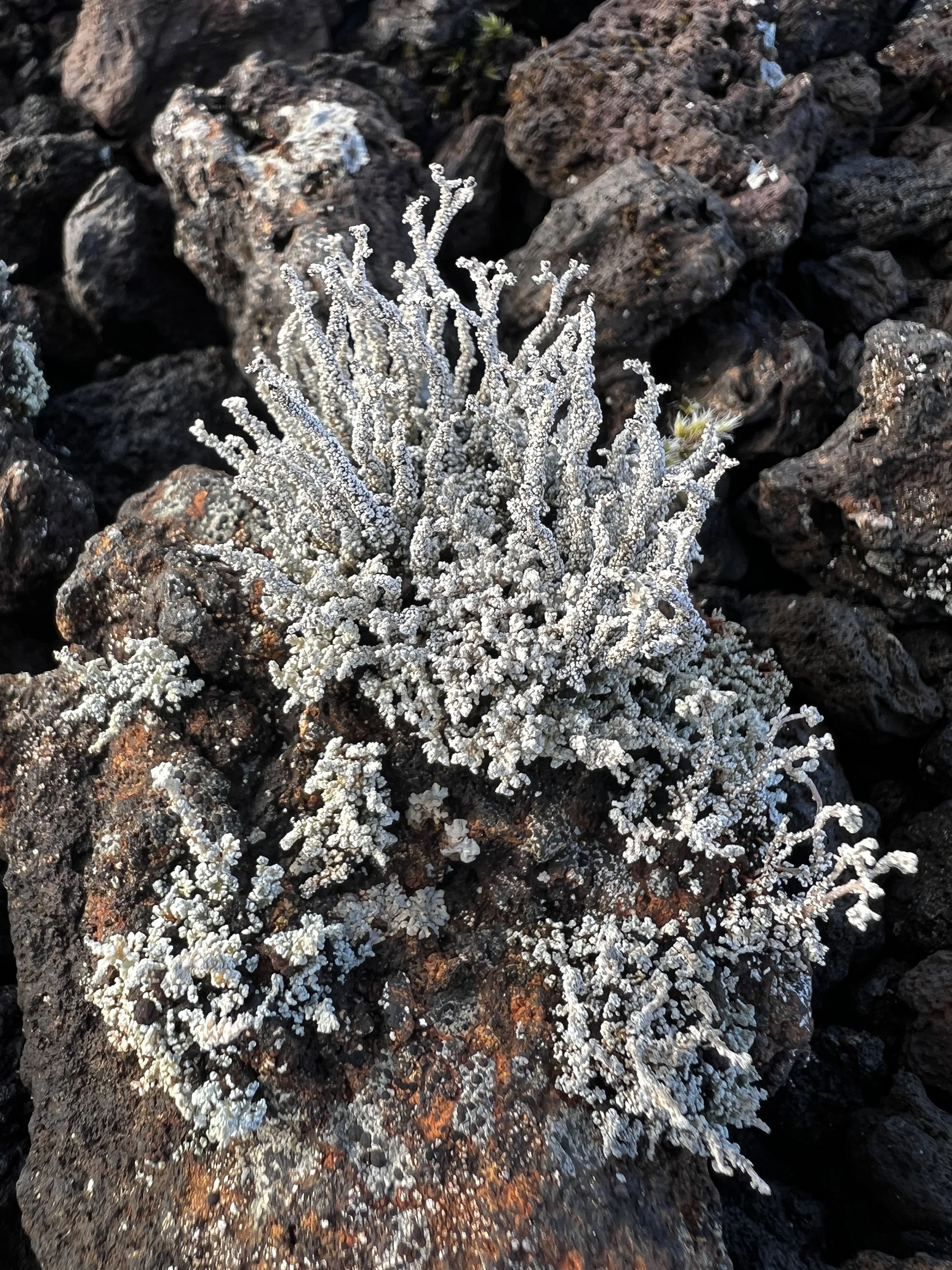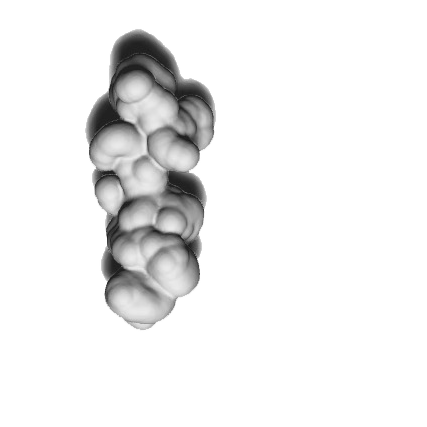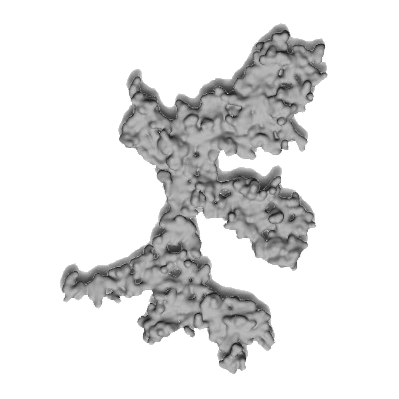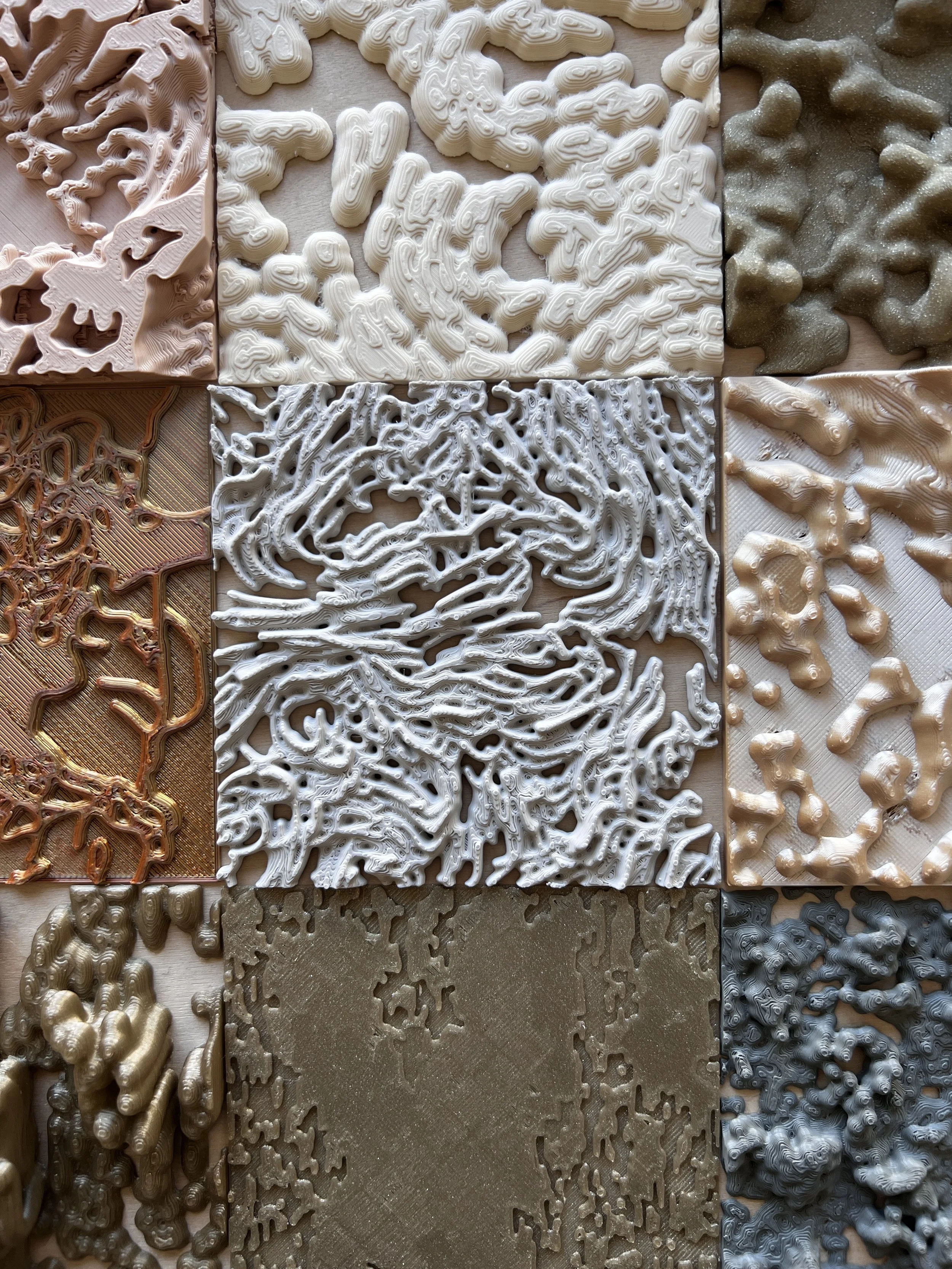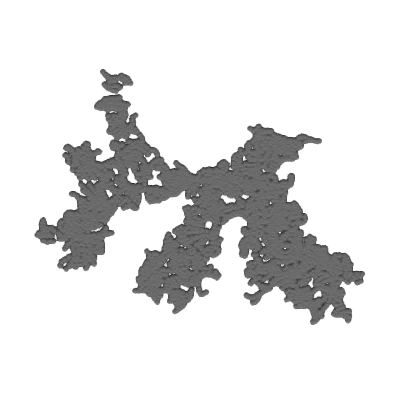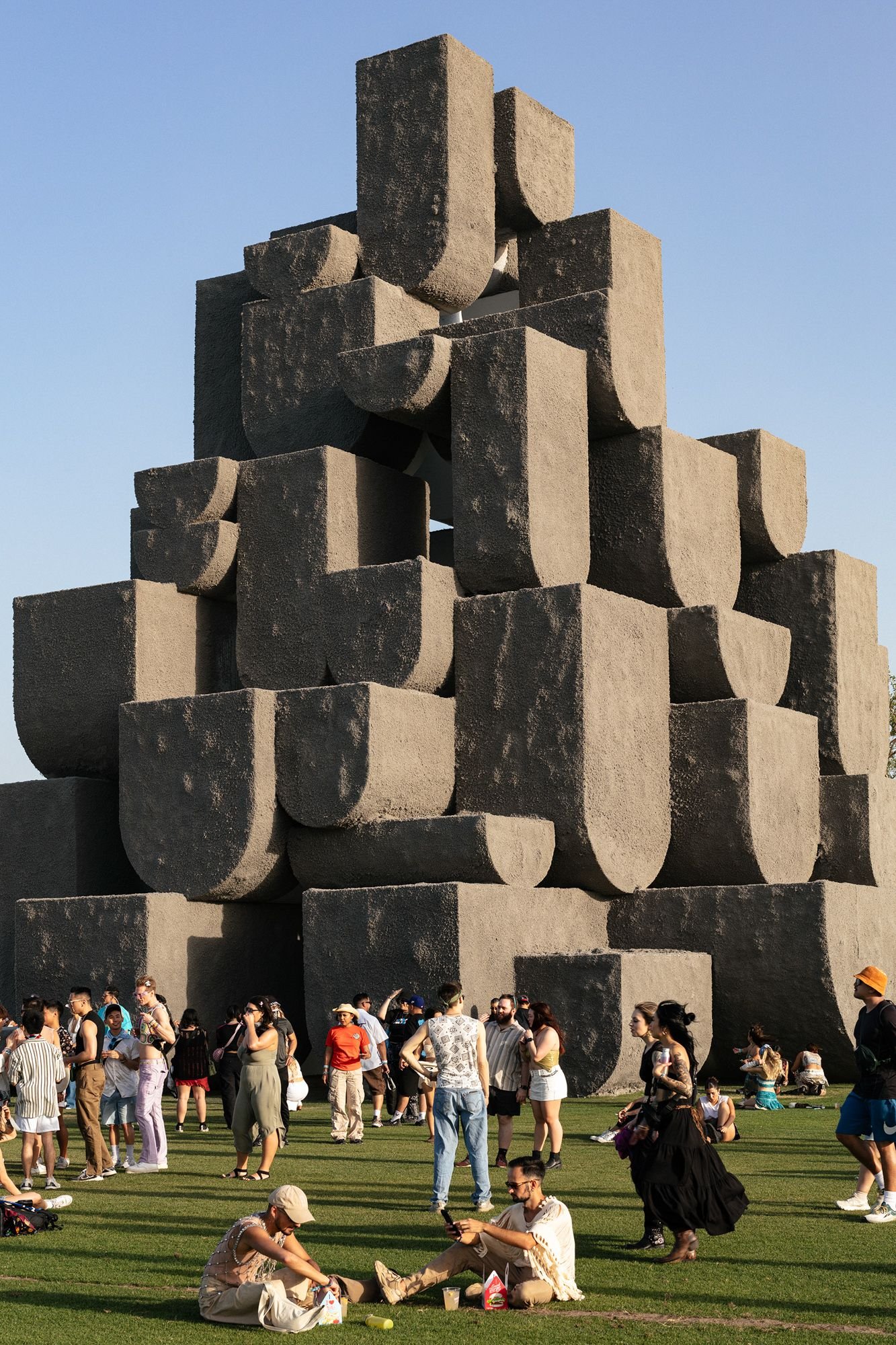
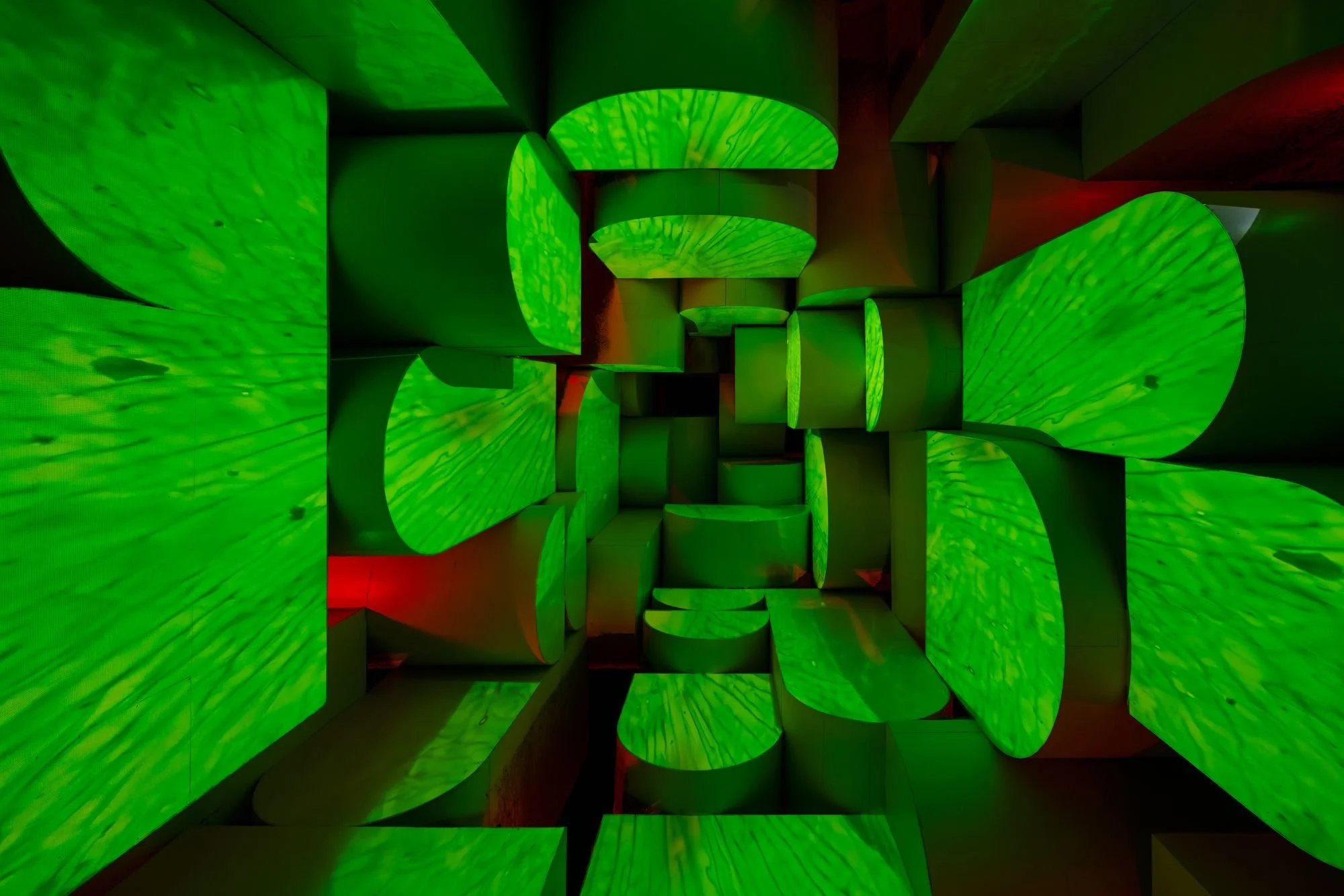
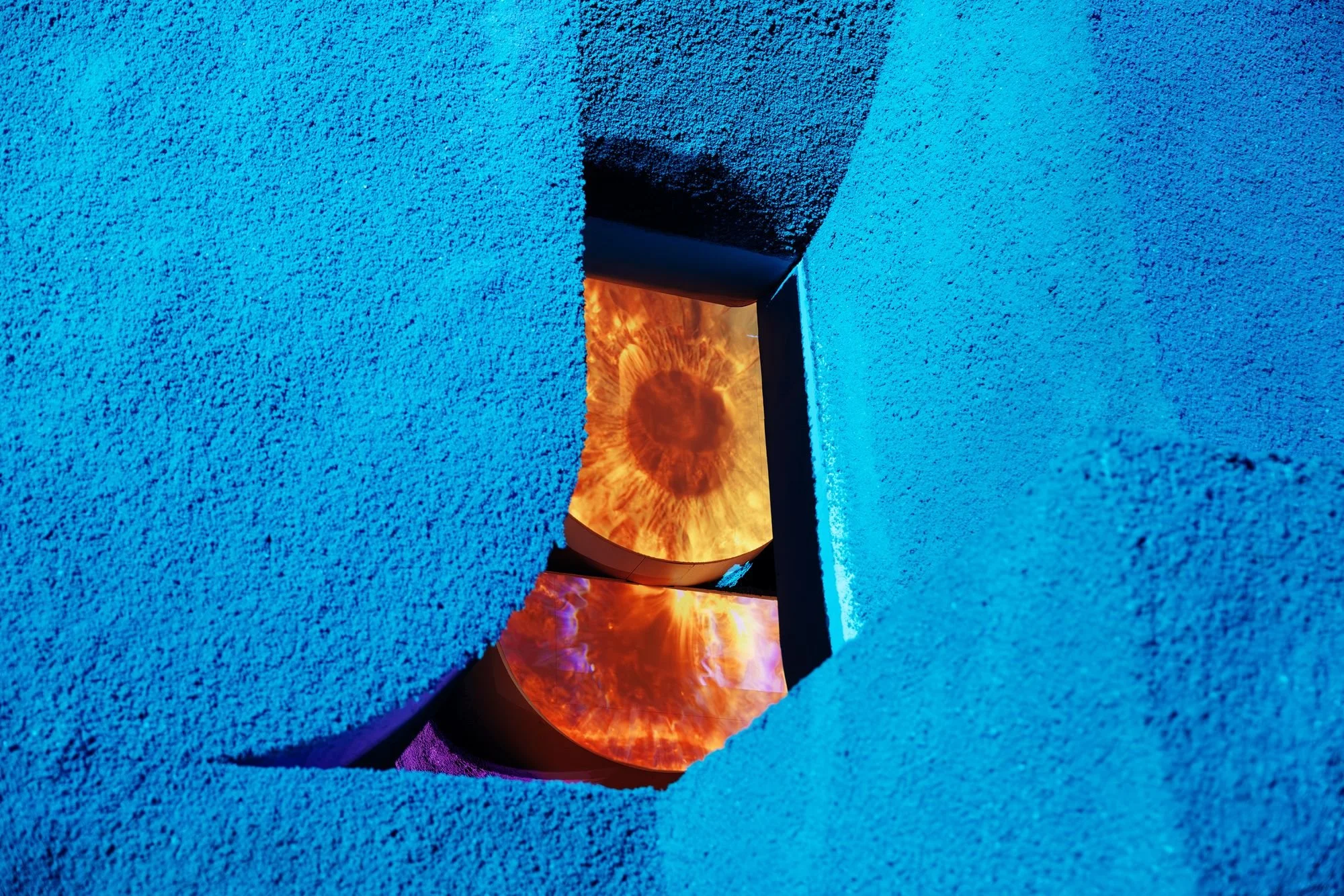
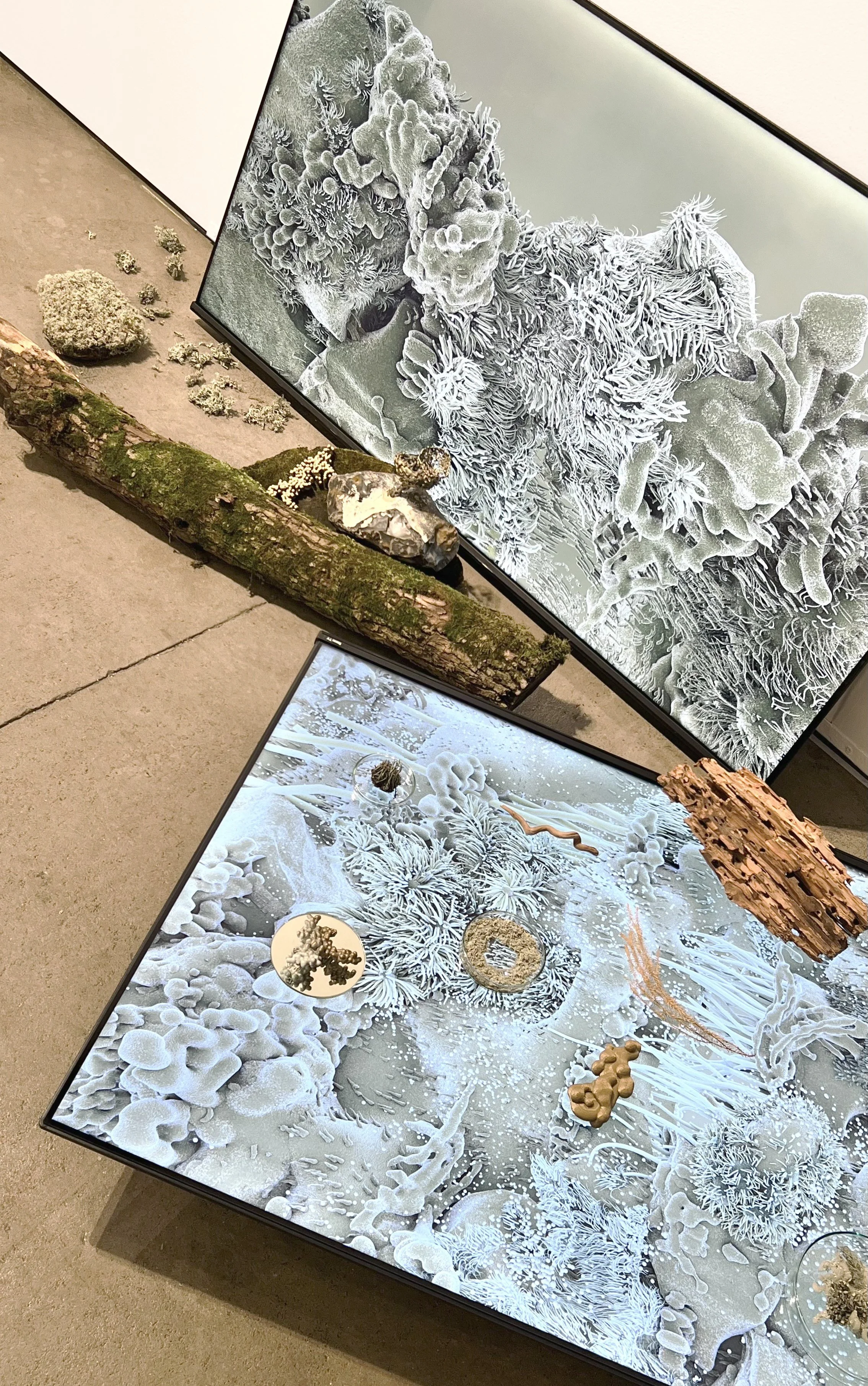
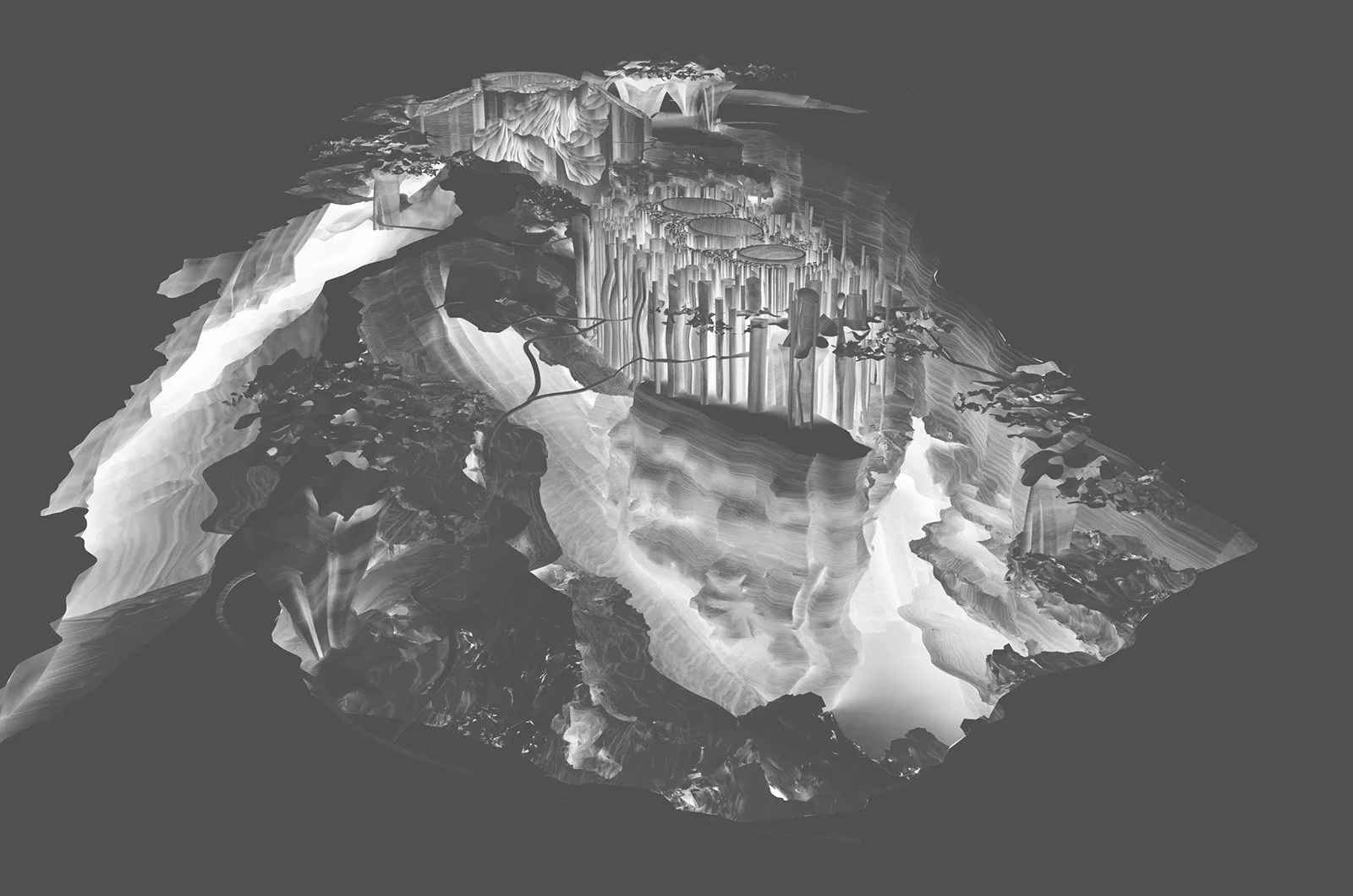
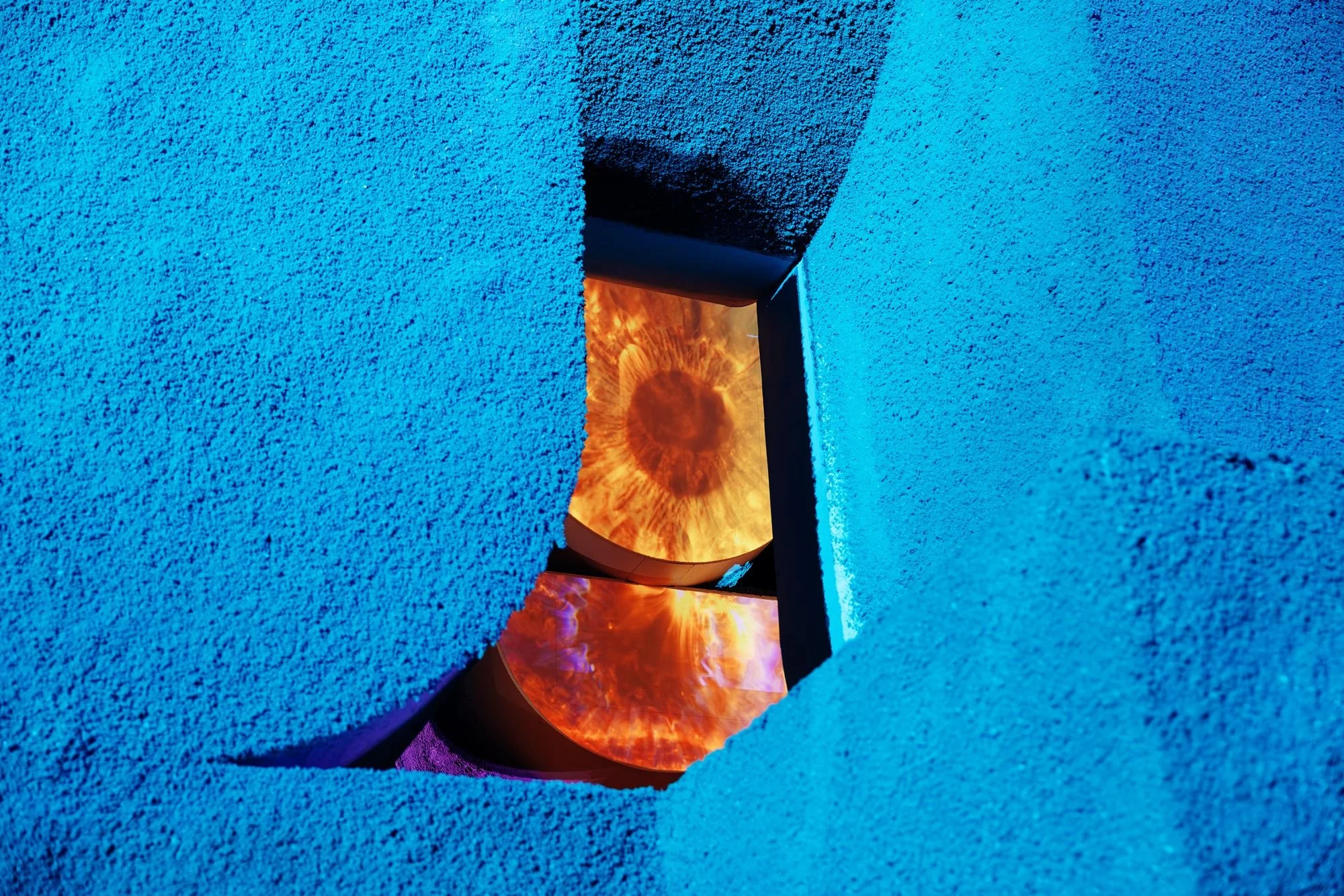
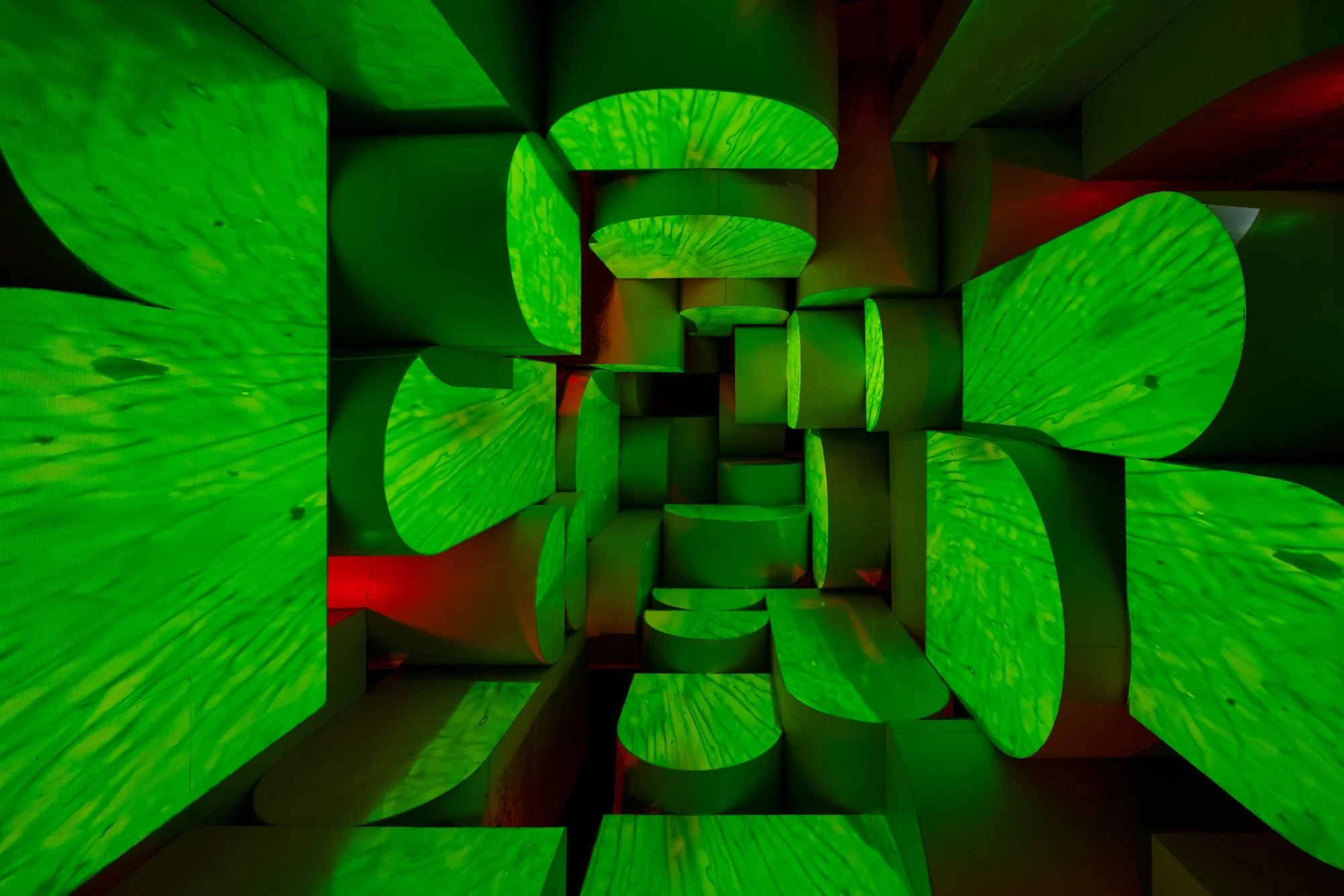
Aistė Ambrazevičiūtė is a Lithuanian artist, designer, and researcher based in Kaunas whose interdisciplinary practice moves between architecture, digital modeling, and ecological observation. Working through her studio, Plantasia Lab, she develops speculative visual systems inspired by lichens, hybrid colonies of algae or cyanobacteria that exist through symbiosis, slowness, and adaptation. Much like lichens themselves, her work operates between domains, combining scientific tools, artistic intuition, and architectural thinking to explore how unseen biological processes shape the surfaces and structures we inhabit. Through projects such as Lichen Grammar and Secret Book of Lichen, Ambrazevičiūtė translates microscopic ecologies into visual languages and spatial imaginaries, proposing alternative ways of seeing, designing, and relating to the natural world. In conversation with COTF, Aistė invites us into her intricate world, one shaped by the slow intelligence of living surfaces.
Interview by Marya Kanakis | Edited by Juan Cantú | Photos courtesy of Aistė Ambrazevičiūtė
Your work typically blurs boundaries between digital modeling, architecture, and mycology. When you start a project, do you begin thinking as an architect, an ecologist, a design researcher, or an image maker?
It’s really all of them. I studied architecture for about seven years, so I can’t separate that way of thinking from my practice. After finishing my master’s, I went through a period of searching for my voice and eventually returned to Lithuania, where there wasn’t really a place for the kind of work I wanted to do. There were no studios or infrastructure that aligned with my interests, so I had to invent my own path and work independently with the tools I had. In a way, not having infrastructure gave me more freedom and time to explore, which still shapes how I work today. I’m not practicing traditional architecture, but my spatial mindset is always present.
Were there any projects during architecture school that became anchor points for the way you think about nature, scale, or representation today?
Yes, my master’s thesis was a turning point. The project, called Imaginary Folklore, explored wood at different scales, trees, forests, and wooden architecture, and how these could be described spatially in a more poetic and imaginative way. That was really where the ideas I’m still working with began. Lithuania has a strong tradition of wooden architecture, and I was fascinated by its ornamentation and human scale. I was especially drawn to the idea of architecture as a Gesamtkunstwerk, a total work of art, where every detail, from doors to fences, is designed. That way of thinking about architecture as a visual language and system of elements strongly influenced what later became my Lichen Grammar.
In 2019 you founded Plantasia Lab, a studio focused on speculative visual forms and material experimentation. What gap were you hoping it would address?
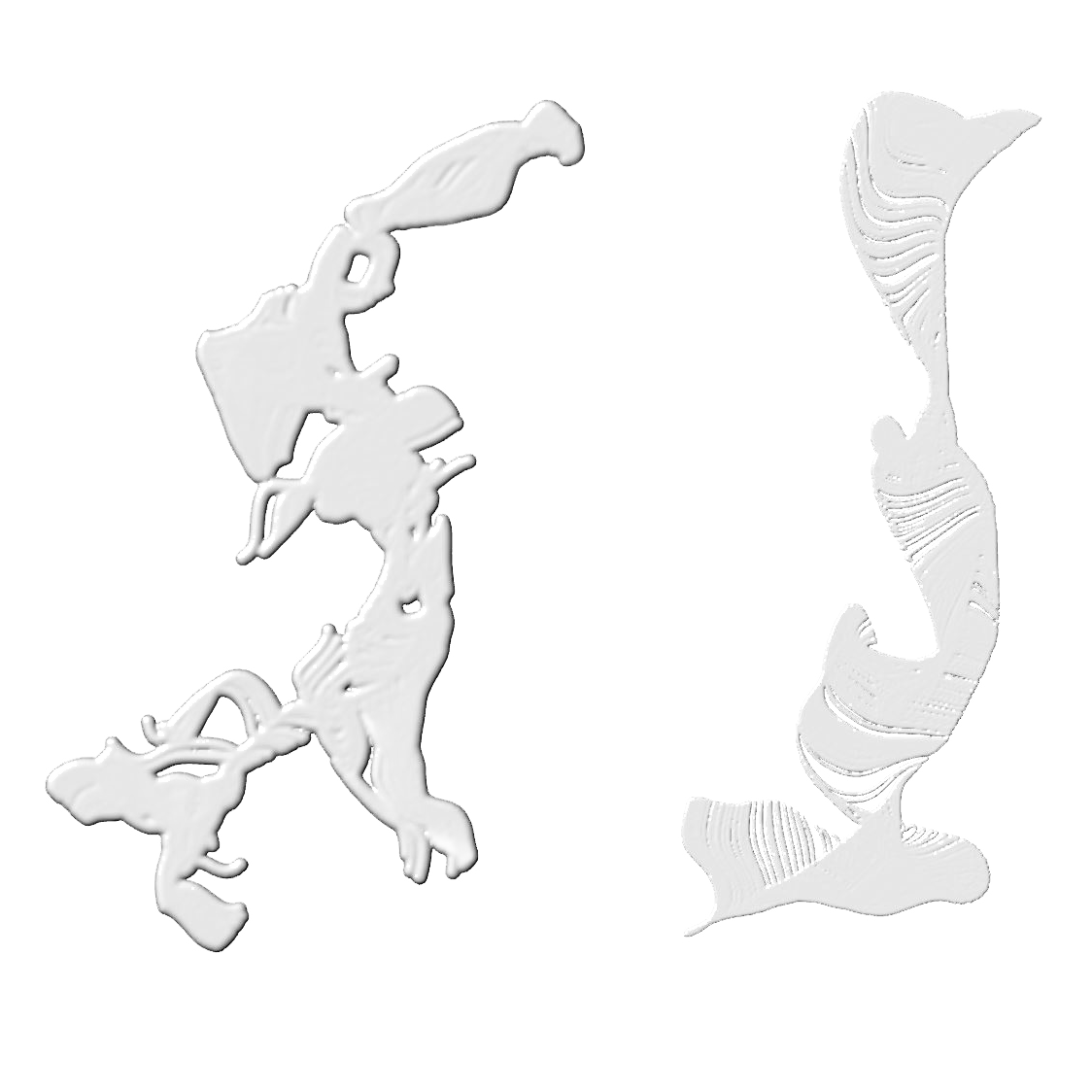
It grew out of a lack of contextual sensitivity I noticed during my internships in architectural studios. We were always discussing walls and interiors, but rarely what existed outside them. Coming from Lithuania, where forests are such a dominant presence, it felt strange that so much green space was included in plans but not truly designed or considered. I was also reacting against what I saw as ego-driven architecture and searching for a more nature-centered approach. Plantasia became a space to explore the diversity of natural forms and textures, especially those found in lichens and plants, and to experiment freely with tools. I was initially focused on glitches and imperfections in digital simulations, but eventually I realized that almost any strange form I generated already existed somewhere in nature.
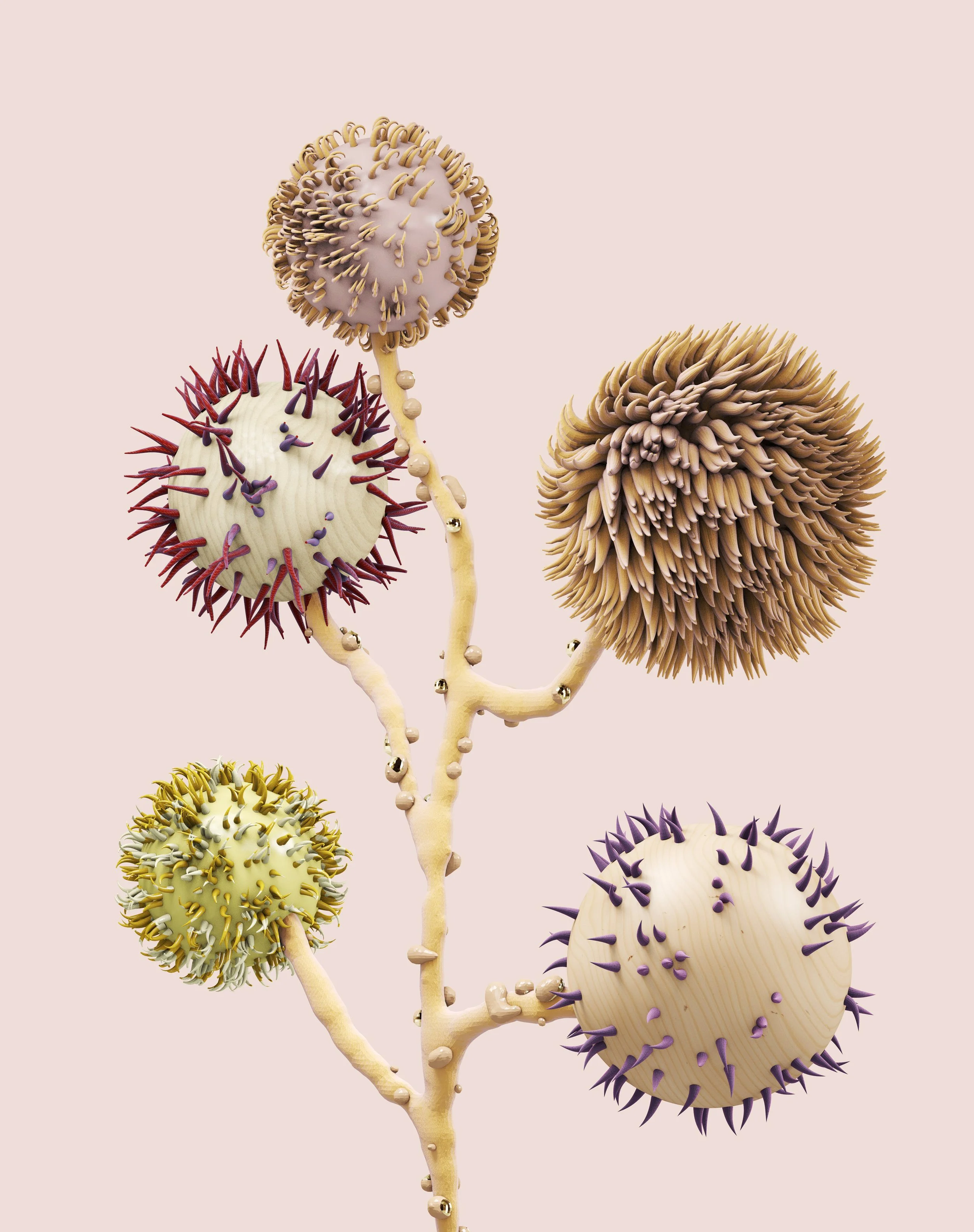
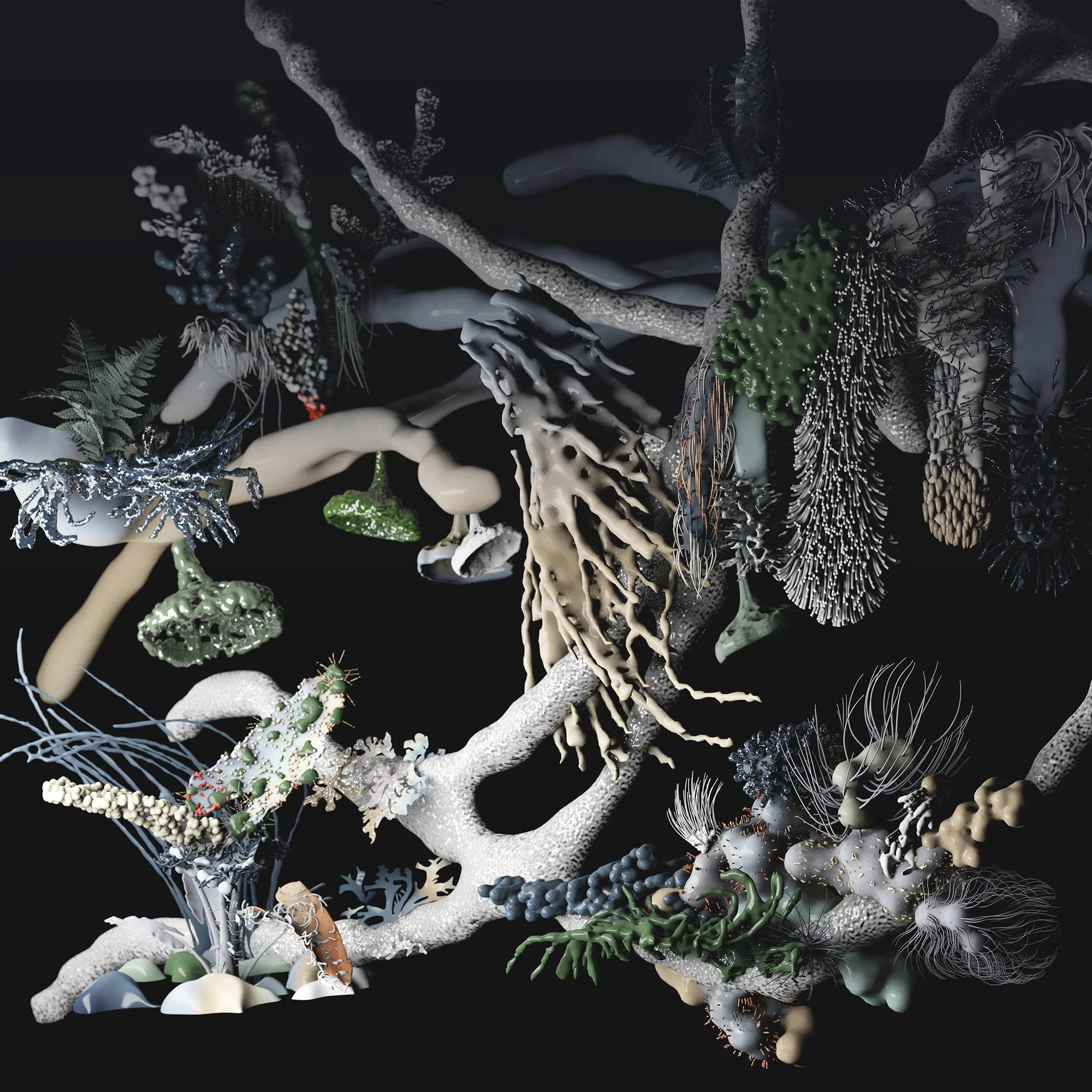
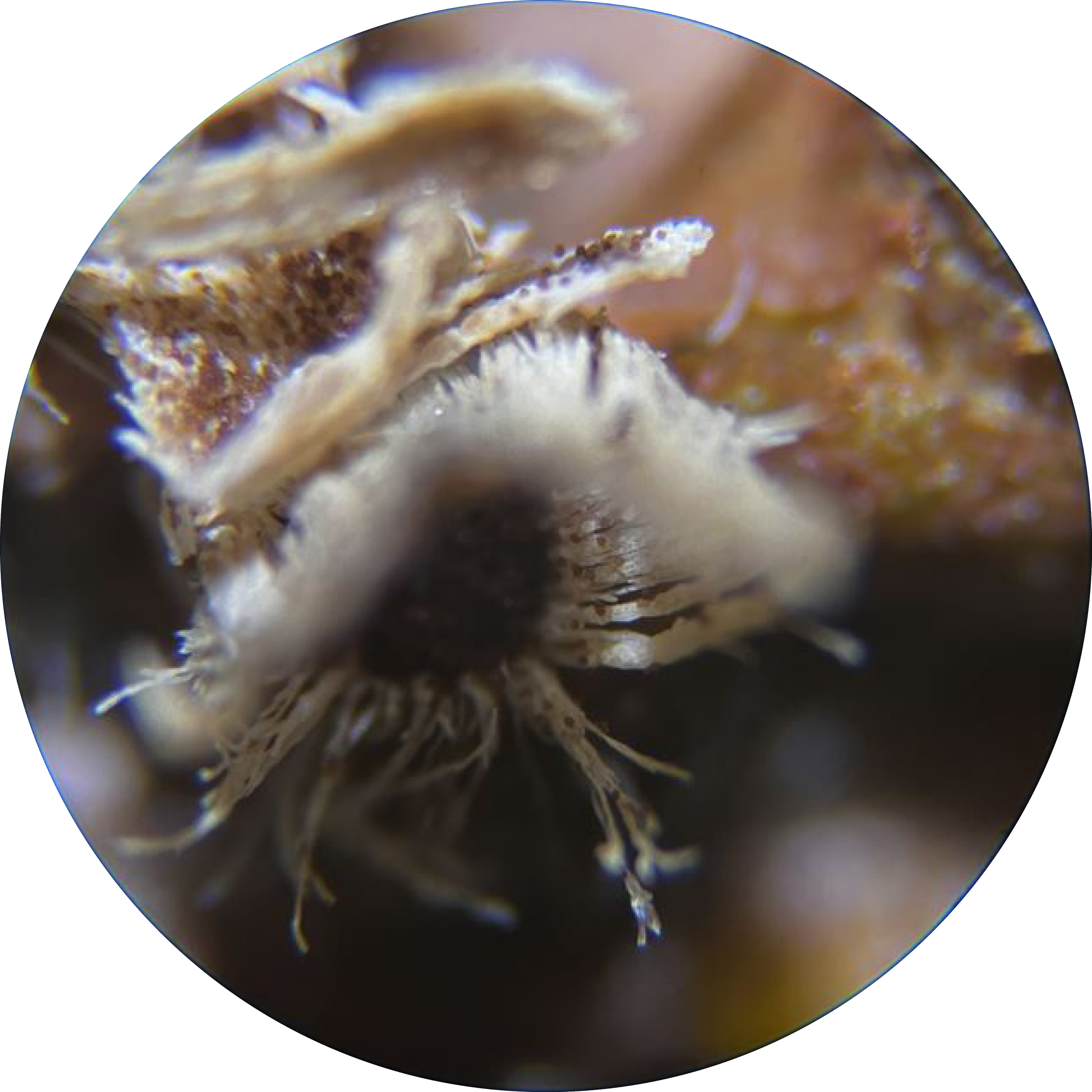
You’ve mentioned bringing lichen specimens from fieldwork back to your studio to examine under a microscope. Since your work blurs interior and exterior environments, I’m curious, what kinds of spaces does your practice thrive in? Do you feel more at home in an office or in a forest?
I try to exist in both urban and natural contexts. I wish I could spend more time outside, which is why I often apply for artist residencies. In reality, though, most of the thinking and production happens in a rather ordinary city environment, which contrasts strongly with the themes of my work.
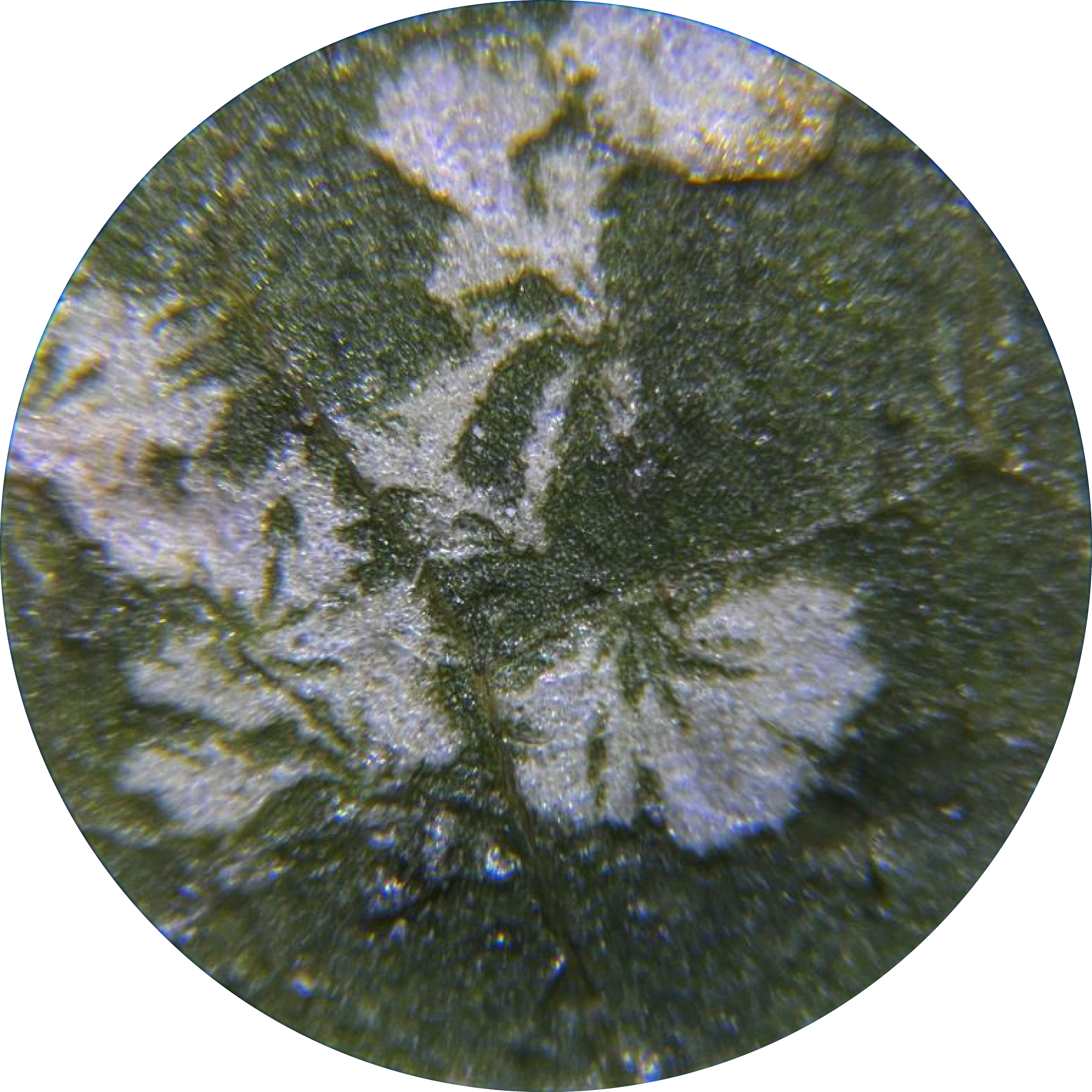
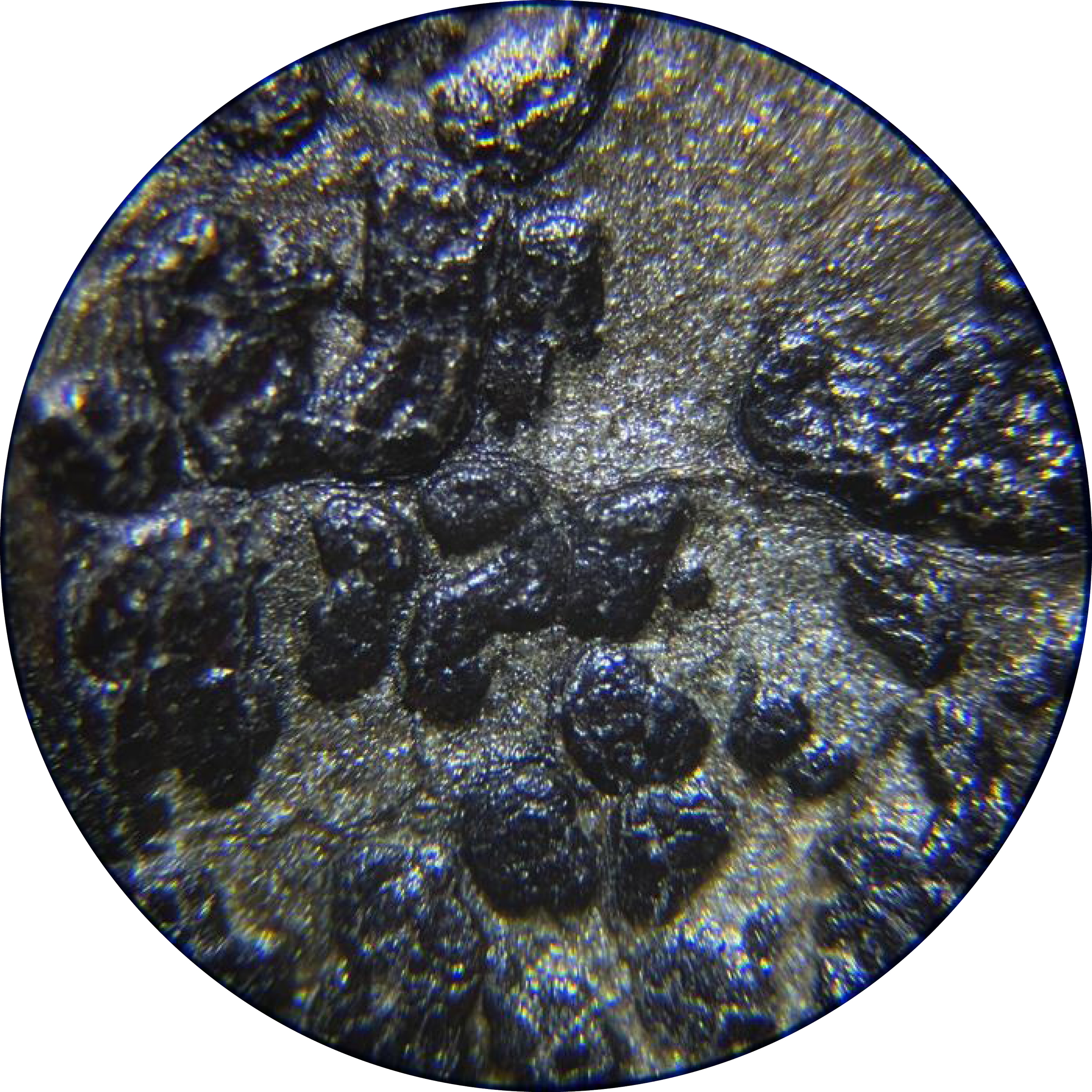
These microscopic ecologies, synthetic surfaces, bark textures, slow biological growth all present in your work often visualizes worlds that remain invisible, what first sparked your fascination with these environments?
Some lichen species grow everywhere, even in cities, but I had never really noticed them as a child. So my fascination didn’t come from childhood memories, it began later, when I started discovering microscopic worlds. The first spark was probably in art school, where I studied alongside regular school for six years. We practiced marbling; mixing oil, paint, and water to create spontaneous, unpredictable patterns, and I was fascinated by how these forms seemed to emerge on their own.
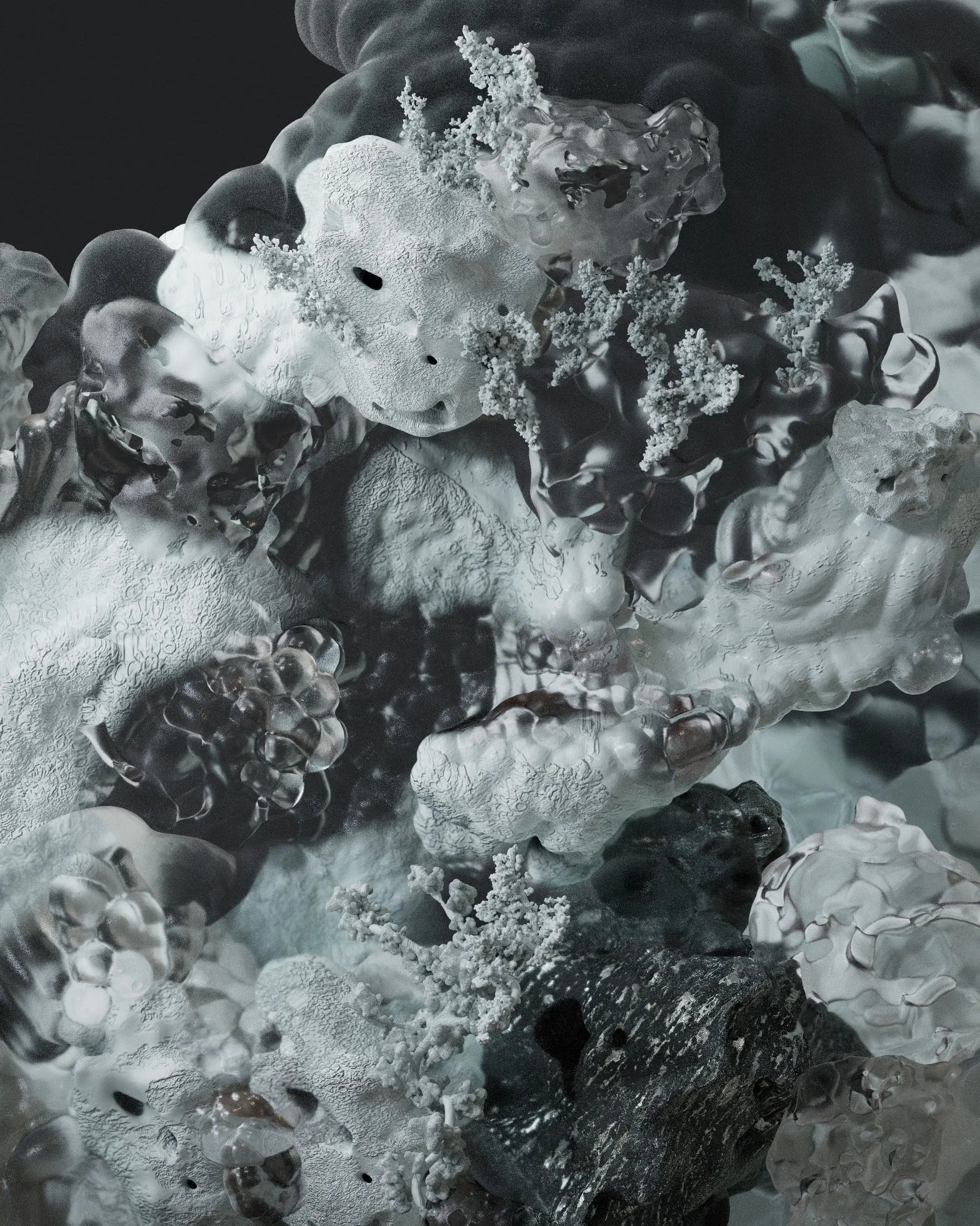
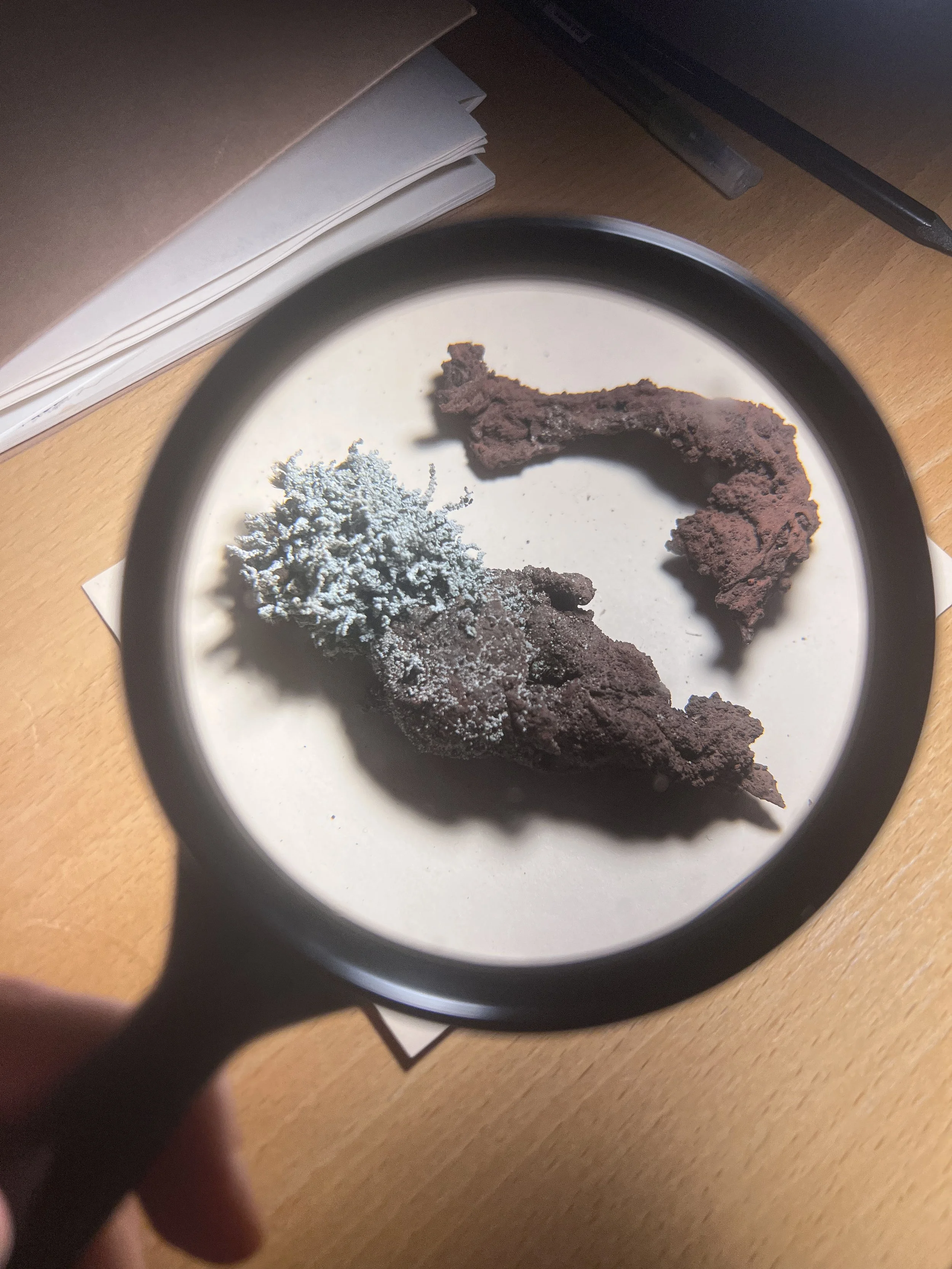
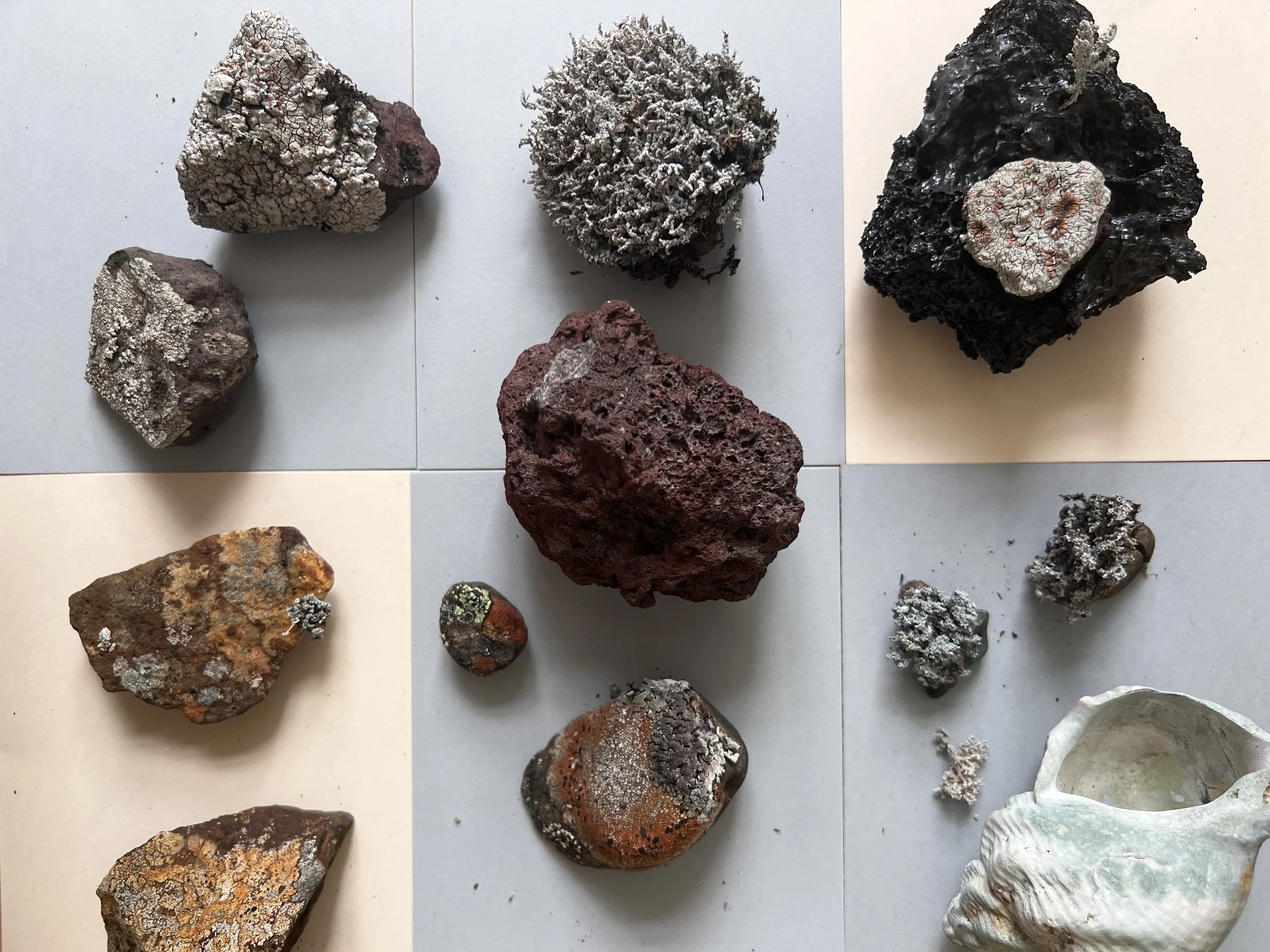
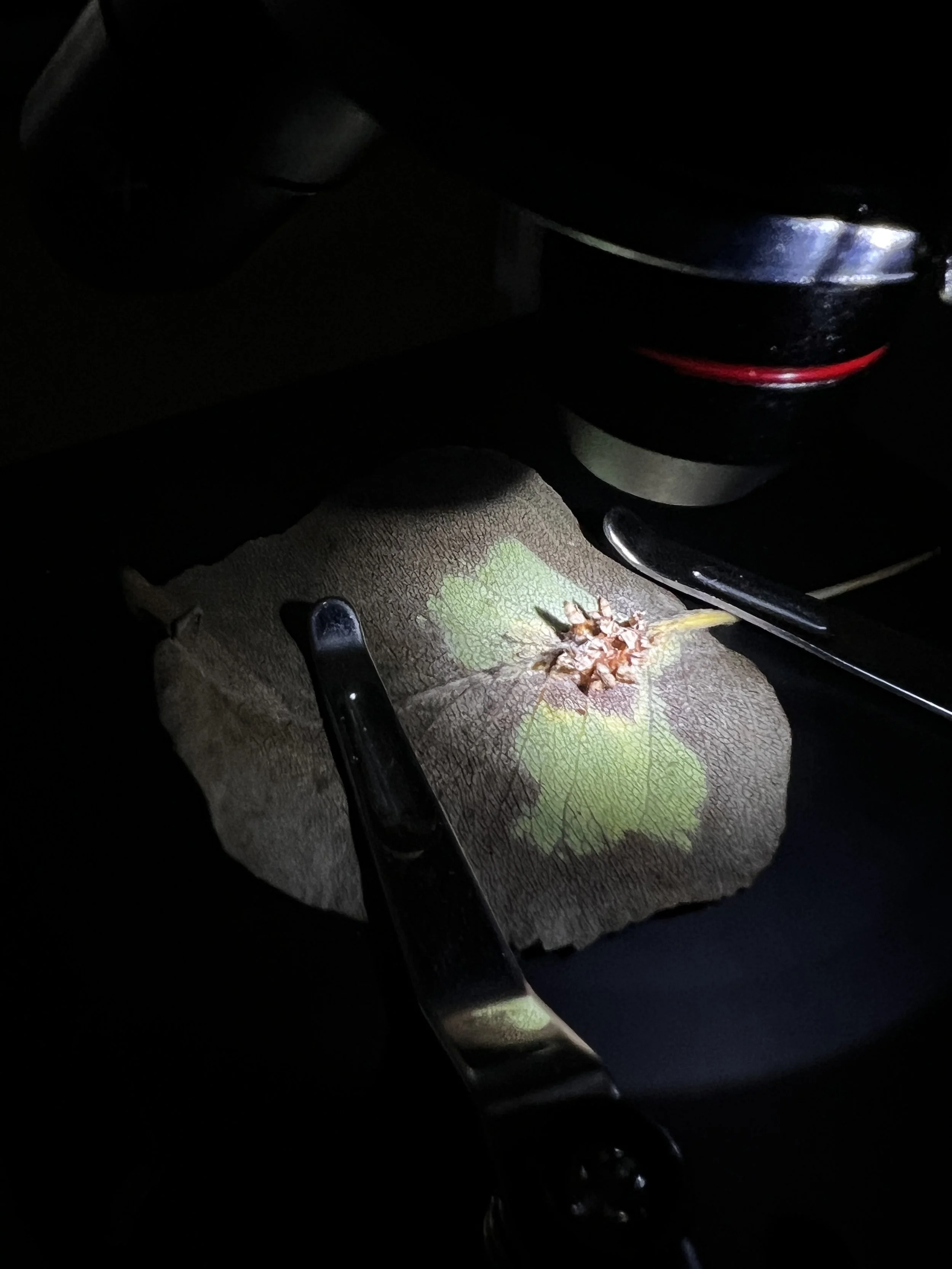
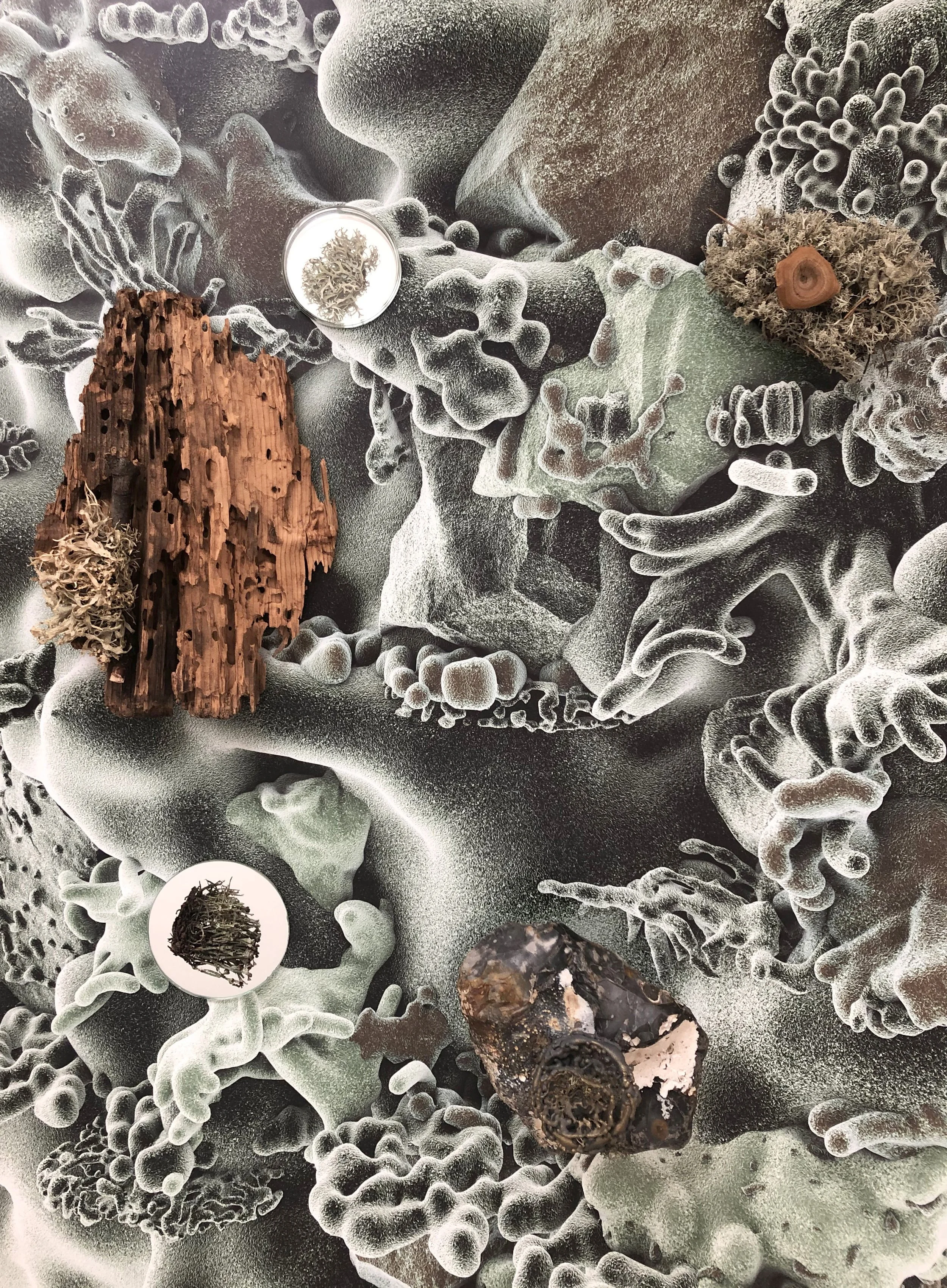
Later, lichen entered my life through a microscope while I was studying wood anatomy and noticed it growing on bark. I was fascinated first by the tool itself, and then by the shapes and forms I had never seen before, even though they were everywhere. For about a year I used a small clip-on iPhone microscope. It was game-changing. I started looking at everything, discovering just how many species and forms existed, and that combination of art, spontaneity, new tools, and these strange organisms is what really sparked my fascination.
Would you see your work as a bridge between deep ecological time and future technologies?
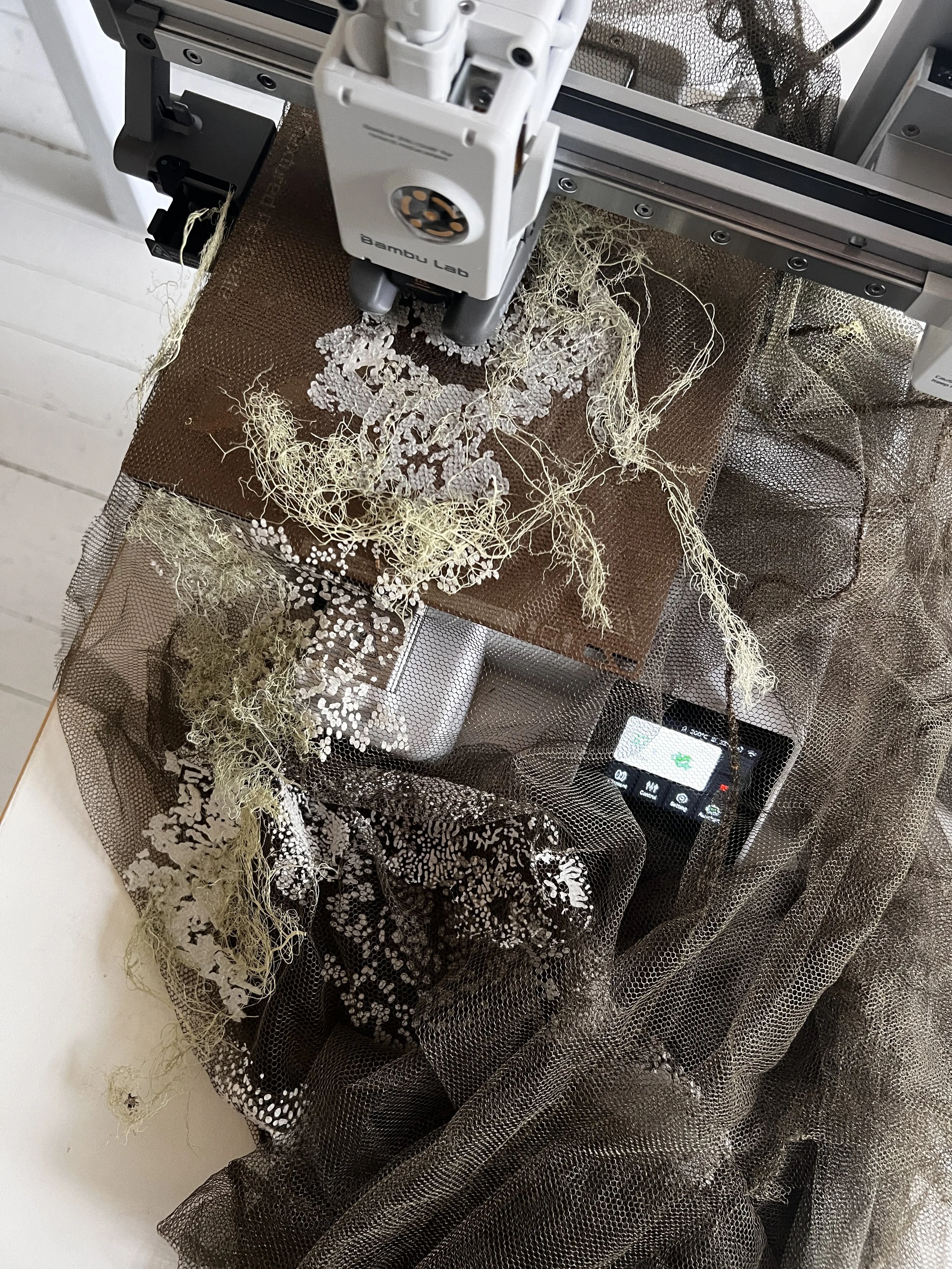
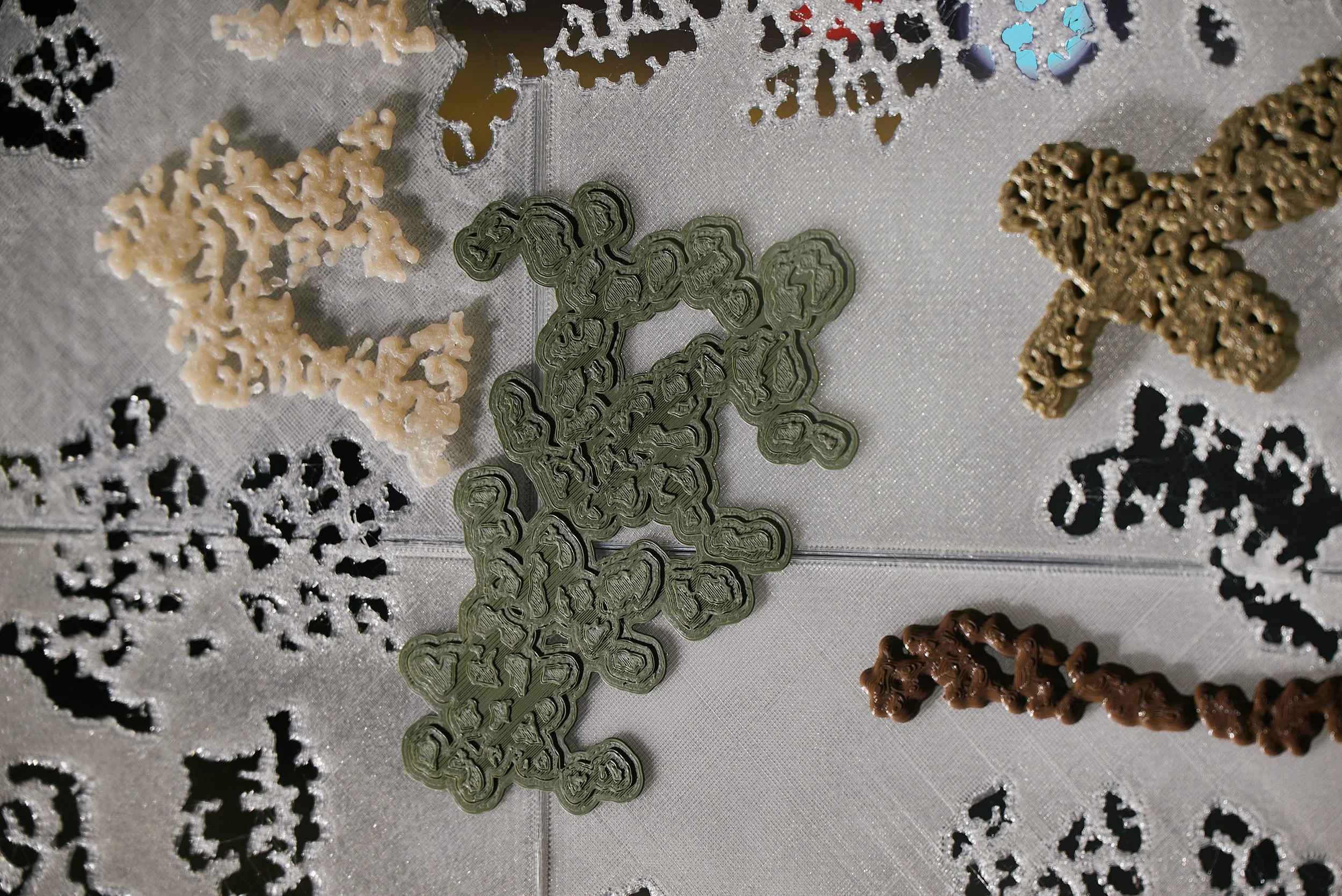
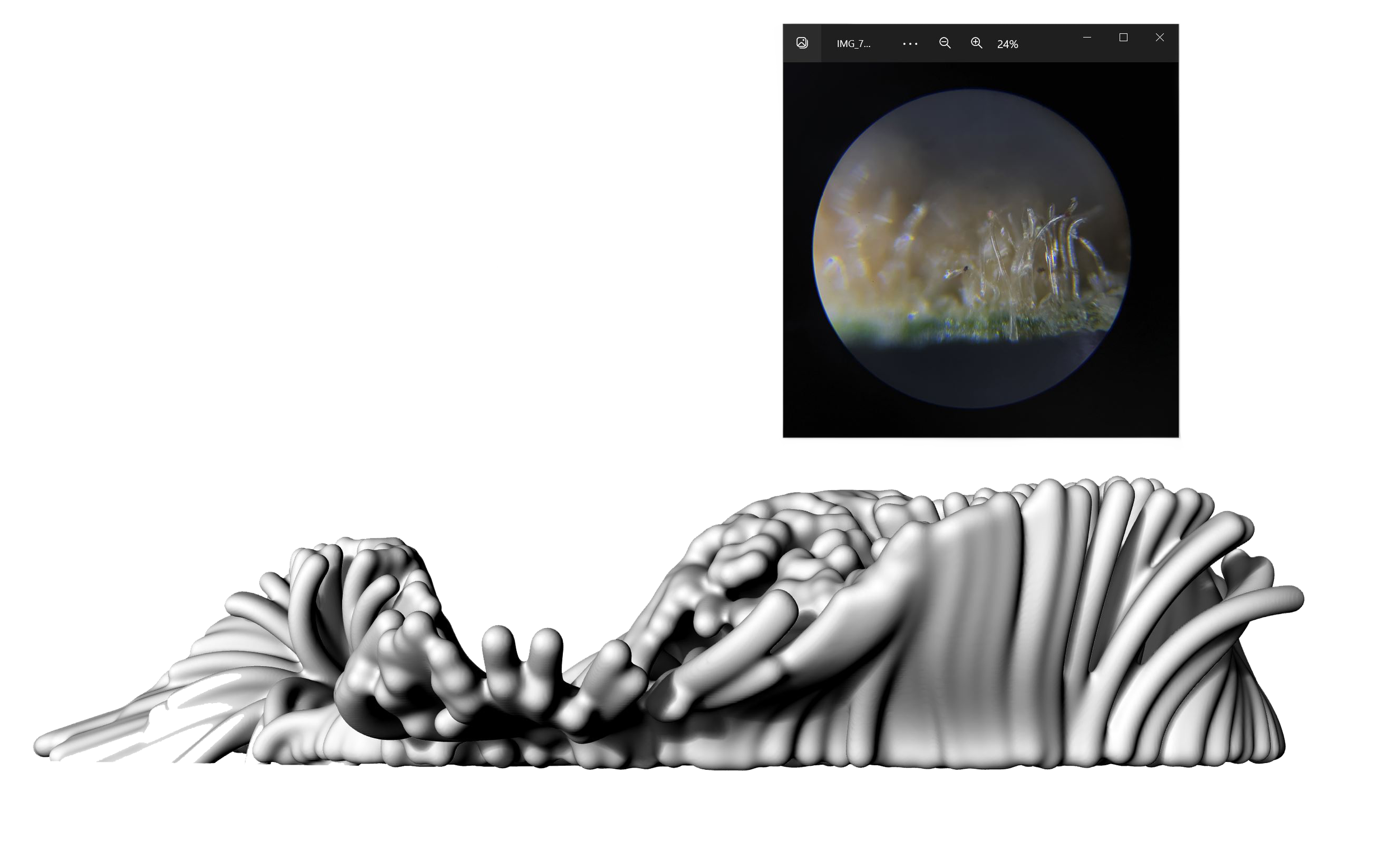
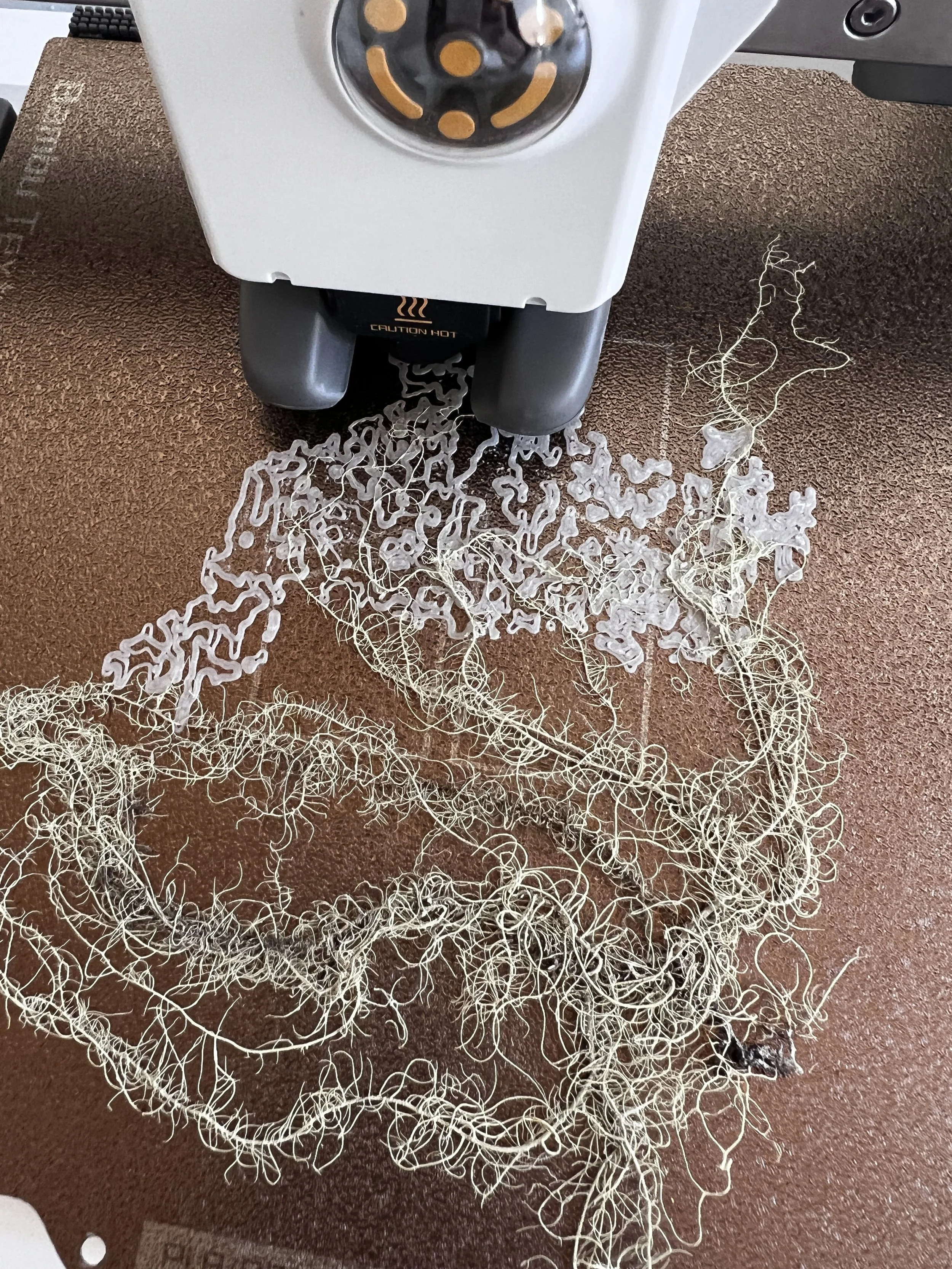
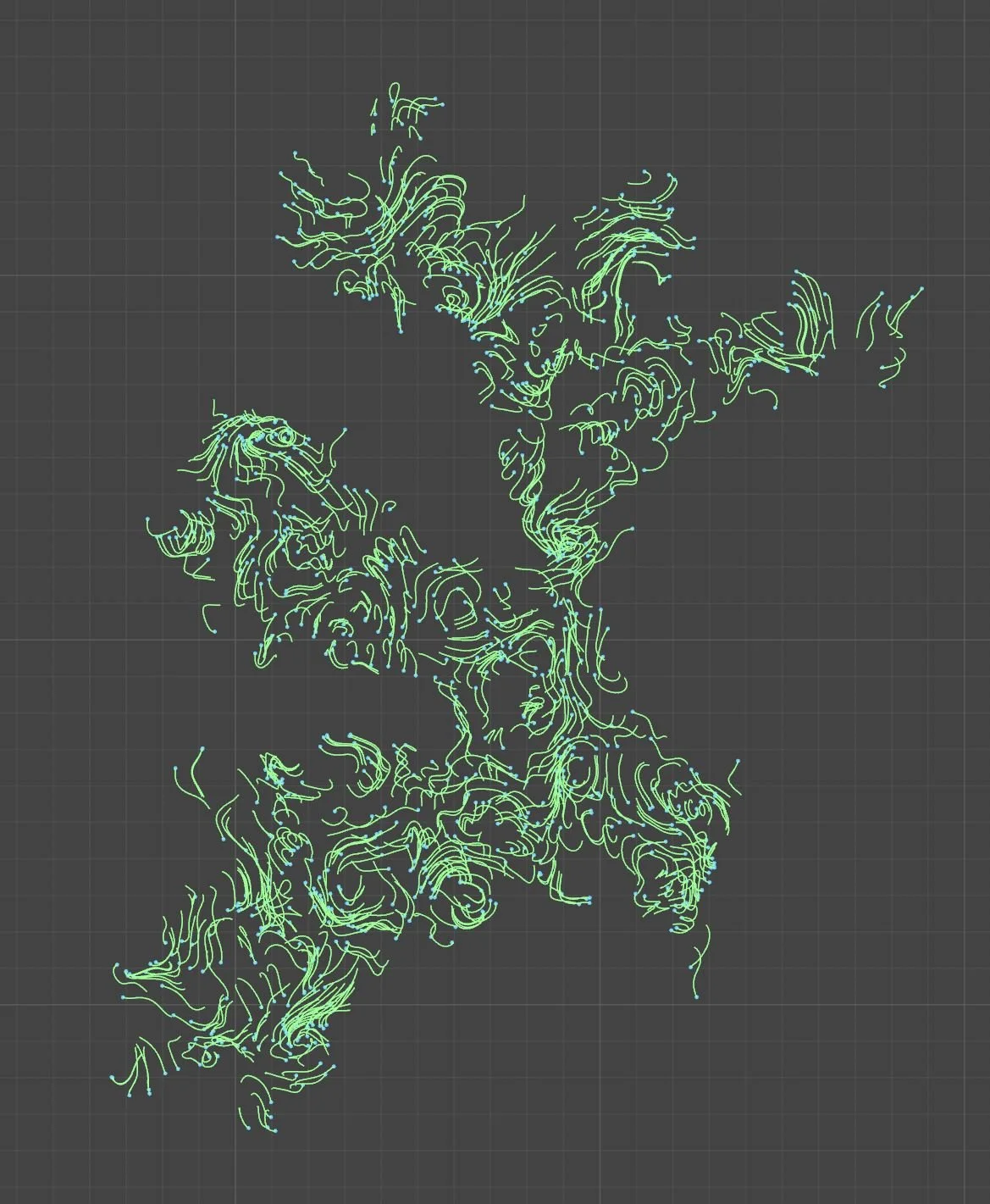
Yes, but in a friendly and sensitive way. I’m not scared of technology, and I keep learning new tools, but I always combine them with very primitive and personal methods. What fascinates me is that we can choose our tools and even create our own toolkit. The more we mix them, the more interesting and enjoyable the process becomes.
Do you think all of nature is replicable through math or equations?
Digitally, maybe yes. But personally, I hope not! I would rather keep a more spiritual view of nature.
Lichens are often described as symbiotic architectures, living collaborations between fungi, algae, and bacteria. How do you see lichens as a blueprint for new forms of architecture or design?
Lichens are worth studying not only for architecture, but also for behavior and ways of thinking. They are so interdisciplinary that sometimes I feel I live the way lichens do. I’m interested in how life grows over surfaces and gradually creates space, and I’d like to translate that into more life-like environments and larger spatial interventions in the future.
How has studying temporality through lichens, their slow growth compared to how quickly we build, changed your perception of architecture?
Lichens taught me that decay isn’t something negative. I was always drawn to textures and plants, so perfectly clean surfaces never interested me. Observing lichens helped me accept slowness, change, and decay as natural and even positive processes. Now it feels self-evident to me, and what seems unfamiliar instead are spaces that are too clean or too permanent.
Have you faced challenges curating or exhibiting your work as ecological media becomes more common in museums and galleries?
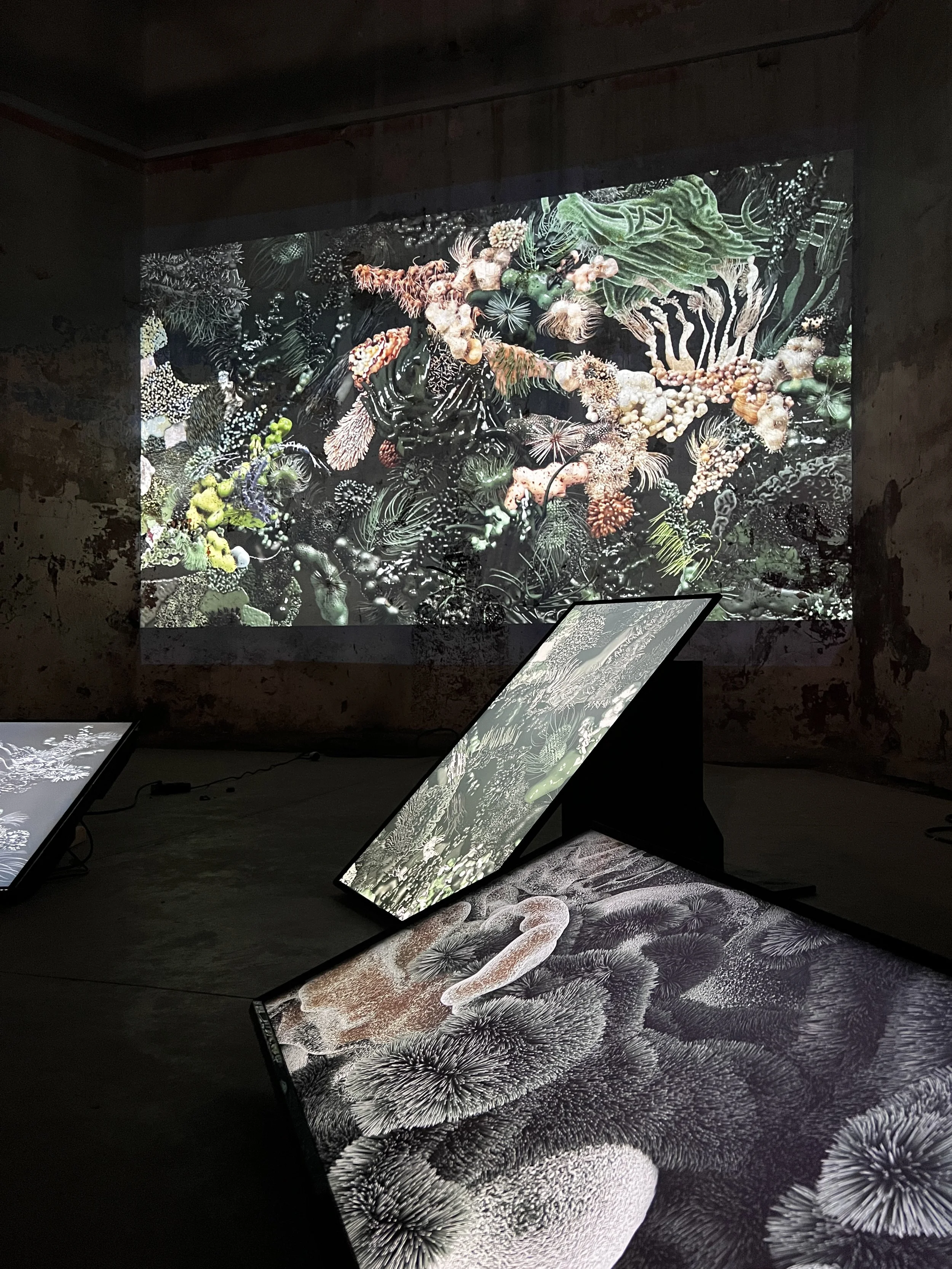
For me, the challenge begins with how I define my own position. I see myself locally as an artist, but also as something in-between, much like lichens, so I often feel like a strange species navigating different contexts. Even though I’m becoming clearer about my voice and tools, both I and the world around me are constantly changing, so finding the most effective way to communicate and exhibit this ‘lichen grammar’ remains an ongoing process.
If someone encountered your work decades from now, long after today’s software has become obsolete, what would you hope still resonates?
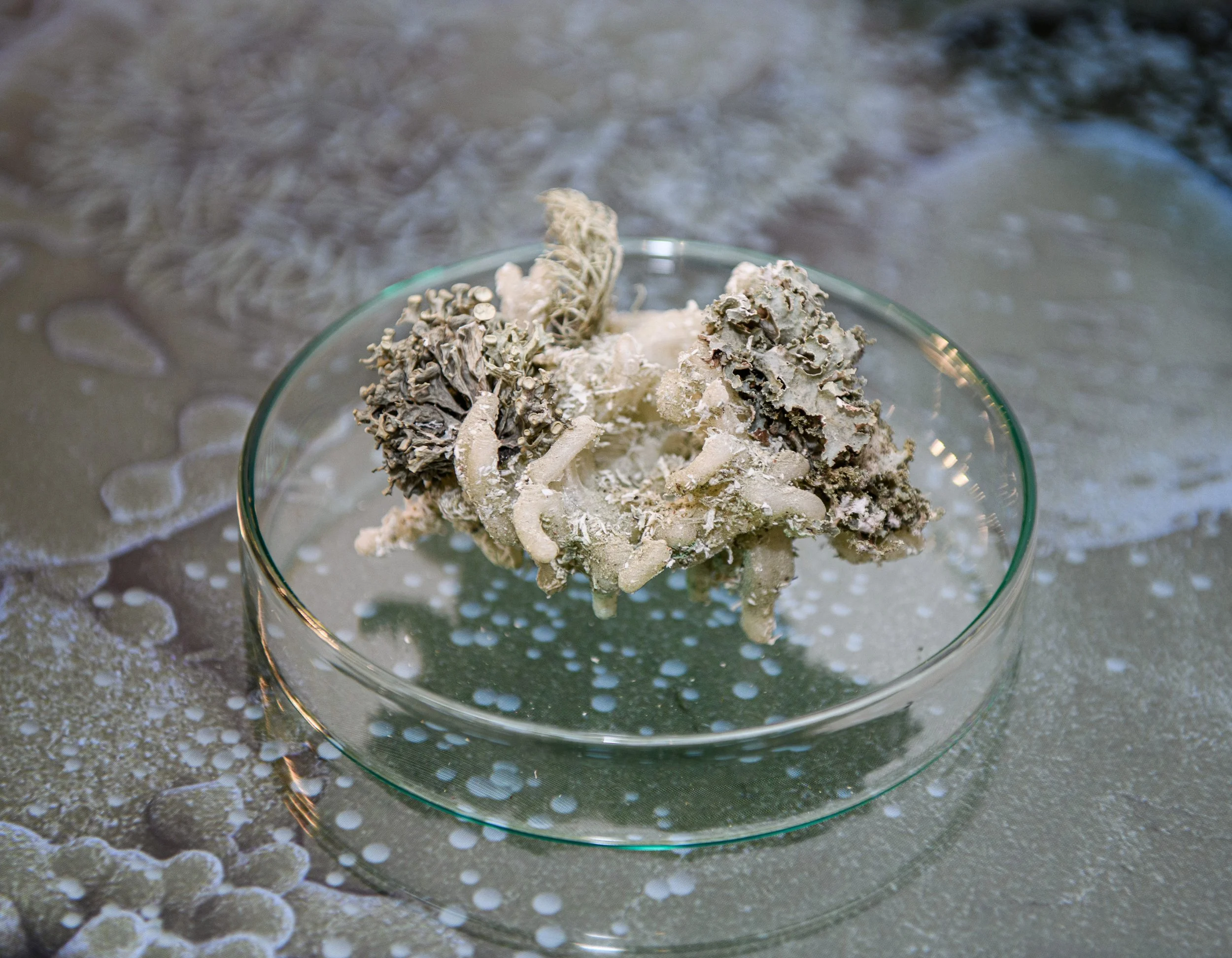
I would want the ecological message to remain, the attention to strange, unfamiliar, or unrecognized organisms and species. Lichens taught me not only about form and texture but also about undervalued species. From this, I started thinking about other undervalued groups, artists, cultural workers, who are also often invisible but working hard. Through observing biological systems, I learned a lot about human society and about myself. Art shouldn’t be a one-to-one simulation of reality, it should guide people to see new perspectives. That’s what I hope remains important.